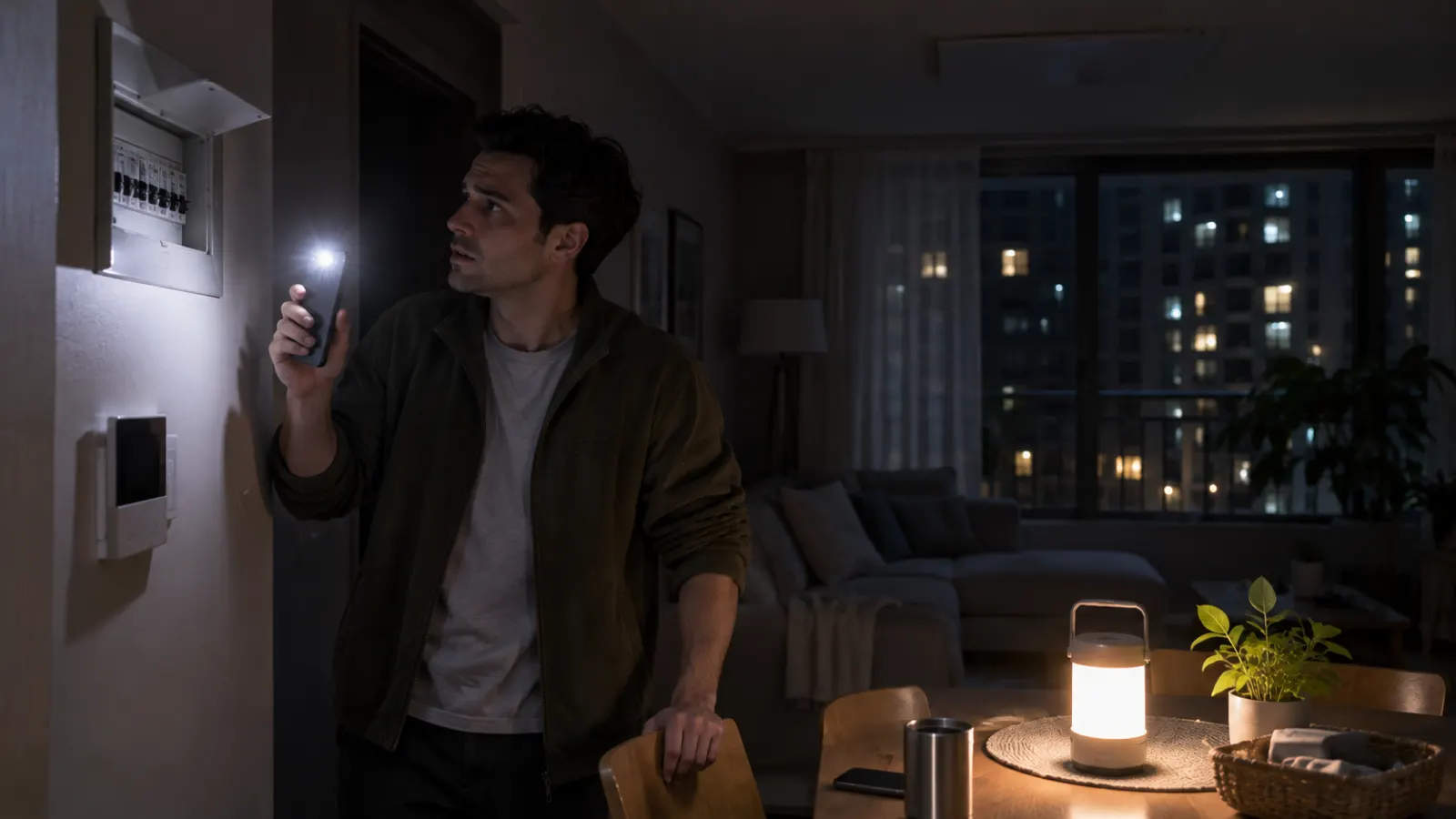
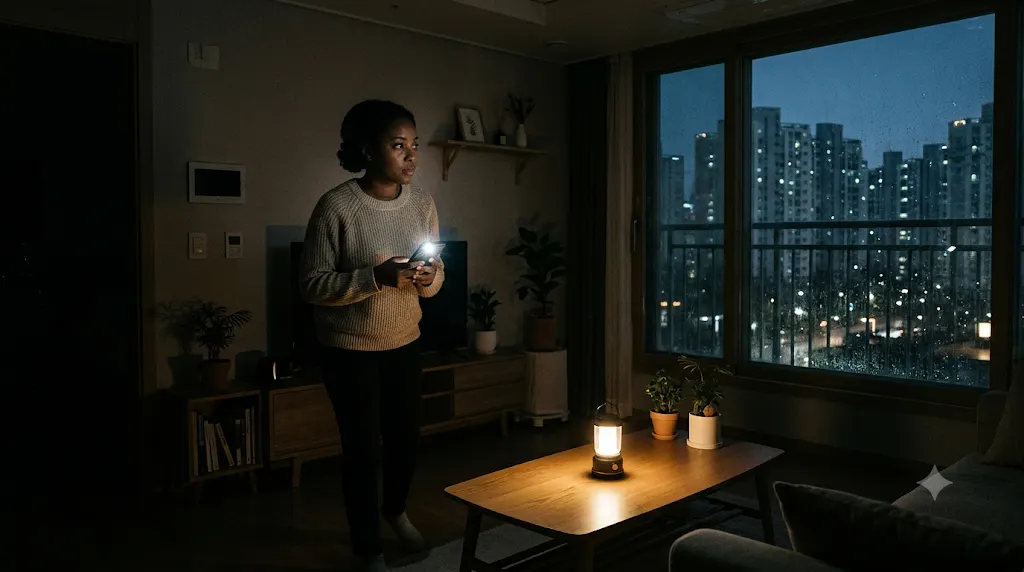
The lights suddenly go out in your Korean apartment, your air conditioner stops, and the refrigerator falls silent. Should you contact your landlord, building management office, or Korea Electric Power Corporation?
If you experience a power outage in Korea, call Korea Electric Power Corporation (KEPCO) at 123 to report a suspected electricity supply failure. Its electricity fault-reporting service operates 24 hours a day. However, if the problem affects only your apartment or building, the cause may involve privately managed electrical equipment rather than KEPCO's distribution network.
Here is how to identify the likely problem, contact the correct organization, and stay safe while waiting for electricity to return.
Who Do You Call for a Power Outage in Korea?
Korea Electric Power Corporation is commonly known as KEPCO or 한국전력공사 (Hanguk Jeollyeok Gongsa).
It operates the national electricity distribution network and provides customer services relating to electricity supply.
Its official outage-reporting number is:
123
According to KEPCO's customer service information, electricity consultations and fault reports are available around the clock, including weekends and public holidays.
How to Call From a Korean Phone
KEPCO's published contact instructions are:
Telephone type | Number |
|---|---|
Local telephone | 123 |
Mobile phone | Area code + 123 |
For example, when calling from a mobile phone about an outage in Seoul, use the Seoul area code followed by 123.
The operator describes the service as a paid telephone call, meaning ordinary connection charges may apply.
Do not assume that a foreign SIM or international roaming connection can dial a short domestic service number successfully.
If you cannot connect, ask building management to contact KEPCO or use the operator's official website for contact information.
First: Check Whether the Outage Is Only in Your Home
Before reporting the problem, identify how widely the electricity failure appears to extend.
You do not need to conduct technical electrical tests.
A simple visual check can help determine whom to contact.
Situation 1: Only One Room Has Lost Power
If lights and outlets elsewhere in your home still work, the issue may involve a particular circuit or appliance.
Possible explanations include a tripped circuit breaker or an electrical fault.
Do not repeatedly operate a breaker that immediately trips again.
If you notice sparks, smoke, a burning smell, exposed wiring, or water near electrical equipment, stop and seek qualified assistance.
Contact your landlord or building maintenance provider.
A licensed electrical professional may be needed to identify the cause.
Situation 2: Your Entire Apartment Has Lost Power
Check whether electricity is still available in the building's common areas.
For example, are the corridor lights operating?
Is the building entrance illuminated?
If common-area electricity is working but your apartment has no power, notify the building management office or landlord.
The problem may involve your unit's electrical system, but it cannot be diagnosed from that observation alone.
Situation 3: The Whole Building Is Dark
If several apartments and common areas have lost power, contact the building's management office.
The building may have a problem involving its own electrical equipment.
It may also be affected by a wider power distribution failure.
Building management can help determine whether a contractor or KEPCO needs to respond.
Situation 4: Nearby Buildings Have Also Lost Power
A neighborhood-wide outage is more likely to involve the electricity distribution network.
Contact KEPCO at 123.
The company can determine whether the problem is already recorded and explain the available information about restoration.
These are practical indicators, not definitive diagnoses.
How to Report an Outage to KEPCO
KEPCO's official outage restoration page explains that the company monitors its electricity network continuously.
It operates an outage response system involving detection, investigation, safety measures, repair work, and restoration.
Step 1: Prepare Your Location
You should be able to identify the affected building.
Useful details include:
City and district
Road-name address
Building name
Apartment building and unit number, if relevant
Nearby landmarks
If you are unfamiliar with your Korean address, copy it from a map or your rental agreement.
Step 2: Explain What Happened
Tell the operator approximately when the electricity stopped.
Explain whether the outage affects only your home, the entire building, or the surrounding area.
If you noticed unusual sounds, smoke, or electrical damage, mention this information.
Do not attempt to investigate exposed electrical equipment yourself.
Step 3: Ask Whether the Outage Is Already Known
KEPCO's automated systems can identify some network faults.
However, the company also receives outage reports from customers.
Ask whether the operator has identified a fault affecting your address.
You can also ask whether any restoration information is currently available.
Do not assume a restoration estimate is guaranteed.
Step 4: Follow the Instructions
If the problem appears to involve KEPCO's network, follow the operator's guidance.
If the issue is inside the building's privately managed electrical system, the building manager or an electrical contractor may need to handle the repair.
The responsible party depends on the cause and ownership of the affected equipment.
How to Check Power Outage Information Online
KEPCO's official website includes a section for real-time power outage information.
Visit:
Navigate to:
Customer Communication → Power Outage Compensation System → Real-Time Outage Information
The company's outage information section links to its online electricity service.
However, the availability of particular online functions and location searches can vary.
A power outage not appearing in an online display does not prove that your property has electricity.
If you cannot find relevant information, use the official 123 reporting service.
What Should You Do While the Power Is Out?
The immediate priority is safety.
Avoid Elevators
Do not enter an elevator during a known building power outage.
If someone is trapped inside, contact building management and emergency rescue services as appropriate.
Do not attempt to force open elevator doors.
Avoid Damaged Electrical Equipment
Stay away from exposed wires, damaged cables, and electrical equipment affected by flooding.
Do not touch a fallen power line, even if it appears inactive.
KEPCO's electrical safety information emphasizes the hazards associated with contact with electrical infrastructure.
Protect Essential Devices
If it is safe to do so, disconnect sensitive equipment that could be damaged when electricity returns.
Avoid using damaged outlets or appliances.
Do not attempt to repair electrical equipment without appropriate training.
Limit Refrigerator and Freezer Opening
Keep refrigerator and freezer doors closed as much as possible to reduce temperature changes.
If the outage lasts an extended period, the safety of refrigerated food may become a concern.
Do not assume food remains safe simply because the electricity has returned.
Prepare Alternative Lighting
Use battery-powered lighting if available.
Avoid open flames near flammable materials.
If you depend on an electrically powered medical device and the interruption creates an immediate health emergency, contact emergency medical services at 119.
What If Your Landlord Does Not Respond?
Foreign renters may encounter uncertainty about who is responsible for building repairs.
The distinction between KEPCO infrastructure and privately owned electrical facilities is important.
KEPCO's published outage information identifies faults involving customer-owned electrical equipment as a possible cause of electricity interruptions.
If your building's electrical equipment is responsible, KEPCO may not be the organization that performs the necessary internal repairs.
However, this does not automatically establish whether a particular repair is the legal responsibility of the tenant, landlord, or building management company.
That depends on the equipment, rental agreement, circumstances, and applicable law.
When contacting your landlord:
Describe the affected area.
State when the outage began.
Explain whether building management has been contacted.
Ask who will arrange an inspection.
Keep a written record of the communication.
If the property has a 관리사무소 (gwanri samuso), or building management office, contact it directly as well.
Can You Claim Compensation for a Power Outage?
Possibly, but compensation is not automatic.
KEPCO publishes a formal outage damage compensation procedure.
According to its official compensation guidance, the company investigates the circumstances of reported damage and determines whether it has legal responsibility.
Its process includes reviewing the cause of the outage, examining the damage, assessing liability, and determining compensation where appropriate.
However, KEPCO explains that it is not responsible for every power interruption.
For example, circumstances involving natural disasters or customer-owned equipment can affect liability.
If you believe an outage damaged your property, keep records such as:
The date and duration of the interruption
Any information provided by KEPCO
Photographs of damaged equipment
Relevant repair reports
Receipts and invoices
Communications with the landlord or management office
These records may help explain the claim, but they do not guarantee compensation.
Contact KEPCO for the applicable procedure.
Useful Korean Phrases During a Power Outage
You can show these sentences to a building manager or customer service employee.
정전이 됐어요.
"The electricity has gone out."
우리 집만 전기가 안 들어와요.
"Only my home has no electricity."
건물 전체가 정전됐어요.
"The entire building has lost power."
언제 복구될 예정인가요?
"When is the electricity expected to return?"
차단기에 문제가 있는 것 같아요.
"I think there may be a problem with the circuit breaker."
전기 기술자를 불러주실 수 있나요?
"Could you arrange for an electrician?"
한국전력에 신고해야 하나요?
"Should I report this to KEPCO?"
If you cannot communicate by telephone in Korean, send a written message to your landlord or building manager.
Common Mistakes Foreign Residents Make
Mistake 1: Assuming KEPCO Must Repair Every Electrical Problem
A fault inside privately owned building equipment may require a different service provider.
Mistake 2: Trying to Repair Electrical Equipment Without Training
Electrical faults can create serious fire and electric shock hazards.
Mistake 3: Assuming Every Outage Is a Scheduled Interruption
Power failures can occur unexpectedly.
Report suspected faults rather than waiting indefinitely for an announcement.
Mistake 4: Treating Online Restoration Information as a Guarantee
The cause and repair requirements may change during an investigation.
Mistake 5: Assuming Compensation Is Automatic
KEPCO evaluates the cause of the outage and its responsibility before deciding whether compensation is payable.
For further information about routine electricity charges rather than outages, see our guide to Korean apartment utility bills and setup.
A Practical Power Outage Checklist
When electricity suddenly stops:
Check for immediate dangers, including smoke, sparks, and damaged wires.
Determine whether the problem affects one room, your home, the building, or nearby buildings.
Contact building management for suspected internal electrical faults.
Report suspected supply failures to KEPCO at 123.
Follow official safety instructions.
Record any damage and relevant communications.
Use qualified professionals for electrical repairs.
The KEPCO customer service, outage restoration, and compensation information in this guide was checked on November 12, 2026. Actual restoration times and repair responsibilities depend on the cause of the outage.
Quick Summary
Call KEPCO at 123 to report suspected electricity supply failures in South Korea; its fault-reporting service operates 24 hours a day.
If only your apartment or building is affected, contact the building management office or landlord to investigate privately managed electrical equipment.
Avoid exposed wiring, damaged outlets, and unsafe electrical repairs while the power is out.
Outage compensation is not automatic and depends on the cause, documented damage, and applicable liability rules.