You have moved into an apartment in Seoul and wonder whether the kitchen tap water is safe to drink. Seoul promotes its municipal water as drinking water, but what if your building is old or you notice an unusual taste?
Seoul's municipal tap water, branded Arisu, is treated and monitored to meet drinking water standards. However, the condition of plumbing inside an individual building can also matter. If you are concerned about the water coming from your own tap, Seoul offers a free household water quality testing service.
Here is how to check official water quality information, request a test, and understand what the results can and cannot tell you.
Is Seoul Tap Water Safe to Drink?
Seoul Metropolitan Government operates a public water supply system known as Arisu, written 아리수 in Korean.
The city treats and monitors the water supplied through its municipal network.
According to Seoul Metropolitan Government's official water quality announcement, the city expanded its monitoring program to 357 substances in 2025.
The program includes the 60 legally regulated drinking water quality parameters.
Seoul also monitors water quality at different stages, from raw water sources and treatment facilities to distribution points.
These measures support the city's position that Arisu is suitable for drinking.
However, a municipal water quality report does not establish the condition of every private building's internal plumbing.
That is why checking water at the household tap can be useful.
Why Your Apartment's Plumbing Matters
Water quality can be affected by more than the treatment plant.
Water passes through distribution infrastructure and, depending on the building, internal plumbing before reaching your faucet.
An older building may have plumbing conditions that deserve investigation.
However, building age alone does not prove that the water is unsafe.
Similarly, an unusual taste or odor does not establish the presence of a particular contaminant.
If you notice persistent discoloration, particles, or an unusual smell, avoid making assumptions about the cause.
Contact the building management office or the water utility and request appropriate testing.
Seoul's Free Tap Water Testing Service
Seoul operates a program called:
아리수 품질확인제
This means Arisu Quality Verification Service.
The program allows households to request water quality testing.
According to the Seoul Metropolitan Government's official service information, residents can request a free inspection of their tap water.
The service is intended to help residents understand water quality at the point of use.
What Does the Test Check?
Seoul's March 2026 service announcement identifies five on-site testing parameters:
Residual chlorine
Turbidity
pH
Iron
Copper
These measurements provide useful information about the tested water sample.
They do not constitute an exhaustive laboratory analysis for every possible contaminant.
If the initial results indicate a problem, the relevant authority may arrange further investigation or explain appropriate next steps.
How to Request a Free Tap Water Test in Seoul
There are several official application channels.
Option 1: Call the Dasan Call Center
Seoul residents can request information about the service through:
02-120
Explain that you want to apply for 아리수 품질확인제.
If you are calling from a Korean telephone in Seoul, the local short number 120 may also be available.
Option 2: Contact Your Local Waterworks Office
Seoul's water supply authority operates regional offices.
Contact the office responsible for your district and ask about household water testing.
The appropriate office depends on your residential address.
Option 3: Use the Seoul Waterworks Website
The official Seoul Waterworks Authority website is:
Look for the Arisu Quality Verification Service or its Korean name.
Online application requirements and identity-verification methods may vary.
If you cannot complete the website application, use the telephone service instead.
Can You Request Testing in the Evening or on Weekends?
Yes, Seoul expanded its testing schedule in 2026.
According to the city's March 11, 2026 announcement, the expanded service began on March 10.
The announced visiting hours include:
Period | Published availability |
|---|---|
Weekdays | Appointments available into the evening, up to 9:00 p.m. |
Weekends and public holidays | Appointments available until 6:00 p.m. |
The service operates by advance reservation.
These are the city's published service arrangements, not a guarantee that every requested appointment will be available.
Contact the relevant office to confirm the actual inspection date.
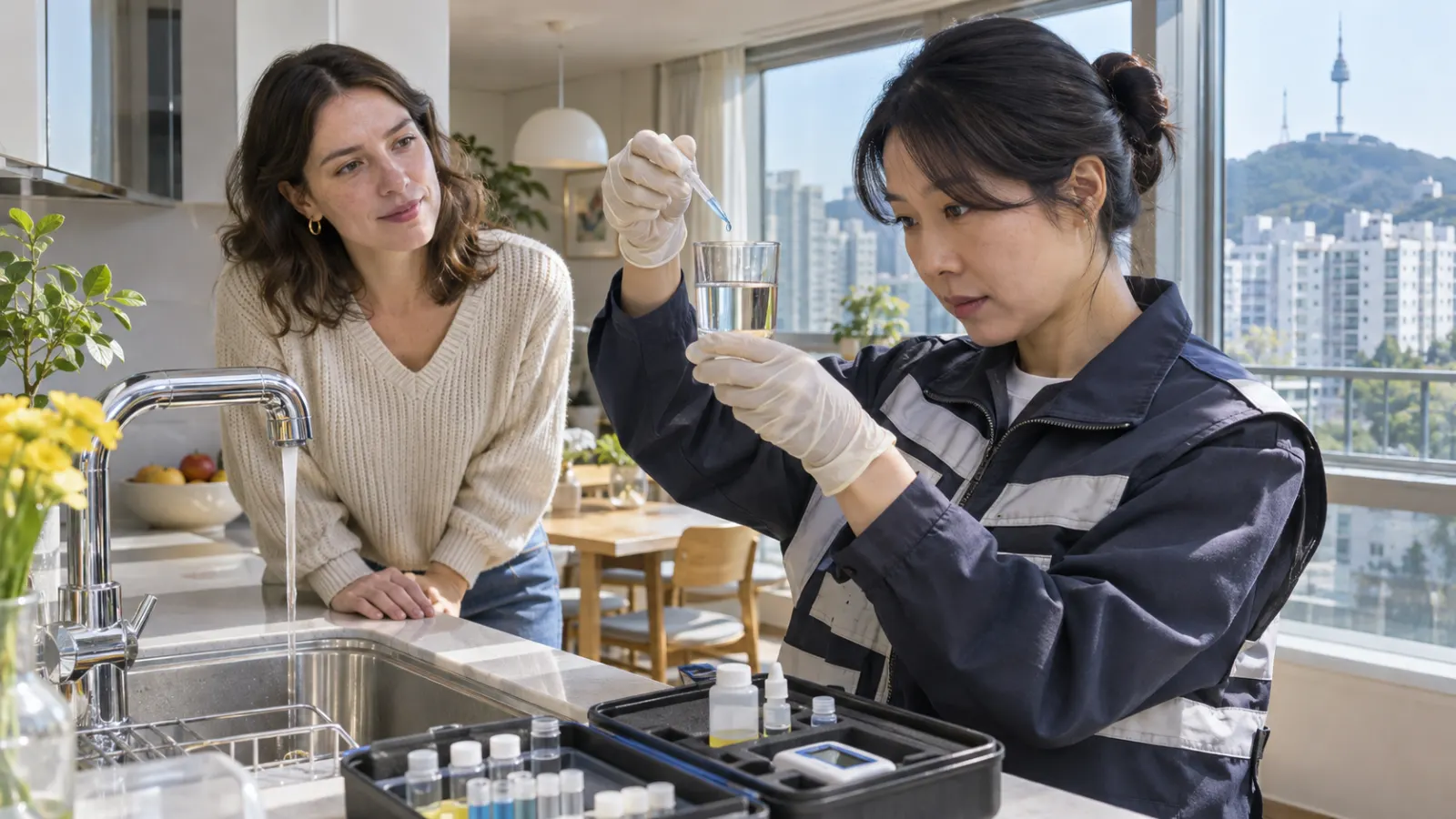
What Happens During the Inspection?
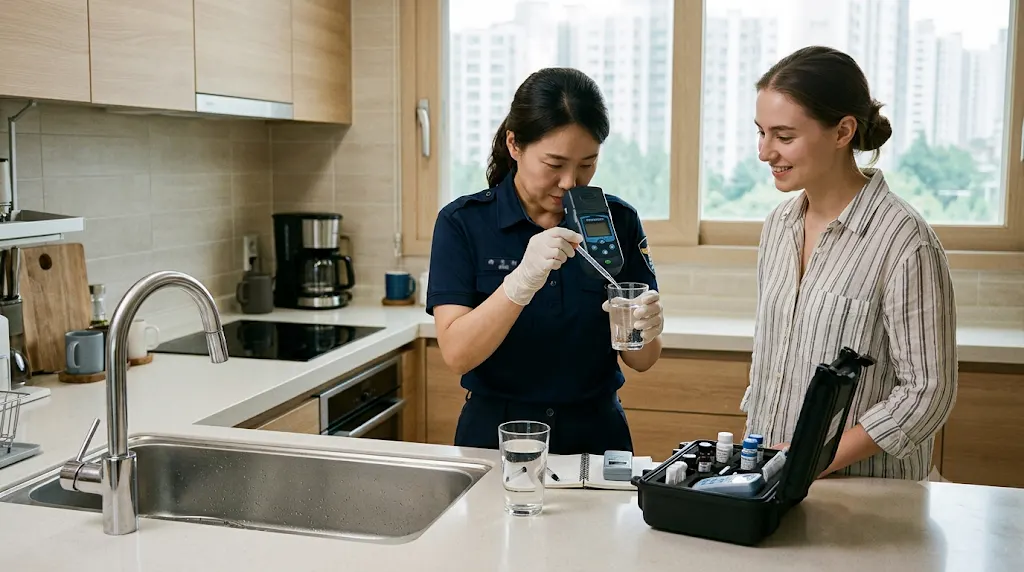
The water quality inspection service involves testing water at the residence.
The city's 2026 announcement explains that the on-site measurements can take approximately five minutes.
The visiting personnel check the relevant parameters and explain the results.
If the measurements suggest a problem, the service may provide information about additional inspection or corrective action.
The total appointment may take longer than the measurement itself because of access arrangements and consultation.
What Should You Prepare?
Before the visit:
Confirm your appointment and address.
Make sure the relevant faucet is accessible.
Explain any specific concerns about the water.
Tell the inspector when the problem occurs, if it is intermittent.
Ask for an explanation of the results and any recommended follow-up.
If you live in a rental apartment, you can also inform your landlord or building management office about the inspection.
How to Check Seoul's Water Quality Online
Seoul also publishes water quality monitoring information.
The city operates an Arisu Map service at:
https://arisu.seoul.go.kr/arisumap/
The system provides monitoring information from locations across Seoul.
According to the city's February 2025 announcement, Seoul monitored water quality at 521 locations through its real-time information system.
However, the number of monitoring points can change as the system develops.
A reading from a nearby monitoring location does not replace a sample taken from your own faucet.
Use the map for general supply information and the household testing service for concerns about water in your residence.
What If the Water Looks Brown or Smells Unusual?
Do not assume that discoloration or odor has one specific cause.
Possible explanations can involve plumbing conditions, maintenance activity, or other factors, but identifying the cause requires appropriate investigation.
If the water appears abnormal:
Avoid drinking it until the concern has been assessed.
Check whether other faucets show the same problem.
Ask building management whether maintenance is underway.
Contact the water utility.
Request testing or further instructions.
Do not assume that boiling the water will resolve every possible contamination problem.
Boiling can address some microbiological risks when performed correctly, but it does not reliably remove many chemical contaminants.
Follow instructions from the water authority if a specific water quality incident has been identified.
Does This Apply Outside Seoul?
The Arisu service is operated by Seoul Metropolitan Government.
Other Korean municipalities have their own water supply authorities and customer service arrangements.
If you live in Busan, Incheon, Daegu, or another city, contact the local waterworks authority rather than assuming Seoul's testing appointment system applies.
The same practical distinction remains important: general municipal water quality information and the condition of water at a specific building are not necessarily identical.
Common Mistakes to Avoid
Assuming Bottled Water Is Always Necessary
Seoul operates a treated municipal drinking water supply with extensive monitoring.
Whether you choose bottled or tap water is a separate personal decision.
Assuming Every Old Apartment Has Unsafe Water
Building age alone is not a water quality test result.
Assuming Clear Water Is Always Safe
Appearance cannot establish whether water meets every drinking water standard.
Treating a Municipal Monitoring Reading as a Household Test
A nearby monitoring station does not measure your individual faucet.
Assuming a Five-Parameter Test Detects Everything
The free on-site screening provides specific measurements, not a comprehensive analysis of every possible substance.
A Practical Checklist for New Seoul Residents
If you are uncertain about drinking tap water in your new home:
Check Seoul's official Arisu information.
Ask your landlord or building manager about any known plumbing issues.
Observe whether there is persistent discoloration or unusual odor.
Request the free Arisu Quality Verification Service if you have concerns.
Review the results with the inspector.
Follow up with the appropriate authority if additional testing is recommended.
The municipal water quality program and free testing arrangements were checked against Seoul government information on November 13, 2026.
Quick Summary
Seoul's municipal tap water, Arisu, is treated and monitored under drinking water quality standards.
The condition of internal building plumbing can also matter, so municipal results do not establish every household's water quality.
Seoul residents can request a free household water quality test through the Arisu service, including by calling 02-120.
The standard on-site test checks five parameters; additional investigation may be necessary if a concern remains.