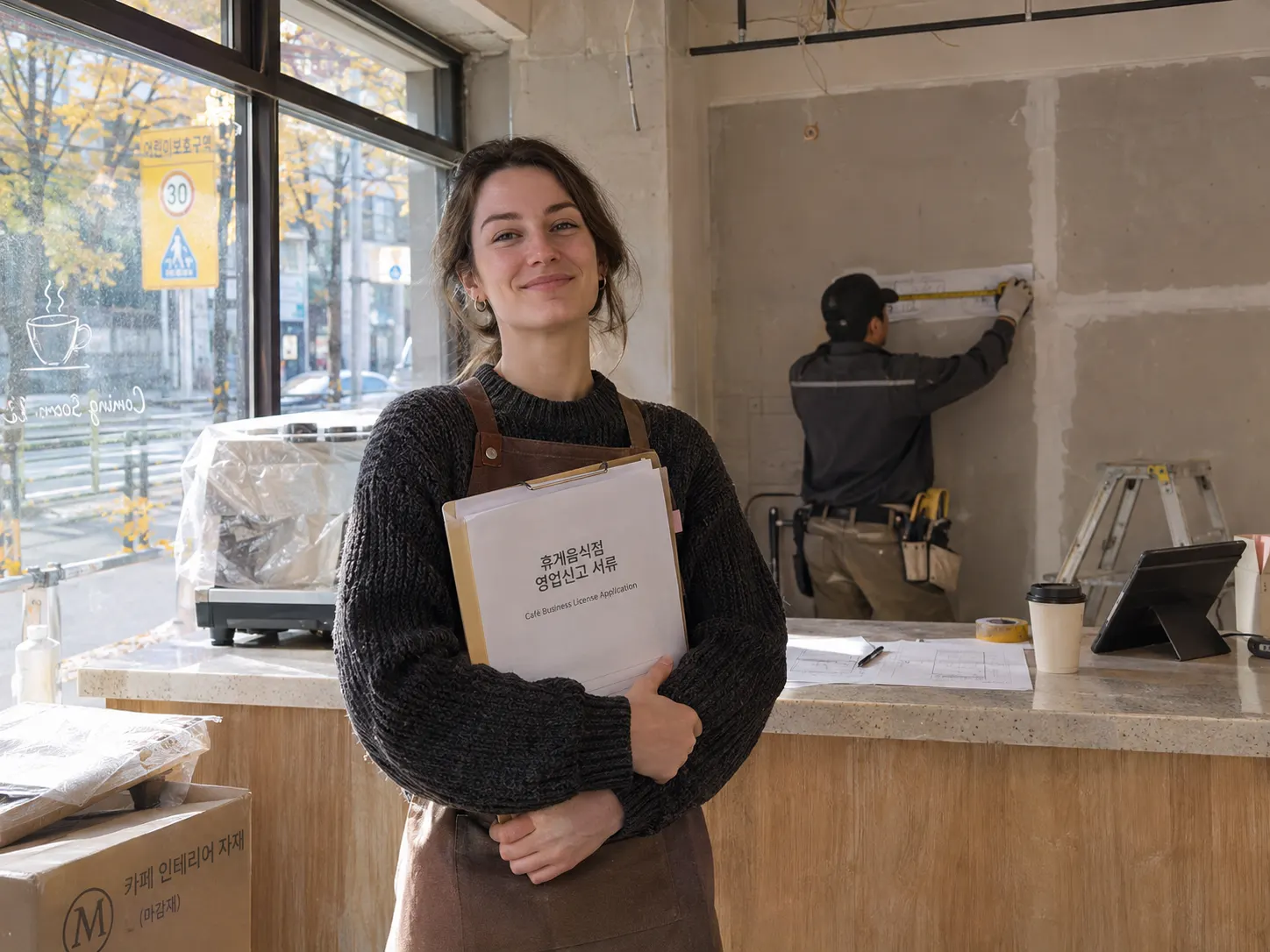
Opening a cafe or small restaurant is one of the most common first businesses people imagine in Korea, and one of the most paperwork-heavy to actually start. To open a restaurant or cafe in Korea as a foreigner, you need a visa that allows business activity, a lease for a unit zoned for food service, a hygiene training certificate, a health certificate, a business report at your district office, and a business registration. The order matters, and mistakes in the first two steps can cost months.
Here is the sequence, the costs that surprise newcomers, and the points foreign owners most often miss. Rules and fees change, so confirm details with your district office before you sign anything.
Check Your Visa Before You Look at Spaces
Running your own food business is a commercial activity, and not every visa allows it. As covered in the freelancer and startup guides:
- F-series visas (F-2, F-5, F-6) are generally the most straightforward, since work rights are not tied to one employer.
- D-8 corporate investment is the usual route for founders structuring the business as a company.
- E-series work visas are tied to a sponsoring employer and generally do not allow you to run a separate business.
- Student and job-seeker visas are generally restricted.
If you are not sure, ask immigration or a labor consultant first. A district office may accept your paperwork even when your visa does not permit the activity, which can create problems at your next renewal.
Step 1: Find a Space That Is Allowed to Serve Food
Not every commercial unit can legally be used for a restaurant or cafe. Ask the agent for the building register (건축물대장) and check the permitted use. Also check whether the unit has any unauthorized alterations, since violations can block your license.
Korean commercial leases usually involve three costs:
- Deposit (보증금) and monthly rent, similar to residential wolse.
- Key money (권리금), a payment to the previous tenant for the location, the customer base, and the fit-out. It is not a deposit and is not returned by the landlord.
- Fit-out costs, which are often the largest expense for a cafe or restaurant.
Korea has a commercial lease protection law that gives tenants some rights, including limits on rent increases and the ability to seek recovery of key money from a new tenant under certain conditions. Have the contract reviewed by someone who reads Korean before signing.
Step 2: Complete Hygiene Training
Before you can file your business report, the owner generally has to complete a hygiene training course (위생교육) through the relevant food service association. It is usually a day-long course, with online options, and it is taught in Korean. Ask the association whether translation support is available, or bring an interpreter.
Step 3: Get a Health Certificate
Owners and staff who handle food generally need a health certificate (보건증), issued after a short exam at a public health center. It is inexpensive, valid for about a year, and has to be renewed. You will need it for yourself and each employee, so ask when you hire, as covered in the hiring guide.
Step 4: File the Business Report
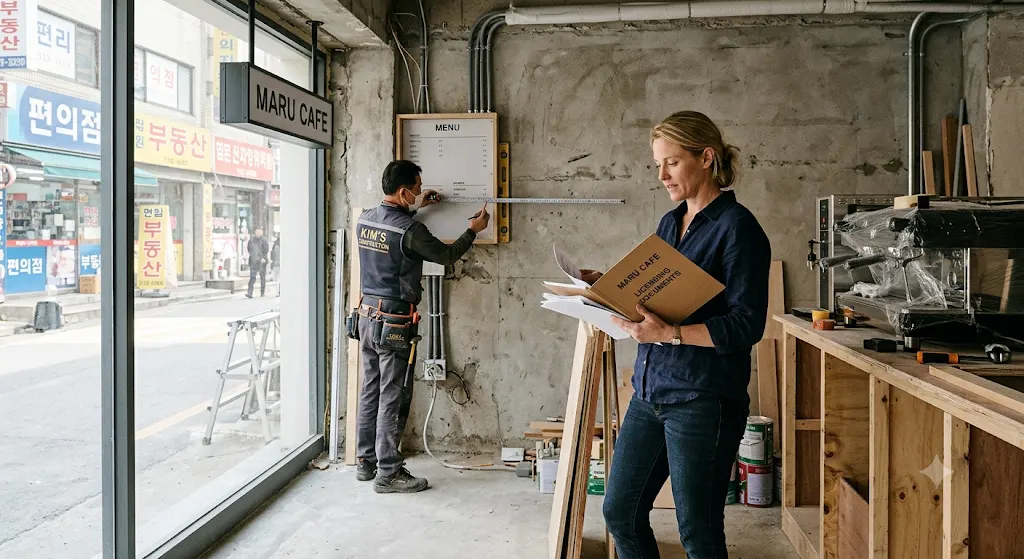
You file a food business report (영업신고) with the hygiene or food department of your district office. The license type matters:
- Rest-type establishments (휴게음식점) cover cafes and places that mainly sell light food and drinks.
- General restaurants (일반음식점) cover places that serve meals and alcohol.
- Bakeries (제과점) have their own category.
Choose the category that matches your menu, since selling something your license does not cover can lead to fines. Typical documents include your ID or ARC, the lease, your training and health certificates, and a floor plan. Depending on the size and location of the premises, you may also need a fire safety completion certificate or other inspections.
Step 5: Register the Business and Prepare to Open
With your report certificate in hand, register the business with the tax office through Hometax, as covered in the business registration guide. Then handle the practical items:
1. Insurance. Mandatory liability or fire insurance applies to many food businesses depending on size and floor.
2. POS and card terminal, and a Korean bank account for settlement.
3. Delivery apps, if you plan to use them, which charge commissions as covered in the delivery guide.
4. Signage and menu labeling, with Korean text.
Typical Timeline and Costs
Paperwork can take a few weeks if everything is in order, but the lease search, negotiation, and fit-out usually take longer. Costs vary enormously by area and size, so get written quotes for the deposit, key money, interior work, and equipment before you commit.
Common Mistakes
- Signing the lease before checking the permitted use. A unit that cannot be licensed is an expensive problem.
- Treating key money as refundable. Budget for it as a sunk cost.
- Choosing the wrong license category. Alcohol and meal service change which license you need.
- Skipping the hygiene training or health certificate. The report cannot be filed without them.
- Assuming your visa allows it. Check before you spend money.
Quick Summary
- To open a cafe or restaurant in Korea, you generally need a visa that allows business activity, a unit zoned for food service, hygiene training, a health certificate, a business report, and a business registration.
- F-series and D-8 visas are the most common routes, while E-series work visas usually do not allow running your own business.
- Budget for the deposit, non-refundable key money, and fit-out costs, and have the lease reviewed before you sign.
- Choose the right license category for your menu, and confirm requirements with your district office, since fees and rules change.