How Korean Workplace Remote Work and Flexible Hours Policies Work
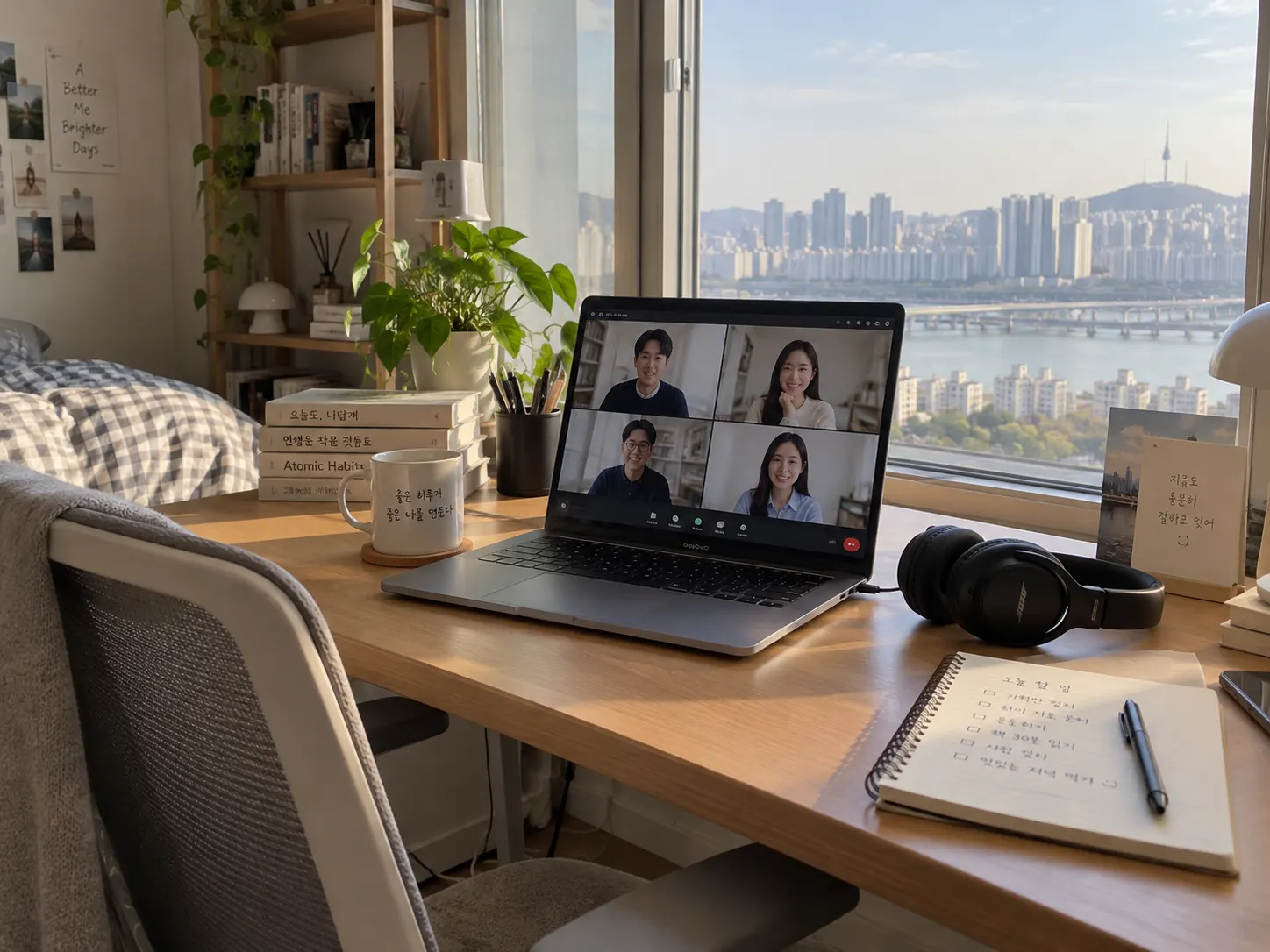
If your Korean employer has mentioned "재택근무" (working from home) or flexible hours, you may be unsure whether it is a right, a perk, or something you have to request. Remote work and flexible hours in Korea are mostly company policy rather than a legal entitlement, and practice varies widely by industry and company size. Knowing how to read your company's actual norms helps you use the option without hurting how you are seen.
The Quick Answer: What Is Actually Guaranteed
Korean law does not give employees a general right to work from home. Standard hours are set at 40 per week, as covered in the overtime guide, and flexible arrangements such as flextime, selective working hours, or remote work depend on your contract, your company's work rules, and sometimes an agreement with employees. Some firms offer them broadly, others only to certain teams, and some do not offer them at all.
Common Arrangements
- Remote or hybrid work: a set number of days at home, often set by team or manager approval.
- Flextime (시차출퇴근제): choosing your start and end time within a window, such as arriving between 8 and 10 am.
- Selective working hours: hours averaged over a period, subject to legal limits and company rules.
- Compressed or reduced hours: available at some companies for specific cases, such as childcare.
Technology, startups, and foreign-owned companies tend to be more flexible. Traditional conglomerates and manufacturing firms often are less so.
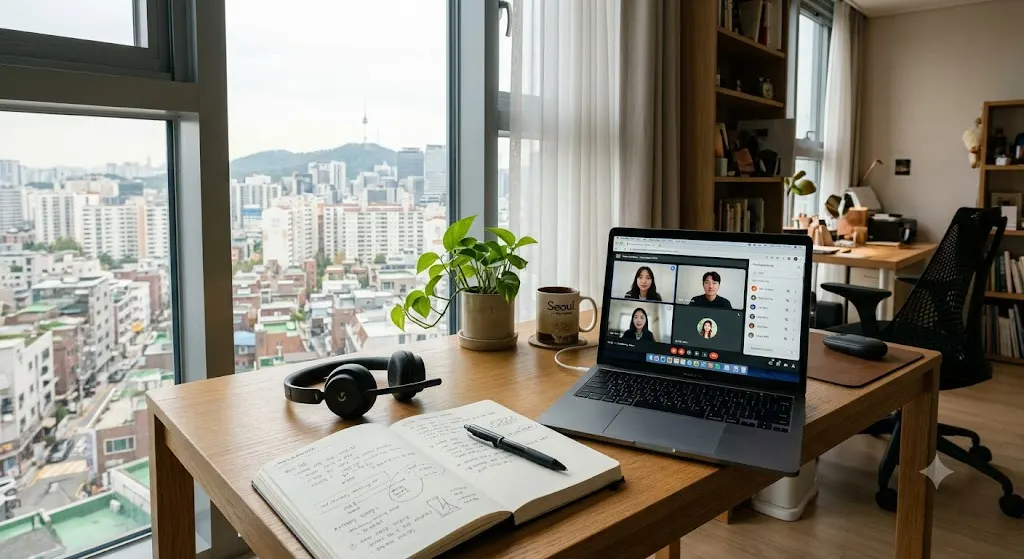
Reading the Real Norm
Written policy and daily practice can differ, as covered in the dress code and meeting culture guides. Before you rely on a policy:
- Ask HR or your manager what is officially allowed
- Observe how colleagues at your level actually use it
- Check whether approval is needed in advance
- Ask how performance and attendance are tracked remotely
Expectations When Working Remotely
Messenger responsiveness matters more when you are out of sight, as covered in the workplace messaging guide. Reply promptly during work hours, keep your calendar updated, and share progress proactively. Joining video calls with your camera on is common at some firms.
Foreign Employees: Visa and Location Notes
Your visa is generally tied to your employer and work location. Working from another country for an extended period can raise tax and immigration questions, so check with HR before traveling and working abroad. Within Korea, confirm that working from home matches your contract.
Requesting Flexibility
If you want an arrangement your company does not formally offer:
- Make a specific proposal, such as one remote day per week for a trial period
- Link it to work outcomes, not just personal convenience
- Offer a review date to adjust if it is not working
- Raise it with your manager respectfully, rather than informally via colleagues
Common Mistakes
- Assuming remote work is a legal right. Check policy.
- Working from home without approval. It can look like absence.
- Being hard to reach remotely. Responsiveness shapes perception.
- Ignoring visa and tax limits when working abroad. Ask first.
Quick Summary
- Korean law does not guarantee remote work or flexible hours, so availability depends on your contract, company policy, and team practice.
- Flextime, hybrid work, and selective hours are common at tech and international firms and less common at traditional companies.
- Confirm the official policy with HR, observe real practice, and stay responsive when working remotely.
- Foreign employees should check visa and tax implications before working from outside Korea.