How to Use Korean Crypto Exchanges as a Foreign Resident
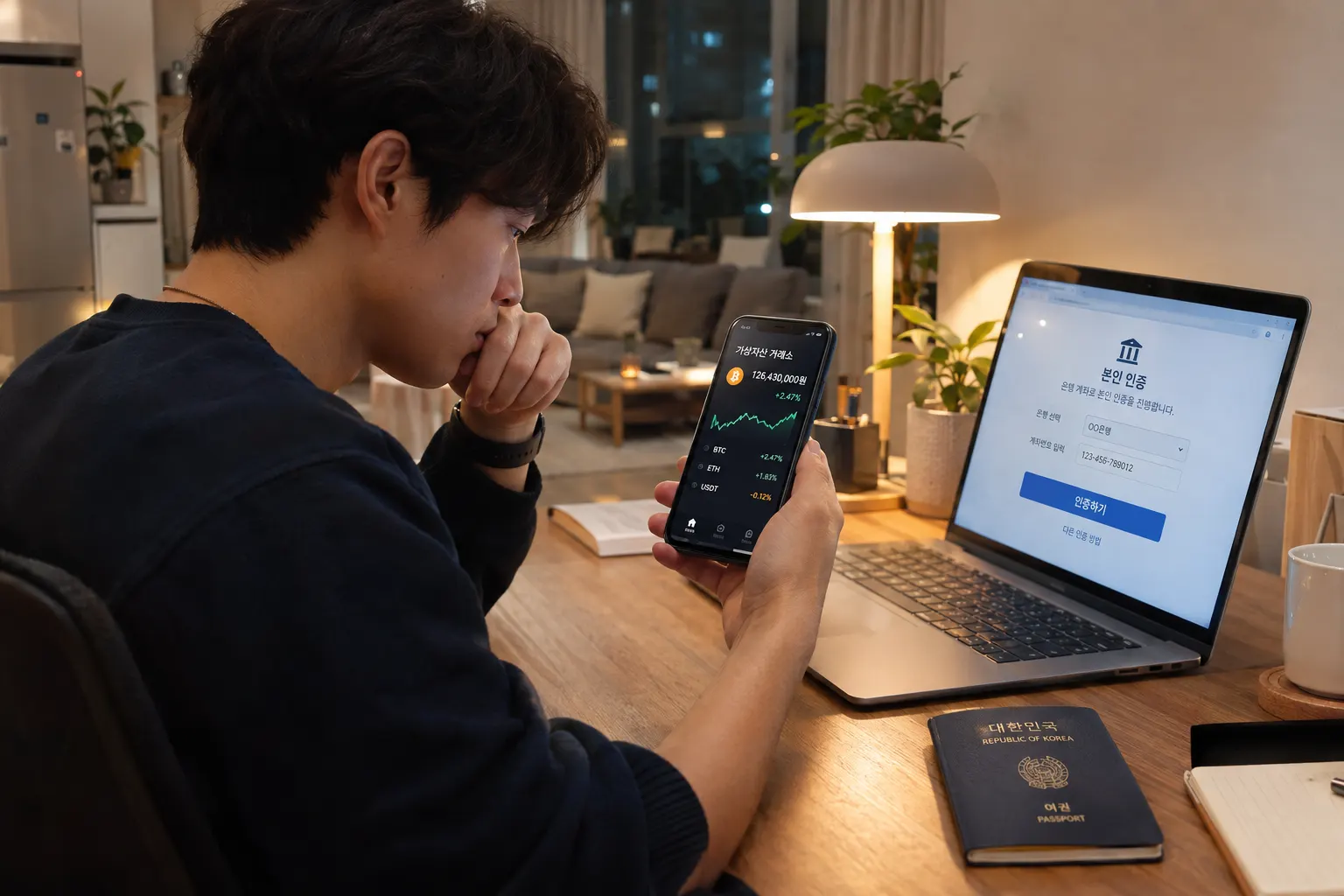
If you hold crypto and moved to Korea, you've probably wondered whether you can simply open an account on a Korean exchange like you would back home. You can't always, and the reason is the real-name rule: crypto exchanges in Korea must link each user to a verified bank account in the same name. For foreign residents this makes the process depend on your visa, your ARC, and which bank the exchange partners with.
This is general information about how the system works, not investment advice.
The Quick Answer: How Access Works
Korean exchanges generally require:
- A real-name verified bank account at the exchange's partner bank
- A Korean mobile number registered in your own name
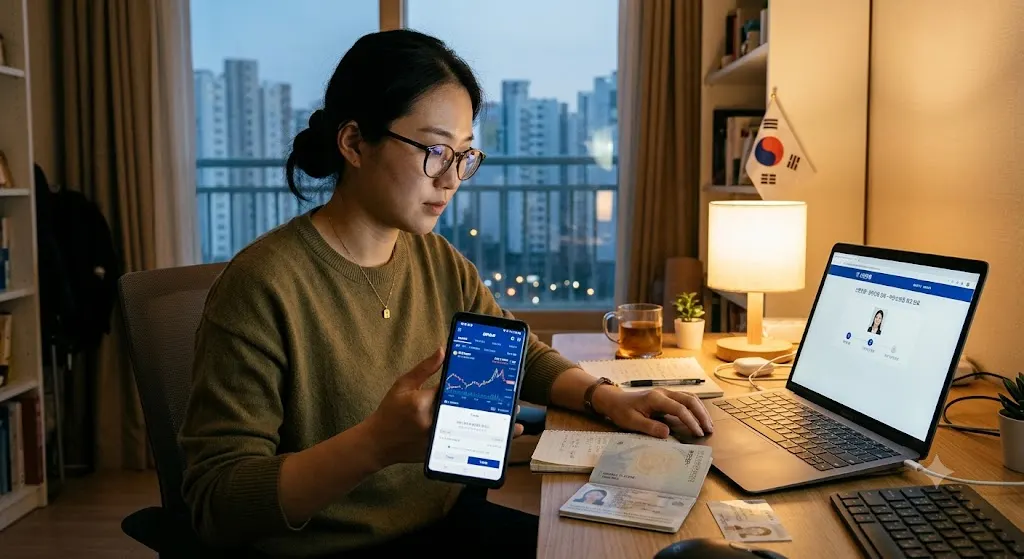
- Identity verification, usually with ARC or passport details
Because each exchange partners with a specific bank, you may need to open an account at that bank before you can deposit won. Policies for foreign residents differ from exchange to exchange and have changed over the years, so check the current requirements on the exchange's own support pages before assuming you qualify.
Why the Real-Name Rule Matters
The rule exists to prevent anonymous transfers and money laundering. In practice it means you can't use someone else's account or a foreign card, and your exchange activity is tied to your identity and bank account. The foundational steps covered in the bank account guide, an ARC, a Korean phone number, and a local account, come first.
Fees and Practical Costs
- Trading fees on major Korean exchanges are often a fraction of a percent per trade, though they vary by exchange and market.
- Withdrawal fees for moving coins out depend on the coin and network.
- Bank transfer costs for putting won in and taking it out can add up if you move small amounts often.
- Price gaps can exist between Korean and overseas markets, sometimes called the "kimchi premium," so the same coin may not be priced equally in Korea and abroad.
Compare the total cost of moving funds, not only the headline trading fee, as covered in the guide on sending money internationally.
The Transfer Rules to Know
Korea applies the "travel rule" to crypto transfers: for transfers above a set threshold, around 1 million KRW, exchanges must collect information about the sender and the recipient, and transfers to some private wallets can be restricted or require extra verification. New accounts may also face temporary withdrawal limits. Moving coins to or from an overseas exchange can also trigger extra checks, and large cross-border movements may bring foreign exchange reporting requirements.
Taxes and Reporting
Crypto taxation in Korea has been scheduled and then postponed several times, so the status of any tax on gains has changed over time. As of 2026, confirm the current rule with the National Tax Service or a tax accountant rather than relying on older articles. Separately, your home country may tax crypto gains or require you to report holdings abroad, so cross-border obligations matter if you stay a tax resident there.
Protection and Risks
Korea's law on protecting virtual asset users requires exchanges to keep customer assets separate and to hold a share of them offline, along with other safeguards. This is not the same as bank deposit insurance, and crypto prices can swing sharply. Common scams include fake exchange apps, impersonators offering "guaranteed returns," and phishing messages that mimic exchange notices. Use only the official app, turn on two-factor authentication, and never share verification codes.
Common Mistakes
- Assuming a foreign account works. Real-name and bank requirements apply.
- Moving large amounts without checking transfer rules. Delays and extra checks are common.
- Ignoring tax and reporting questions. Rules differ in Korea and in your home country.
- Chasing price gaps without calculating fees and limits. Costs and delays can erase them.
- Trusting unsolicited investment tips. Scams target newcomers.
Quick Summary
- Korean exchanges require a real-name bank account and verified identity, and foreign resident access depends on the exchange, your visa, and the partner bank.
- Total cost includes trading, withdrawal, and bank transfer fees, and prices in Korea can differ from overseas markets.
- Transfers above roughly 1 million KRW fall under the travel rule, and new accounts may face withdrawal limits.
- Confirm current tax rules in Korea and your home country, and use only official apps with two-factor authentication.