Why Korean Phone Verification Is Difficult for Foreigners
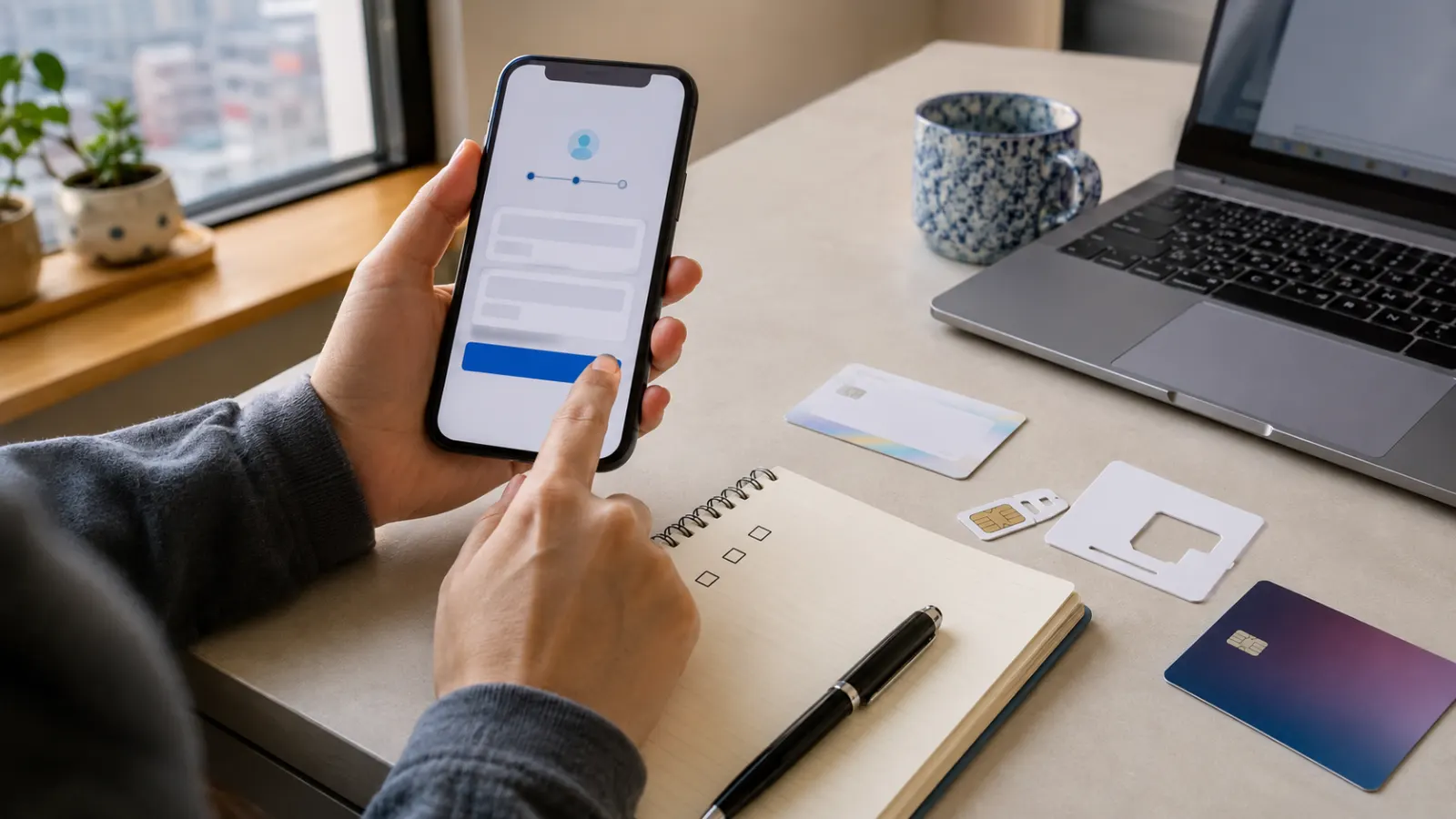
A foreigner in Korea can buy coffee with a card, use fast subway Wi-Fi, and navigate the city with a smartphone. Then, suddenly, a simple online task fails: signing up for a delivery app, opening mobile banking, booking a local service, or verifying an account. The screen asks for phone verification, but the code never works.
This is one of the most frustrating parts of digital life in Korea. The issue is not only the phone number itself. Korean phone verification is connected to legal name records, residence status, telecom registration, payment systems, and identity databases. If one part does not match, the whole process can fail.
Why phone verification matters so much in Korea
In Korea, a mobile phone number is often treated as a form of identity confirmation. It is not just a contact number. Many services use your phone number to check whether you are a real person and whether your information matches official records.
This can affect:
- Mobile banking
- Online shopping
- Food delivery apps
- Ticketing platforms
- Hospital or clinic reservations
- Government services
- Payment apps
- Membership programs
- Used goods platforms
- Age-restricted services
- Password recovery
For Korean citizens, the system usually feels normal because their phone number, legal name, and resident registration information are already connected. For foreigners, the system can be less smooth because names, documents, phone plans, and residence status do not always align neatly.
The common misunderstanding is thinking, “I have a Korean phone number, so I can verify myself.” A Korean number helps, but it does not always mean you can complete Korean identity verification.
A Korean SIM is not always enough
Foreigners often buy a SIM or eSIM right after arriving in Korea. It may work perfectly for maps, messaging, translation, video calls, and internet browsing. But that does not automatically mean it works for identity verification.
Some travel eSIMs are data-only. Some prepaid SIMs provide calls and texts but may have limited verification support. Some short-term plans are designed for convenience, not full integration with Korean apps and banks. Even when a number can receive SMS, the service you are using may require a number registered under your legal identity.
This is why two foreigners can have very different experiences. One person’s prepaid number may work for basic app signups. Another person’s number may fail on banking or payment apps. A long-term resident with a verified postpaid plan may have fewer problems, but can still be blocked by name mismatch.
Before choosing a phone plan, ask a more specific question: “Can this number be used for Korean identity verification under my legal name?” That is different from asking whether the SIM has data, calls, or texts.
Name matching is the biggest hidden problem
Many verification failures happen because of name formatting. Korean digital systems can be strict about exact spelling and order. Your passport, residence card, telecom account, bank account, and app signup may need to match more closely than you expect.
Problems can happen when your name is entered differently across systems. For example:
- Passport: MARIA JANE SMITH
- Residence card: SMITH MARIA JANE
- Telecom account: MARIA SMITH
- Bank account: SMITH MARIA J
- App signup: Maria Jane Smith
A human can understand that these are the same person. A verification system may not.
Middle names, hyphens, spaces, long names, capital letters, and surname order can all cause problems. This is especially common for foreigners because Korean forms are often designed around shorter Korean names.
When you open a phone plan, bank account, or local app account, check how your name is entered. Do not treat spelling as a small detail. In Korea, a small difference can block banking, shopping, delivery, ticketing, or account recovery later.
The residence card connection
Long-term foreign residents in Korea usually rely on their foreigner residence card for local identity processes. This card is often still casually called an ARC, even though official terminology may vary depending on the situation.
For many online services, the system may ask for your name, residence number, phone carrier, and phone number. These details need to match the information connected to your phone subscription and residence record.
This creates a timing problem for new arrivals. You may need a phone number soon after landing, but stronger verification may become easier only after your residence card is issued. During the waiting period, you may be physically living in Korea but not yet fully recognized by many digital systems.
Students, workers, and long-term residents should expect this early friction. It is not unusual for the first few weeks to feel awkward because banking, phone setup, and residence registration are all connected.
Why carrier selection matters
When a Korean verification screen asks for your mobile carrier, it may list major carriers and budget carriers separately. If you use an MVNO, often called an altteul phone plan in Korea, you may need to select the correct budget carrier option rather than the major network behind it.
This can be confusing because your SIM may use a major network, but your actual service provider is a budget carrier. Choosing the wrong carrier category can cause verification failure even when your name and phone number are correct.
Before trying multiple times, check your exact telecom provider and how it appears on Korean verification menus. Repeated failed attempts can sometimes lock or delay verification, depending on the service.
Tourists face a different problem
Tourists usually do not need full Korean phone verification for a short trip. The problem is that some local services assume users have it.
A tourist may be able to use maps, translation, messaging, global booking platforms, airport transfers, and offline card payments without much trouble. But certain Korean-only services may still be difficult. This can include some delivery apps, local reservations, ticketing services, membership discounts, or online shopping platforms.
The practical advice for tourists is not to solve the whole system. Use services that support foreign users, foreign cards, passport-based options, hotel assistance, or direct reservations. For a one-week trip, spending hours trying to pass domestic phone verification is often not worth it.
Long-term residents should set up the system carefully
If you are staying in Korea for months or years, phone verification becomes much more important. It affects daily life in ways that are easy to underestimate at first. A good setup usually means:
- A residence card or valid local identity record
- A Korean phone number registered under your legal name
- A consistent English name format across phone, bank, and immigration records
- A bank account connected to the same identity
- A phone plan that supports SMS, calls, and verification
- A stable number you do not change casually
Changing your phone number later can be annoying. Many Korean services use it for login, password reset, security alerts, payment confirmation, and customer support. Once you connect a number to several accounts, treat it like a digital address.
What to do when verification fails
When phone verification fails, do not immediately assume the app is broken. Work through the likely causes. Check whether:
- Your phone number can receive normal SMS
- Your plan supports identity verification
- You selected the correct carrier or MVNO option
- Your name matches your residence card
- Your name matches your telecom registration
- Your residence status is still valid
- Your bank account uses the same name format
- You entered your residence number correctly
- The service allows foreign users
- The app requires a Korean-only identity flow
If the issue continues, contact your telecom provider first. Ask how your name is registered and whether your number supports identity verification. Then check the bank or app if needed.
For important services, visiting a branch or customer center may be faster than guessing online.
A realistic way to think about Korean phone verification
Korea’s digital systems are convenient once everything is connected. Residents can move money, order food, book appointments, verify accounts, and recover passwords quickly. But getting into that system can be difficult for foreigners because it depends on exact identity matching.
For short-term visitors, the best approach is flexibility. Do not depend on local-only services unless you know they work for tourists. For long-term residents, the best approach is consistency. Keep your name, phone, bank, and residence records aligned from the beginning.
The phone number is not just a number in Korea. For foreigners, it can become the key that unlocks daily digital life—or the small mismatch that blocks it.
Quick Summary
- A Korean phone number does not always mean you can complete Korean identity verification.
- Name order, spelling, carrier selection, and residence card details can all affect verification.
- Tourist SIMs and data eSIMs may be useful for internet access but limited for local app verification.
- Long-term residents should keep phone, bank, and immigration records as consistent as possible.