Using ATMs in Korea With a Foreign Card: Fees, Limits, and Common Problems
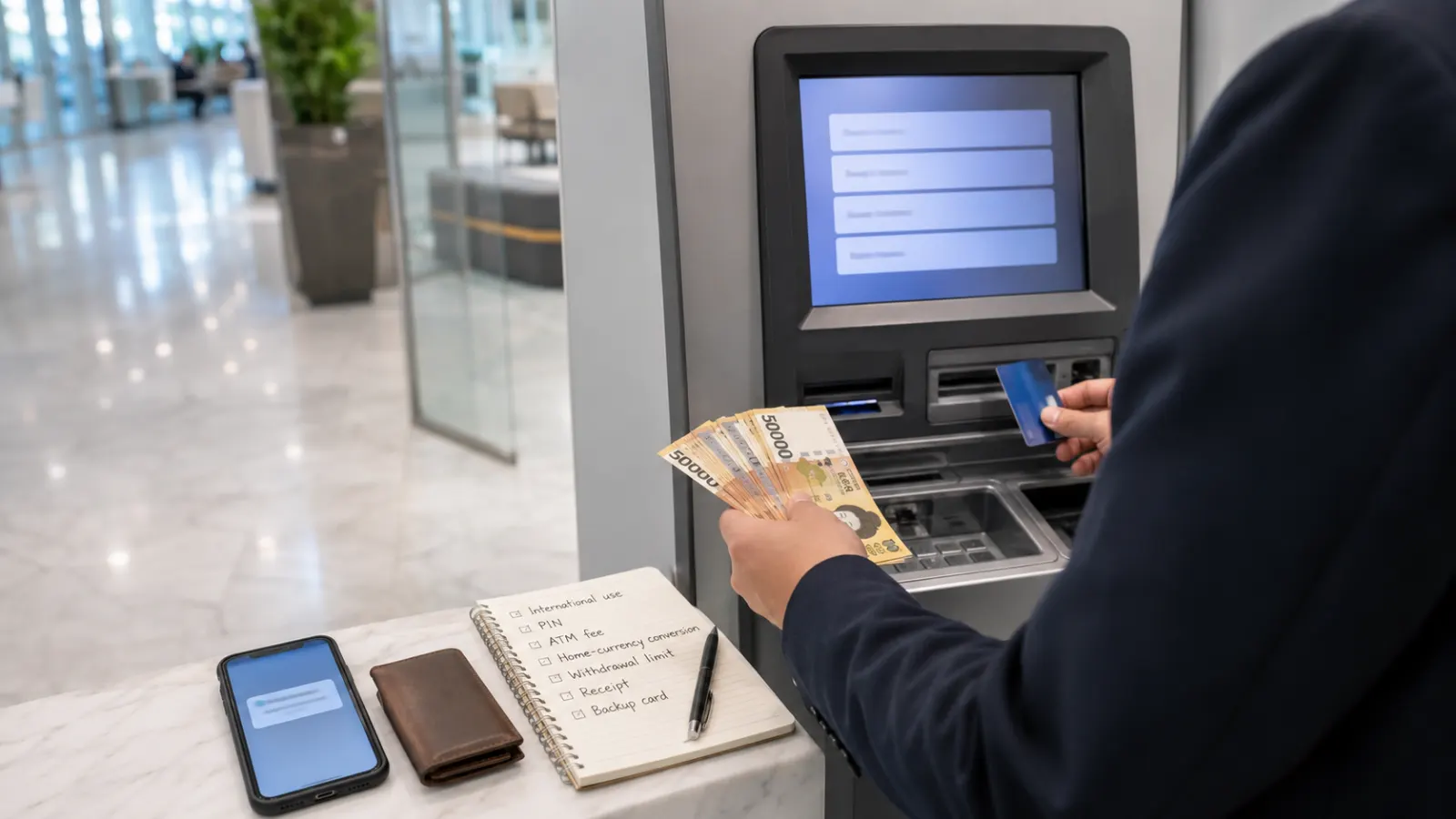
Korea is highly card-friendly, but international visitors and newly arrived residents may still need cash for traditional markets, rural transportation, small businesses, deposits, older ticket machines, or emergency backup.
Finding an ATM is easy. Finding one that accepts a particular foreign card, offers English instructions, remains accessible after bank hours, and clearly explains the total fee can be more difficult.
The safest approach is to use an ATM located at a recognized bank, airport, station, convenience store, or other well-managed location and to review every fee and exchange option before confirming the withdrawal.
Not every ATM accepts every foreign card
An ATM can display familiar international card symbols and still reject a transaction. Acceptance may depend on:
- Card network
- Issuing bank
- Card type
- Security settings
- ATM operator
- Withdrawal amount
- Daily limit
- Time of day
- Temporary network problem
- Overseas-use setting
A foreign debit card may work at one Korean bank’s ATM and fail at another. Do not interpret one failed attempt as proof that the card cannot be used anywhere in Korea. Try another recognized ATM after checking that the card remains active.
Look for global ATM support
Some machines are specifically marked for international or global card transactions. The English-language menu may appear after selecting a foreign-card option or inserting the card. Possible menu labels include:
- Foreign card
- Overseas card
- Global service
- Cash withdrawal
- International card
Avoid repeatedly pressing unfamiliar options.
A cash advance is not the same as withdrawing funds from a debit account. When using a credit card, the transaction may be treated as borrowing and can create additional interest or fees.
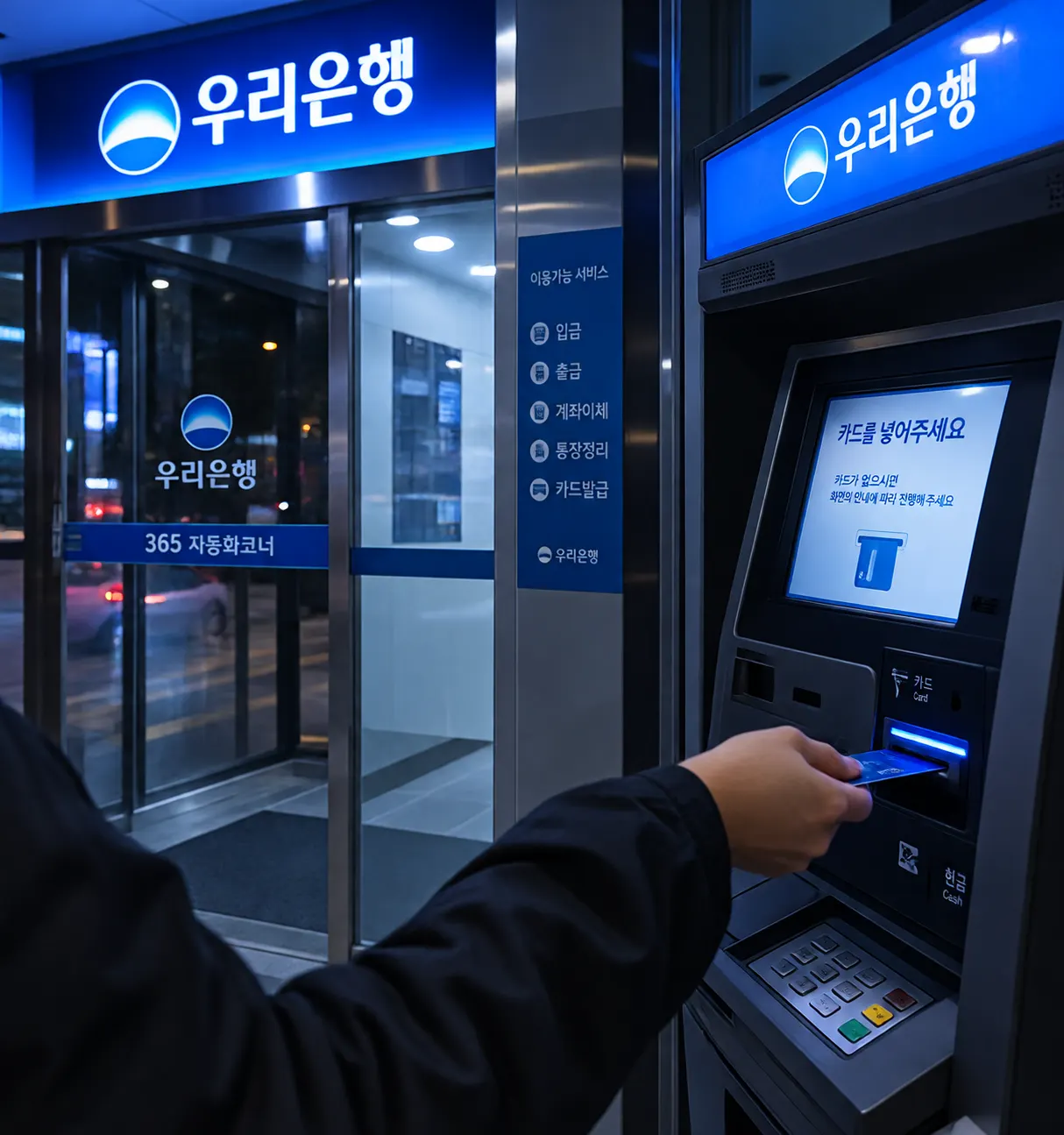
Bank ATMs
Bank branches are useful because assistance may be available during business hours. A branch lobby or ATM zone may contain several machines with different functions. Advantages can include:
- Clear bank ownership
- Staff support
- Better transaction records
- Security cameras
- Multiple machines
- International-card menu
However, the ATM area may close after the building’s operating hours. Some exterior or dedicated ATM zones remain open longer. Do not wait until late at night to test the only card you have.
Convenience-store ATMs
Convenience stores often have ATMs with long operating hours. They can be practical for tourists, but acceptance and fees vary by machine operator. Check the screen for:
- ATM operator fee
- Amount in Korean won
- Currency conversion option
- Card-network fee
- Cancellation option
- Receipt availability
The store employee may not operate or control the machine. If the transaction fails or the machine retains a card, use the ATM operator’s contact information rather than expecting the cashier to fix the problem.
Fees can come from several sources
A withdrawal can include:
- Korean ATM operator fee
- Foreign card issuer fee
- International network fee
- Currency conversion cost
- Cash-advance fee when using credit
- Interest when treated as borrowing
The ATM may show only its own fee. Your home bank may add another charge later. Before traveling, ask your card issuer about international cash-withdrawal fees and daily limits.
A larger single withdrawal may reduce repeated ATM fees, but carrying too much cash creates another risk.
Dynamic currency conversion
An ATM may offer to charge the withdrawal in Korean won or convert it into your home currency.
A home-currency option may look convenient because the final amount appears familiar. However, the conversion rate and markup may differ from the rate applied by your card network or bank.
Read the screen carefully. Do not choose an option simply because it says guaranteed, fixed, or convenient. When uncertain, compare the displayed exchange information with your card issuer’s usual foreign-currency treatment before traveling.
Withdrawal limits
Limits can be imposed by both the Korean ATM and the foreign card issuer. A machine may limit:
- Amount per transaction
- Number of transactions
- Daily total
- Available banknote denominations
- Foreign-card withdrawals
Your own bank may have a lower daily limit or block unusually large transactions. Requesting the maximum amount repeatedly can trigger security controls. Plan enough cash for the day, not the entire trip, unless a specific large payment genuinely requires it.
Informing the card issuer
Some banks no longer require travel notices, while others may still use location-based fraud controls. Before departure, check:
- Whether Korea withdrawals are enabled
- International ATM limit
- Card network
- Emergency number
- Replacement procedure
- App approval requirements
- Text verification
- Registered phone number
A security message sent to an inactive home-country number can block access. Keep a second payment method separate from the main card.
PIN problems
A card used mainly for contactless purchases may still require a PIN for ATM withdrawal. Confirm the PIN before traveling. Do not assume the online banking password, card verification code, and ATM PIN are the same.
Repeated incorrect attempts can lock the card or cause the ATM to retain it. If you are uncertain, stop after the first failed attempt and contact the issuer through its official channel.
Card retained by the ATM
If the ATM does not return the card:
- Stay near the machine.
- Record the ATM location and number.
- Photograph the machine without exposing another customer’s information.
- Contact the ATM operator.
- Contact the card issuer.
- Lock or freeze the card if necessary.
- Keep the failed transaction record.
A card used at a bank branch during staffed hours may be easier to recover than one retained at an unattended machine late at night. Do not accept help from an unknown person asking for your PIN.
Cash not received but account charged
Occasionally, a transaction can appear to debit the account even though cash was not dispensed. Keep:
- ATM receipt
- Date and time
- ATM operator
- Location
- Requested amount
- Screen message
- Account transaction screenshot
Contact both the ATM operator and the card issuer. A pending transaction may later reverse automatically, but this cannot be assumed. Do not repeat the same large withdrawal several times before checking the account.
Currency and banknotes
Korean ATMs dispense Korean won. The available banknote denominations depend on the machine. Count the cash discreetly before leaving the area.
Do not display a large amount in a crowded public place. Store cash separately from passports and main cards where practical.
Using a Korean card after opening an account
Foreign residents who open a Korean bank account may receive a check card with ATM access. Ask the bank to explain:
- Withdrawal PIN
- Daily limit
- Transfer limit
- ATM fees
- Overseas use
- Cash card function
- App lock and unlock
- Replacement process
- English-language support
A card payment PIN and banking security method may not be identical. Test a small withdrawal while bank staff are available.
ATM safety
Use a machine in a visible, well-managed location. Before inserting the card:
- Check for unusual attachments
- Shield the PIN
- Refuse help from strangers
- Keep the receipt
- Take the card before cash
- Confirm the account later
- Leave if the area feels unsafe
Do not photograph a screen displaying full card or account information. Destroy receipts securely when they contain sensitive details.
When cash is necessary
Cash can still be useful for:
- Traditional markets
- Rural buses
- Small admission fees
- Older machines
- Shared group expenses
- Emergency taxi backup
- Certain local services
However, most travelers do not need to carry a very large amount. Use cards for ordinary purchases when accepted and maintain a modest cash reserve.
A practical arrival plan
Before flying:
- Enable international use.
- Confirm the PIN.
- Check fees and limits.
- Prepare a backup card.
- Save issuer contact details.
- Ensure phone verification works.
After arrival:
- Use a recognized ATM.
- Make a modest first withdrawal.
- Review the fee.
- Check the account.
- Keep emergency cash separate.
Quick Summary
- Foreign-card acceptance differs between Korean ATMs even when international symbols are displayed.
- Total cost may include ATM, issuer, network, conversion, and cash-advance fees.
- Review any home-currency conversion option before accepting it.
- Carry a backup payment method and save evidence when an ATM retains a card or fails to dispense cash.