Can You Bring a Power Bank on a Flight From Korea?
You are departing South Korea with a smartphone, laptop, and portable power bank. You may have heard that lithium batteries are restricted on flights, but does that mean you cannot bring a power bank at all?
Power banks are generally treated as spare lithium batteries and must not be packed in checked baggage. Incheon International Airport publishes capacity-based restrictions for batteries carried onto aircraft, while airlines may impose additional conditions on quantity, storage, and use.
Before flying, check your power bank's watt-hour rating and your airline's current requirements.
Why Are Power Banks Restricted?
Portable power banks normally contain lithium-ion batteries.
Lithium batteries can present fire and overheating risks if damaged, defective, short-circuited, or improperly handled.
Because of these risks, aviation security and dangerous-goods transport rules distinguish spare batteries from batteries installed inside electronic devices.
A power bank is not treated in exactly the same way as an ordinary smartphone.
The official Incheon Airport restricted-items guide lists power banks and spare batteries separately from general electronic equipment.
Can You Put a Power Bank in Checked Baggage?
No.
Incheon Airport identifies power banks as items that must not be placed in checked baggage.
Carry eligible power banks in the cabin, subject to the applicable capacity and quantity restrictions.
Before handing over your suitcase at check-in, check all compartments for spare batteries and portable chargers.
If your carry-on bag is unexpectedly checked at the boarding gate, remove the power bank and keep it with you according to airline instructions.
What Is the Maximum Power Bank Capacity?
The airport's official restricted-items FAQ describes the following capacity categories.
Battery capacity | General published guidance |
|---|---|
Up to 100 Wh | May be permitted, subject to airline quantity rules |
Over 100 Wh and up to 160 Wh | Airline approval required; maximum two under the published category |
Over 160 Wh | Not permitted |
The airport's main restricted-items page also publishes additional quantity limitations for power banks. Because these rules and airline-specific controls can be updated, passengers should confirm the current permitted number directly with their airline rather than relying on an older general allowance.
Do not assume that every power bank below 100 Wh can be carried in unlimited quantities.
What Does Wh Mean?
Wh stands for watt-hours.
It measures energy capacity.
Many portable batteries are advertised using milliampere-hours (mAh), but aviation restrictions commonly use watt-hours.
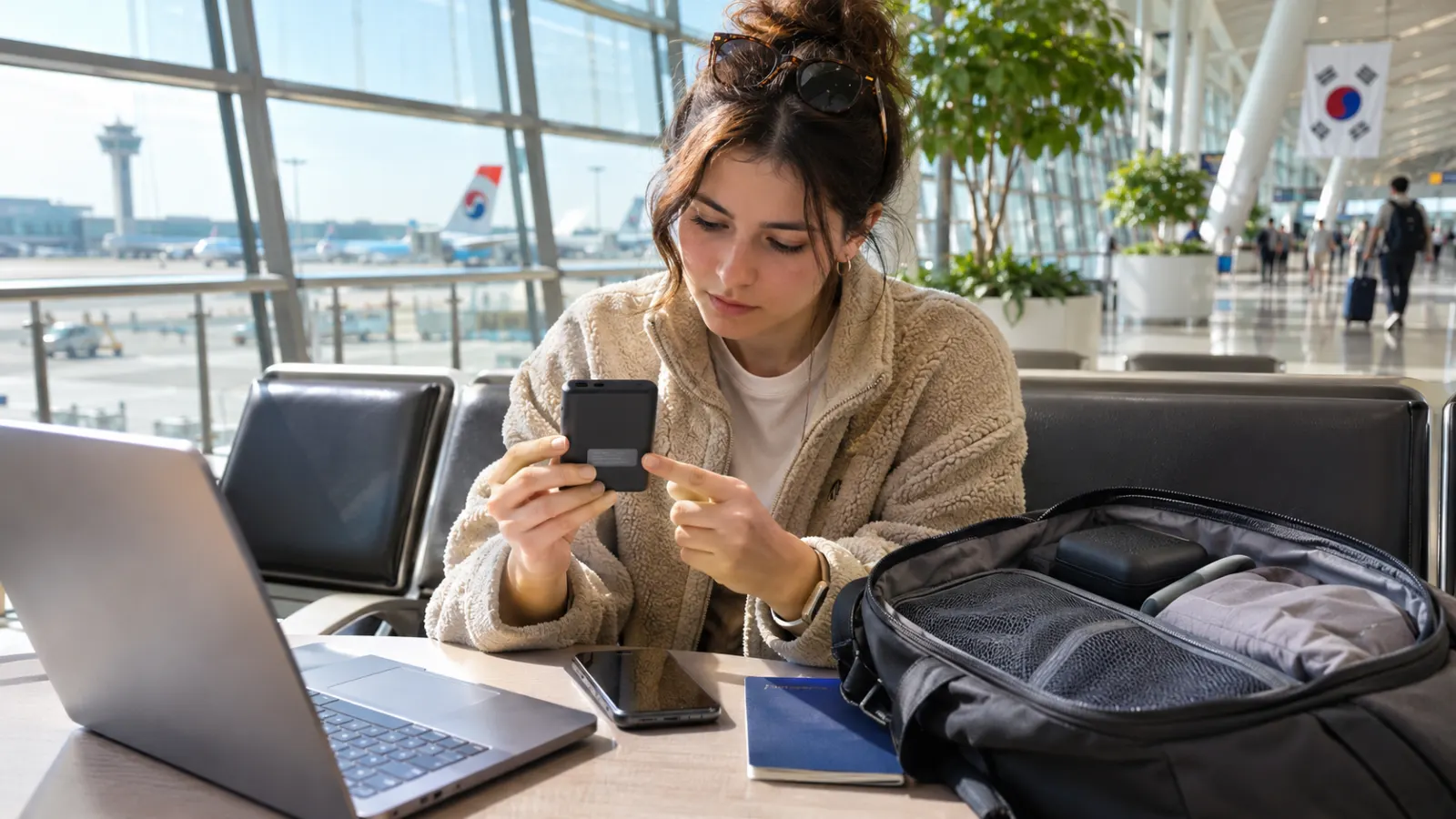
If the battery label provides voltage and milliampere-hours, the calculation is:
[ \text{Wh}=\frac{\text{mAh}\times\text{V}}{1000} ]
For example, if a battery is rated at 20,000 mAh and 3.7 V:
[ \frac{20,000\times3.7}{1000}=74\text{ Wh} ]
This is an illustrative calculation.
You must use the actual rated voltage of the battery, not an assumed value. Some devices use different cell configurations or ratings.
Can You Estimate Capacity From mAh Alone?
Not reliably.
A 20,000 mAh label does not, by itself, provide the complete information required to determine watt-hours.
Check the manufacturer's specifications or the rating printed on the device.
If the capacity is missing or unreadable, ask the airline whether it can accept the battery. Do not assume that security staff will approve an unmarked device.
How Many Power Banks Can You Bring?
This is where travelers need to be especially careful.
The permitted quantity can depend on the battery capacity, airline policy, and current aviation safety requirements.
Incheon Airport's main guidance publishes a maximum of two power banks per person under its stated capacity conditions, while its FAQ also describes airline-dependent rules for batteries up to 100 Wh.
Because the published explanations are not identical in scope, use the more restrictive applicable rule and confirm the permitted number with the operating airline before departure.
Do not assume that dividing several power banks between different pockets or bags changes the per-passenger allowance.
How Should You Pack a Power Bank?
Protect the device from physical damage and accidental short circuits.
Avoid carrying a battery with exposed electrical contacts or damaged casing.
Do not place loose metallic objects where they can contact exposed battery terminals.
Follow the airline's current instructions for individual protection, storage location, and whether the device may be used or charged during the flight.
These conditions can differ from the general security-screening rules.
What If the Battery Is Swollen or Damaged?
Do not bring a visibly swollen, leaking, overheating, or otherwise damaged battery onto an aircraft.
A damaged lithium battery may be hazardous even if its rated capacity is below the permitted limit.
Contact the manufacturer or an appropriate battery collection service for safe handling instructions.
Do not puncture, crush, or dismantle the battery.
Are Smartphone and Laptop Batteries Treated the Same Way?
Not exactly.
Incheon Airport's FAQ distinguishes lithium batteries installed in electronic devices from spare batteries.
It states that lithium batteries installed in electronic devices are subject to a maximum capacity condition of 160 Wh.
However, airlines can impose additional rules concerning devices, battery capacity, and whether equipment may be transported in checked baggage.
A laptop with an installed battery should not automatically be treated as equivalent to a separate portable power bank.
Check the rules for the specific device.
Can You Use a Power Bank During the Flight?
Do not assume that permission to carry a power bank also means permission to use it.
Carriage, storage, and in-flight charging are separate questions.
An airline may restrict connecting a power bank to another device or charging the power bank during flight.
Before departure, check the operating airline's latest cabin safety instructions.
Follow crew instructions even if you previously used the same power bank on another flight.
What If You Have a Connecting Flight?
Your journey may involve more than one airline or airport.
A power bank accepted at Incheon may be subject to different operational requirements on the next flight.
Check the rules of every operating airline, particularly when your itinerary involves separate tickets or an international connection.
If the airlines have different allowances, prepare for the more restrictive requirement.
Common Mistakes to Avoid
Packing the Power Bank in Checked Luggage
Power banks belong in eligible cabin baggage, not checked baggage.
Looking Only at mAh
Watt-hours determine the relevant capacity category.
Assuming All Batteries Under 100 Wh Are Unlimited
Airline quantity restrictions still apply.
Assuming Cabin Carriage Means In-Flight Use Is Allowed
An airline may prohibit charging or using power banks during flight.
Bringing a Damaged Battery
Physical condition matters as well as rated capacity.
Before You Leave for the Airport
Read the watt-hour rating printed on each power bank. Confirm the number and capacity of batteries you intend to carry, then check your operating airline's current instructions.
Keep eligible spare batteries out of checked baggage and protect them from damage and short circuits.
If your power bank has no readable rating or falls into the 100–160 Wh category, contact the airline before departure rather than waiting for security screening.
For general airport security questions, consult Incheon International Airport's restricted-items FAQ.
The airport's published capacity and baggage guidance was checked on November 18, 2026. Airline-specific quantity, storage, and use requirements must be confirmed separately.
Quick Summary
Power banks are treated as spare batteries and must not be packed in checked baggage.
Capacity limits are expressed in watt-hours, not simply milliampere-hours.
Batteries above 100 Wh require special attention, and those exceeding 160 Wh are not permitted under the airport's published rules.
Check your airline's current quantity, storage, and in-flight use restrictions before traveling.