Robot Cafes and Unstaffed Shops: Why Korea’s Small Businesses Are Automating
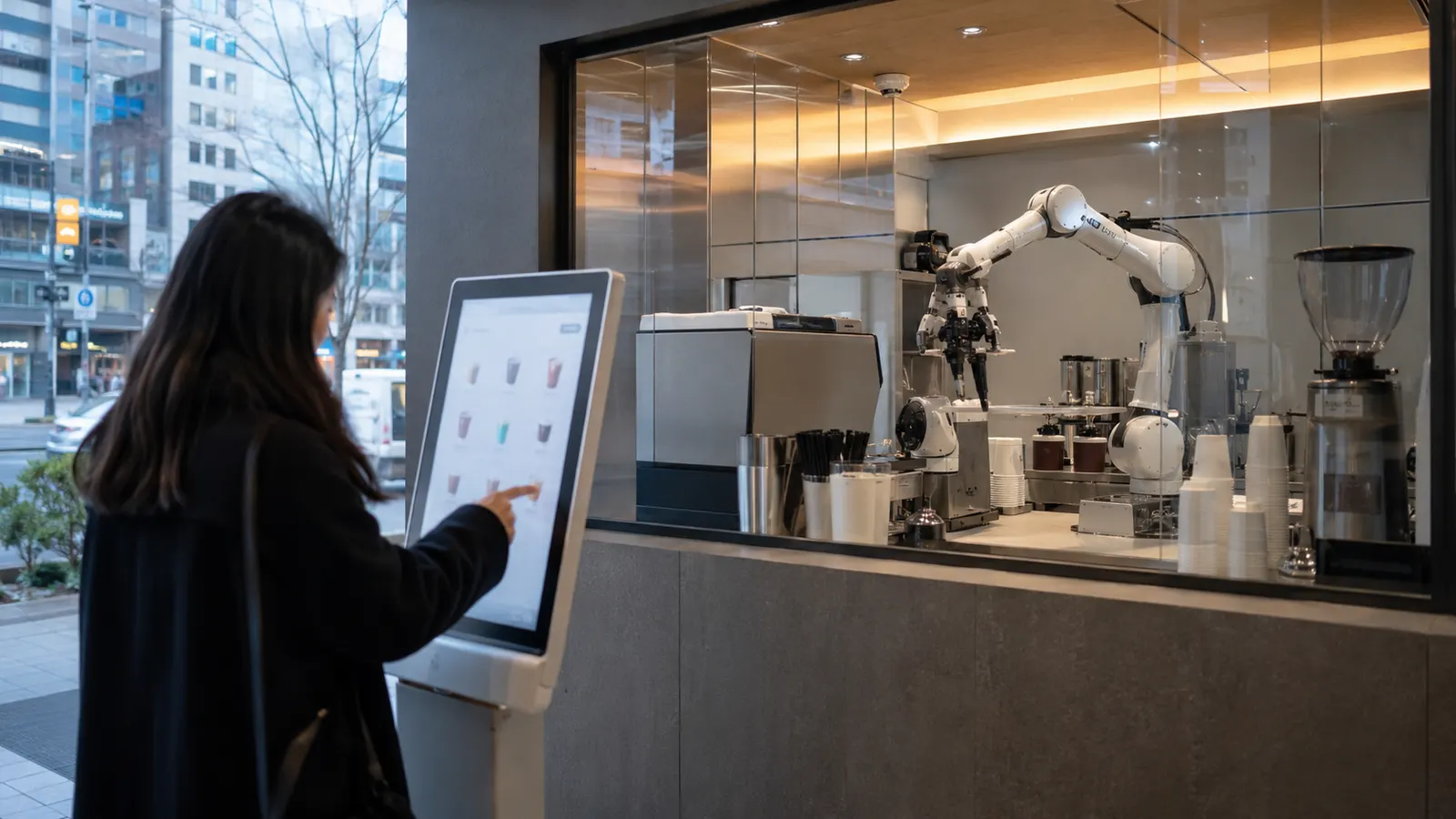
South Korea’s small shops are changing.
In Seoul and other cities, customers can now find robot cafes, self-service ramen shops, unmanned convenience stores, automated pet stores and small retail spaces that operate with few or no employees.
This is not just a technology trend. It is a business response to labor shortages, rising costs and Korea’s aging population. For international readers, Korea’s automated shops offer a useful preview of what retail could look like in other high-cost cities.
Why automation is spreading
Small businesses in Korea face a difficult mix of pressures.
Rent is high in popular neighborhoods. Labor costs have risen over time. Younger workers are harder to recruit for repetitive service jobs. Many shop owners also want longer opening hours but cannot afford to staff a store all day and night.
Automation helps solve part of that problem. A self-service shop does not remove every cost. Owners still need to manage inventory, cleaning, repairs and customer issues. But it can reduce the number of staff needed for routine tasks.
That can make the difference between a shop that closes early and a shop that stays open late.
What customers experience
For customers, automated retail is often simple. At an unmanned ramen shop, people choose noodles, pay through a kiosk and cook the meal themselves using machines or prepared stations. At a robot cafe, a robotic arm may prepare coffee while staff handle maintenance and ingredients behind the scenes.
At an unmanned store, customers scan items and pay without speaking to a cashier. The experience is not always warmer than traditional service, but it is convenient. It also gives customers privacy, which matters in Korea’s growing solo-consumer culture.
Why Korea is a good market for this
Korea has several conditions that make automated shops easier to operate.
Digital payments are widely used. Customers are comfortable with kiosks. Delivery apps and self-service systems are already part of daily life. Urban density also gives small stores a steady flow of customers.
Another factor is social trust. Unmanned stores depend on customers following rules, paying correctly and not damaging equipment. No country is perfect, but Korea’s relatively safe urban environment makes this model more realistic than in many places.
What this means for workers
Automation does not mean service workers disappear overnight. Many businesses still need people for cooking, cleaning, customer care, delivery coordination and quality control. But the type of work may change.
Instead of standing at a counter all day, workers may manage several machines, handle remote support, restock products or focus on customer experience. This creates a new challenge: small businesses need digital skills, not only cheaper machines. A robot arm is not useful if the owner cannot maintain it, troubleshoot it or integrate it into daily operations.
The risk for small businesses
Automation can look attractive, but it is not a guaranteed solution. Machines break. Kiosks confuse some customers. A store without staff may feel cold or uncomfortable. Some neighborhoods still prefer human service. The upfront cost can also be high.
A shop owner needs to calculate whether automation will actually improve margins after rent, equipment, maintenance, software fees and lost sales from customers who dislike self-service.
In other words, automation is not magic. It is a business model that works best when the product is simple, the customer flow is steady and the system is easy to use.
Why the trend matters
Korea’s robot cafes and unmanned shops show how retail adapts when labor becomes scarce and expensive. They also show how consumer habits are changing. People increasingly accept fast, private, self-directed experiences. They do not always expect a person behind the counter.
For Korea, this could help some small businesses survive. For visitors, it is another everyday example of how quickly Korean cities test new service models.
Quick Summary
- Korean small businesses are adopting robot cafes, kiosks and unmanned stores.
- The trend is driven by labor shortages, rising costs and longer operating-hour needs.
- Customers value speed, privacy and convenience.
- Automation works best for simple, repeatable services.
- The next challenge is helping small business owners manage the technology well.