How Korean Business Meals and Client Entertainment Etiquette Work
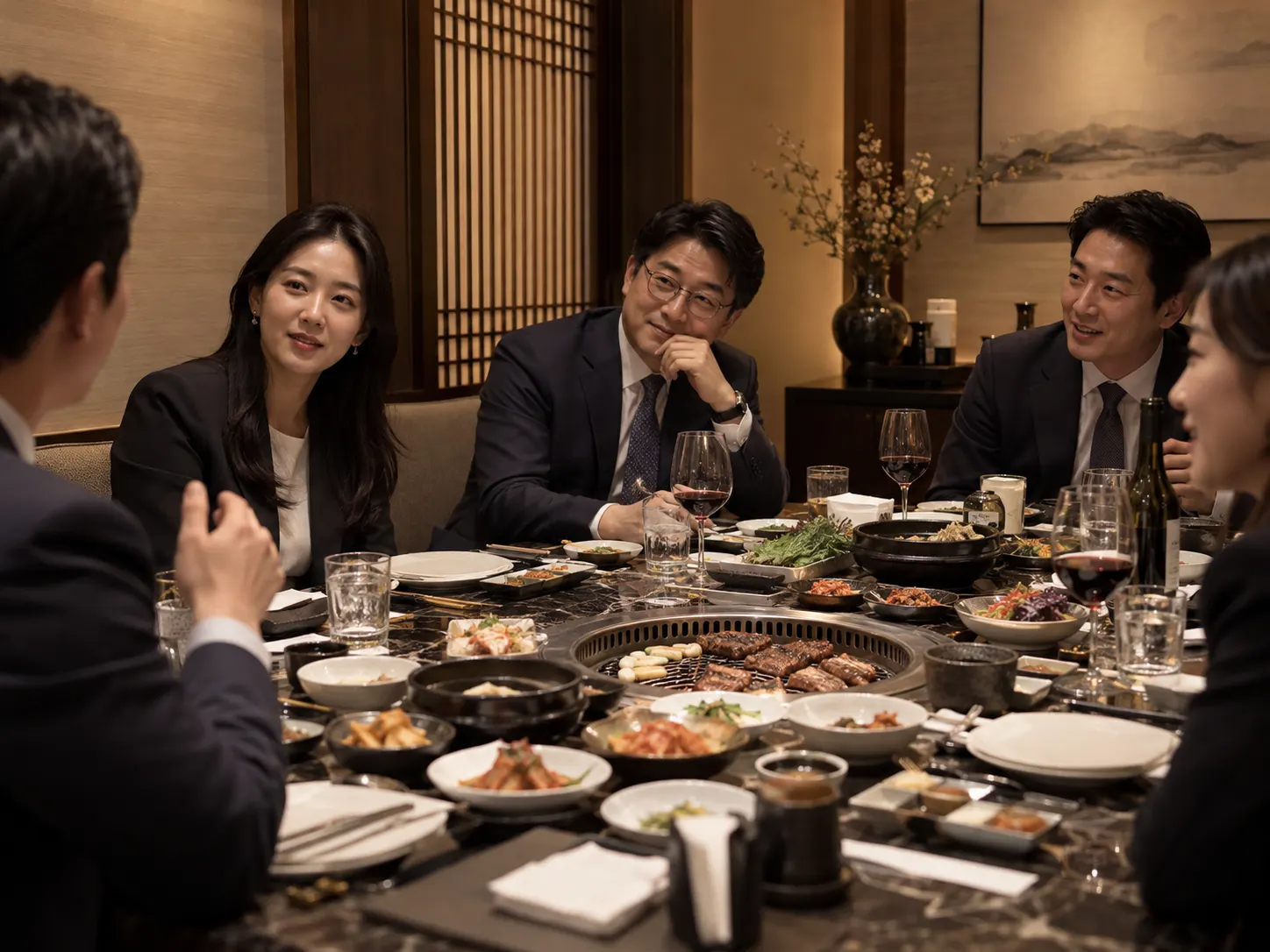
If a Korean client or partner has invited you to dinner, you may be wondering whether it is a social courtesy or part of the deal. Business meals in Korea are usually both. A client dinner in Korea is where relationships are built, and it shapes how seriously the other side takes you in the next meeting. Knowing the basic etiquette makes the evening easier and the business relationship stronger.
Here is how these meals typically work, who pays, and what foreign professionals often get wrong.
The Quick Answer: What to Expect
A business dinner usually starts with a set restaurant chosen by the host, often Korean barbecue, a private-room Korean restaurant, or a seafood place. Conversation begins with light topics, and business is raised gradually, if at all. The goal is rapport, not a negotiation. Formal decisions are rarely made at the table.
Who Pays and How the Bill Is Handled
The person who invited usually pays, and the senior host often insists on covering the bill. A common pattern is that one side hosts the first dinner and the other hosts a return meal later. Reaching for the bill at the table can embarrass your host, so a better move is to thank them warmly and offer to host next time.
If you are the one inviting, arrange payment with the restaurant in advance or quietly step away to settle it, rather than splitting the bill at the table. Splitting evenly, which is common among friends, is generally not how business meals work.
Seating and Table Etiquette
- Wait to be seated. The most senior guest usually sits farthest from the door, and the host will guide you.
- Wait for the senior person to start eating before you begin.
- Pour for others, and receive with both hands. Pouring a drink for a more senior person, with your right hand supported by your left, is a sign of respect. As covered in the hoesik guide, using both hands when receiving is the safe habit.
- Turn your head slightly away when drinking alcohol in front of someone senior.
- Share dishes. Food is placed in the center, and you take from the common dishes.
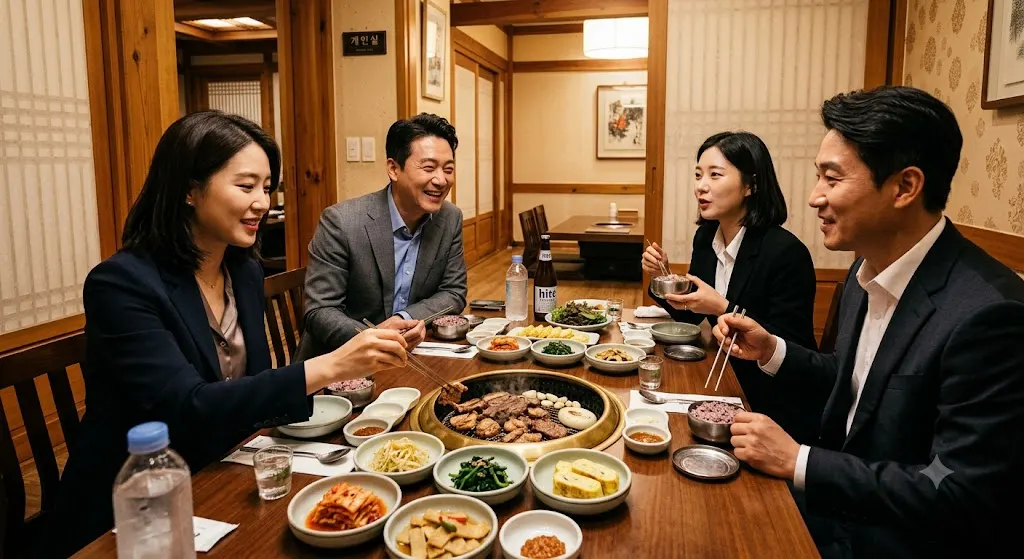
Drinking and Declining
Alcohol is often part of a client dinner, though less than in the past. If you do not drink, saying so politely early on, with a brief reason such as health or medication, is widely accepted. You can accept a first pour and simply leave the glass mostly full, or switch to a soft drink. Pressure usually eases once you have clearly stated your preference.
What to Talk About, and What to Avoid
Good topics include food, travel, your impressions of Korea, family in general terms, and sports or culture. Hold off on pushing a deal or asking for quick commitments. Avoid sensitive subjects such as politics and anything about your host's personal finances. Asking about age or family is common in Korea, but follow your host's lead rather than starting that conversation yourself.
After the Dinner
A short message the next day thanking your host for the meal is expected and appreciated. If there was an invitation for a second round, you can attend briefly or leave politely after the first. Following up on any business points in writing a few days later, as covered in the business email guide, keeps the relationship moving without forcing the topic at dinner.
Common Mistakes
- Trying to pay or split the bill at the table. It can read as refusing hospitality.
- Starting to eat or drink before the senior guest. It is a small gesture that people notice.
- Pushing business too early. Rapport usually comes first.
- Skipping the thank-you message. A brief follow-up shows appreciation and professionalism.
Quick Summary
- Business meals in Korea are relationship-building events, and decisions are rarely made at the table.
- The inviting side usually pays, and a better response than offering to split is to thank your host and offer to host next time.
- Wait for the senior person to be seated and begin eating, pour and receive drinks with both hands, and decline alcohol politely if you prefer.
- A short thank-you message the next day and a written follow-up on business points complete the etiquette.