South Korea’s AI Chip Megaproject Explained: Why Samsung and SK Hynix Matter
South Korea is making one of its biggest industrial bets in years, and the focus is clear: AI chips.
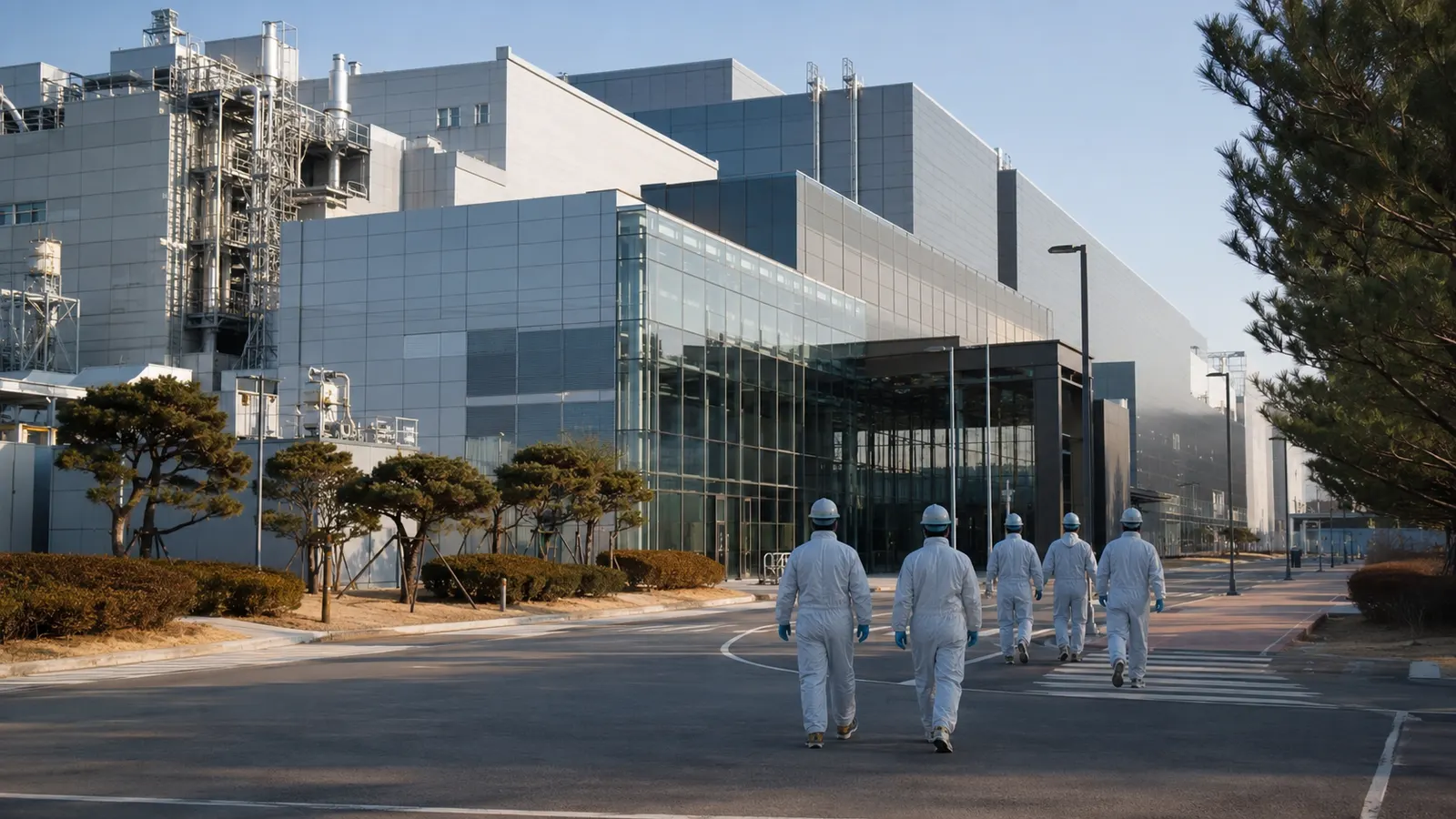
The government has announced a massive semiconductor and AI investment strategy involving Samsung Electronics and SK Hynix, with Reuters reporting that the plan includes new chip production sites, high-bandwidth memory facilities, AI data centers and regional industrial clusters. The goal is not only to protect Korea’s position in memory chips, but to make the country more important in the global AI supply chain.
For readers outside Korea, this matters because AI growth depends on hardware. Chatbots, cloud platforms, autonomous systems and robotics all need advanced chips, and Korea already plays a central role through memory semiconductors.
Why Korea is moving now
The AI boom has changed what governments consider strategic infrastructure. Semiconductors are no longer just an export product. They are tied to national security, cloud computing, industrial automation and economic power.
South Korea already has two of the world’s most important memory chipmakers. Samsung Electronics and SK Hynix are especially strong in DRAM and high-bandwidth memory, which are essential for AI processors.
The challenge is that other countries are also investing aggressively.
The United States, Taiwan, Japan, China and the European Union all want stronger chip ecosystems. Korea cannot rely only on its existing factories around Seoul and Gyeonggi Province if it wants to stay ahead for the next decade.
What the plan includes
The latest Korean plan is built around several large projects.
Samsung and SK Hynix are expected to play leading roles in new semiconductor facilities. The strategy also includes investment in high-bandwidth memory, chip packaging, data centers and robotics-linked AI industries.
This is important because AI chips are not only about the chip itself.
A full ecosystem needs materials, equipment, electricity, water, packaging, testing, logistics and specialized engineers. If one part of that chain is weak, production can slow down.
Korea’s new push is also regional. The government wants more high-tech investment outside the already crowded Seoul metropolitan area.
Why high-bandwidth memory is important
High-bandwidth memory, often called HBM, is one of the most valuable parts of the AI chip market. AI processors need to move huge amounts of data quickly. HBM helps do that by stacking memory chips and connecting them in ways that allow faster data flow. This is why SK Hynix and Samsung are closely watched by global investors.
If demand for AI servers keeps rising, Korean memory makers could benefit. But if the market overheats or supply grows too quickly, chip prices could face pressure. That is why the plan is both an opportunity and a risk.
What could slow it down
Large chip projects are difficult to execute. They require stable power, water supply, roads, trained workers, suppliers and long-term demand. Semiconductor factories also take years to plan, approve and build. Another question is whether private companies will invest exactly as announced. Many large industrial plans are adjusted depending on market conditions.
For Samsung and SK Hynix, the key issue will be timing. They need to expand quickly enough to meet AI demand, but carefully enough to avoid oversupply.
What it means for Korea
If the plan works, Korea could strengthen its role as an AI manufacturing base, not just a consumer of AI services. The benefits could spread to construction, equipment, materials, regional jobs and local universities. It could also help Korea reduce its dependence on a few already crowded industrial zones.
The larger story is simple: Korea wants to turn the AI boom into a national growth engine. Samsung and SK Hynix are the companies that can make that strategy real.
Quick Summary
- Korea is investing heavily to strengthen its AI chip supply chain.
- Samsung and SK Hynix are central to the country’s semiconductor strategy.
- High-bandwidth memory is one of the most important technologies for AI servers.
- Regional chip clusters could create jobs outside the Seoul area.
- Execution will depend on infrastructure, timing and long-term AI demand.