Coworking Spaces in Korea: What Foreign Freelancers and Small Teams Should Compare
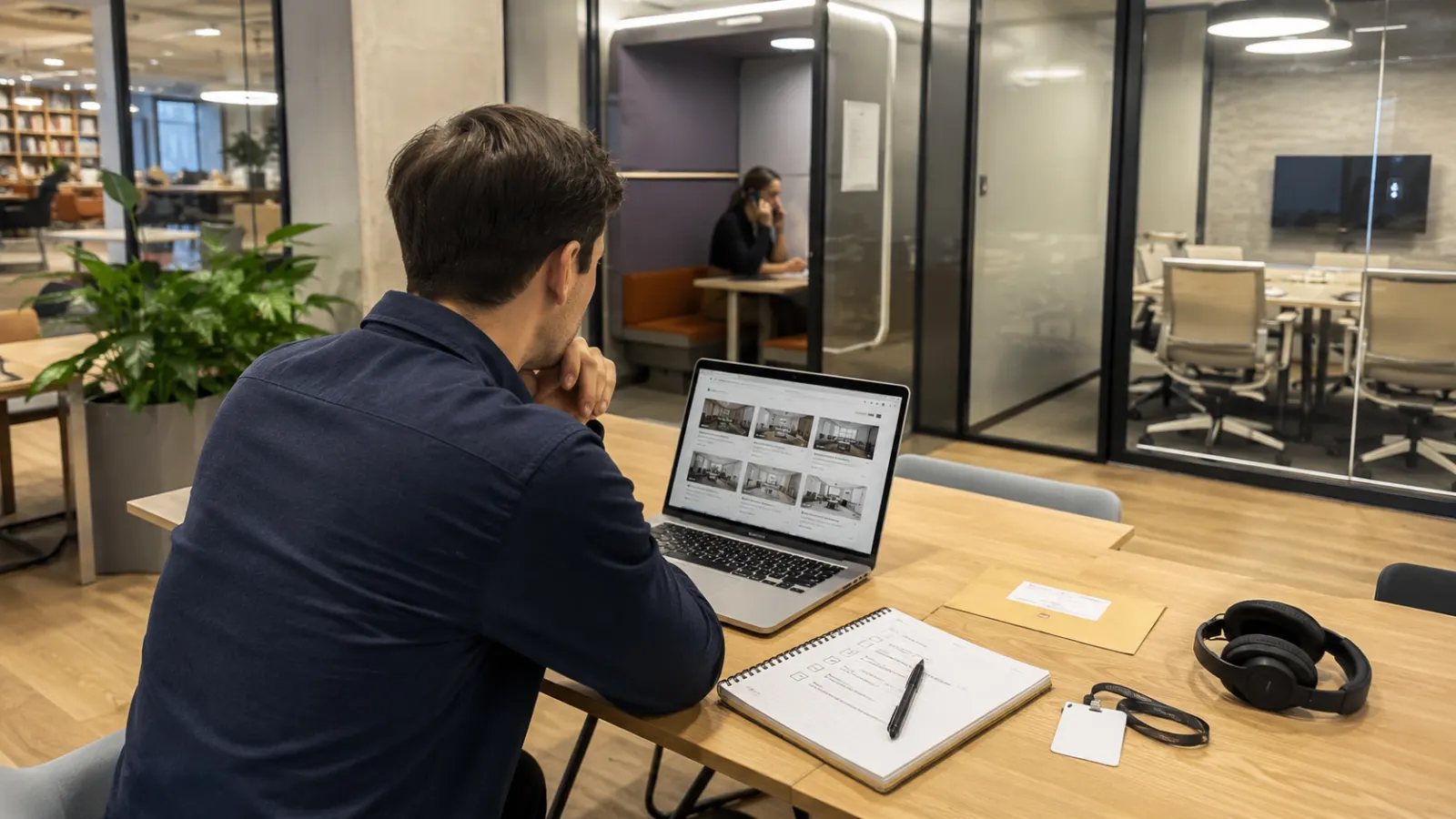
A coworking space in Korea can solve several problems at once. It can provide a reliable desk, faster internet, meeting rooms, business mail, and separation between work and home. For foreign freelancers and small teams, however, the advertised monthly price may not include the services that actually matter.
Some spaces are designed mainly for individual remote workers. Others focus on registered companies, startup teams, events, or short-term office rentals. Before signing a membership, compare access rules, phone booths, business-address use, payment requirements, and contract terms rather than choosing only by neighborhood or interior design.
Hot desk, fixed desk, or private office?
Coworking spaces generally offer several levels of access. A hot-desk plan allows members to use available shared seating. It is usually flexible but does not guarantee the same desk each day. A fixed desk provides a dedicated workspace and may include storage. It can be useful for monitors, equipment, and regular work routines.
A private office provides more privacy and may suit teams, client calls, confidential work, or businesses that need a stable address. Ask what is included with each option:
- Desk access
- Chair quality
- Monitor
- Locker
- Mailing address
- Meeting-room credits
- Printing
- Coffee
- Event access
- Guest access
- Cleaning
- Tax
A low-cost hot-desk membership may become expensive when meeting rooms and printing are billed separately.
Access hours
A space may advertise 24-hour access while the reception desk, air conditioning, meeting rooms, or building entrance operate on different schedules. Check:
- Member access hours
- Reception hours
- Weekend access
- Holiday closures
- Building security
- Elevator operation
- Air-conditioning schedule
- Overnight work rules
- Emergency contact process
Remote workers serving overseas clients may need early-morning or late-night access. A building that limits heating or cooling after business hours may be uncomfortable despite allowing entry.
Test the route from your home at the times you expect to work.
Phone calls and video meetings
An attractive open office can be difficult when your work involves frequent calls. Ask how many phone booths are available and whether they require reservations. During busy periods, a small space with only one booth may create constant scheduling problems. Check:
- Call booth availability
- Maximum use time
- Soundproofing
- Meeting-room price
- Reservation cancellation
- Guest call access
- Recording or broadcasting restrictions
- Internet stability inside booths
Do not assume that quiet conversation is acceptable at every shared desk. Some spaces divide silent, conversation, and lounge zones.
Internet quality
A coworking space should provide more than a strong Wi-Fi symbol. For video, development, design, uploading, or cloud work, consider:
- Download speed
- Upload speed
- Latency
- Wired Ethernet
- Backup connection
- Network separation
- Guest Wi-Fi
- VPN compatibility
- Large-file restrictions
- Support during outages
Ask whether the private office shares the same Wi-Fi as the public lounge.
Businesses handling confidential customer or financial information should not treat a public shared network as automatically secure. Use appropriate device security and confirm whether the space offers an isolated wired or business network.
Business-address registration
Some coworking spaces advertise a business address or virtual-office service. This does not mean every member can register every type of business there. Before paying, confirm:
- Whether business registration is allowed
- Which business categories are accepted
- Whether the lease or occupancy document is provided
- Whether mail is received
- How official mail is notified
- Whether inspections are possible
- Whether signage is allowed
- Whether immigration applications can use the address
- What happens when membership ends
A workspace suitable for a software consultant may not be suitable for food production, retail inventory, education, healthcare, or another regulated activity. Business registration and immigration permission are separate issues. A coworking contract does not automatically authorize a foreign resident to operate a business.
Meeting rooms and guests
Spaces often include limited monthly meeting-room credits. Ask:
- Number of free hours
- Additional hourly price
- Minimum booking unit
- Maximum room capacity
- Display and cable availability
- Whiteboard
- Video-conference equipment
- Outside guest policy
- Reception service
- After-hours access
A client should not discover at arrival that the building requires advance registration or that guests cannot enter outside reception hours. Check whether external guests can use Wi-Fi, parking, elevators, and restrooms without a member escort.
Mail and parcel handling
A coworking address may be useful for receiving contracts, tax notices, equipment, and client mail. The handling process matters. Ask whether the space:
- Signs for registered mail
- Accepts large parcels
- Stores refrigerated items
- Charges per package
- Opens or scans letters
- Forwards mail overseas
- Discards uncollected mail
- Requires the legal business name
- Notifies members immediately
Sensitive legal or government mail should not sit unopened for weeks. Keep your contact details current and understand the storage period.
Pricing and contract terms
Compare the full cost. Possible charges include:
- Membership fee
- Deposit
- Value-added tax
- Access card
- Locker
- Meeting room
- Printing
- Parking
- Mail handling
- Address registration
- Cleaning
- Additional team member
- Event space
- Early cancellation
A discounted six- or twelve-month plan may not fit someone with an uncertain visa, client contract, or housing arrangement. Ask whether the membership renews automatically and how far in advance cancellation must be submitted. Do not rely on a salesperson saying the contract is “flexible.” Read the written termination section.
Trial days are worth using
A short trial can reveal issues that photographs cannot show. During the trial, test:
- Morning seating availability
- Afternoon noise
- Phone-booth access
- Restroom cleanliness
- Internet
- Chair comfort
- Temperature
- Natural light
- Lunch options
- Commute
Also observe whether members take calls at desks and whether common spaces become crowded. A beautiful lobby is less important than the desk where you will work for several hours.
Community and networking
Some coworking spaces host startup events, language exchanges, workshops, or investor programs. Others provide little interaction beyond shared furniture. Choose based on whether you actually want community. A freelancer who needs deep concentration may prefer a quiet space with few events. A newcomer building a professional network may value introductions and recurring gatherings.
Ask whether events are included, conducted in Korean or English, and open to all members. Do not pay a premium for networking that exists mainly in marketing materials.
A practical comparison sheet
Compare at least three spaces using:
- Total monthly cost
- Commute
- Access hours
- Desk availability
- Call facilities
- Internet
- Meeting rooms
- Address registration
- Mail handling
- Contract length
- Cancellation
- Language support
The best coworking space is not necessarily the largest international brand or trendiest Seoul location. It is the one that removes the daily friction from your actual work.
Quick Summary
- Compare hot desks, fixed desks, and private offices by total included services.
- Test call booths, internet, seating, and temperature during a trial day.
- Confirm business-address eligibility for your exact activity before registering.
- Review taxes, deposits, renewal, meeting-room charges, and early cancellation in writing.