How Fixed-Term Employment Contracts Work in Korea
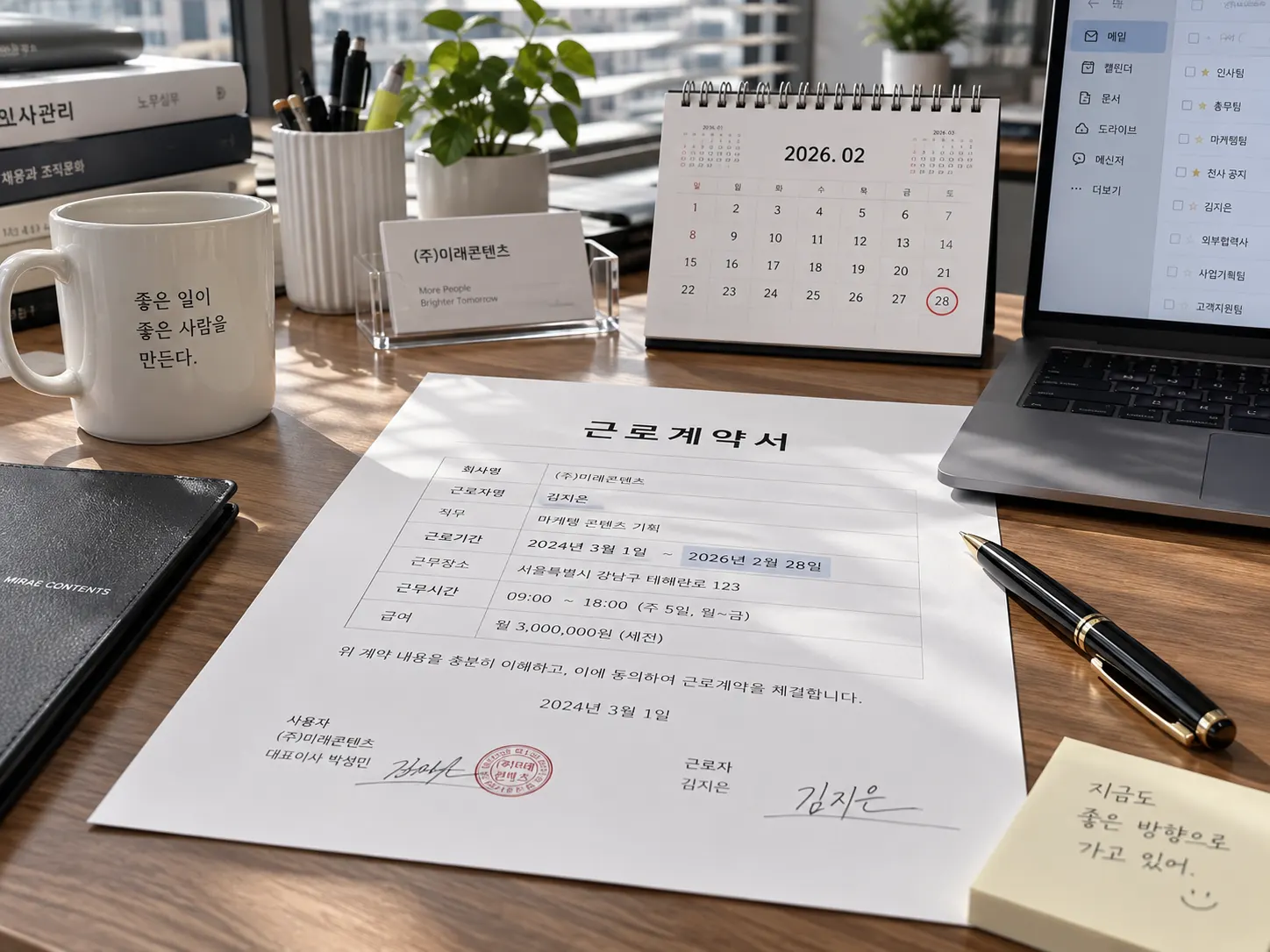
If your Korean job offer says "one year, renewable," you may be wondering what happens at the end and whether the contract can quietly stretch on forever. Fixed-term contracts in Korea are common, and the law limits how long an employer can keep someone on them. Understanding the two-year rule and the limits of renewal expectations helps you plan, especially if your visa is tied to the job.
This is general information, not legal advice.
The Quick Answer: The Two-Year Rule
Under Korean law, an employer who keeps a fixed-term employee for more than two years in total is generally treated as having hired that person on an indefinite-term contract. This does not necessarily mean a permanent, lifetime guarantee of the same pay and conditions, but the contract is no longer limited to a set end date.
Some exceptions allow longer fixed-term use, for example certain older workers, specialized professionals, and roles tied to specific projects. If you think an exception applies to you, confirm it with a labor consultant (노무사).
How Employers Often Handle It
Because of this rule, you will see several patterns:
- Contracts that end at or before two years
- Conversion to an indefinite contract after a probationary period or a performance review
- Short breaks between contracts, which employers sometimes use and which can be legally contested depending on the facts, as covered in the severance pay guide
Whether successive contracts count as continuous is not always obvious, so keep every contract and your pay records.
Renewal: Hope Versus Right
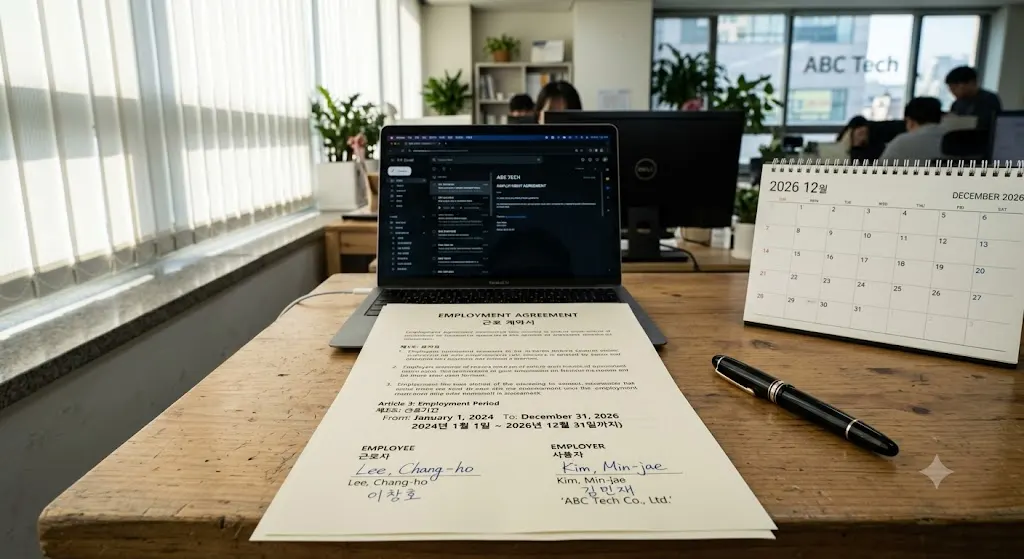
A fixed-term contract normally ends on its stated date without a formal dismissal. However, courts have recognized that employees can have a reasonable expectation of renewal in some situations, for example when the employer has repeatedly renewed contracts for similar roles or when the company has stated that renewal is expected. If a non-renewal seems unfair, the labor authorities and courts can treat it like an unjustified dismissal.
This is highly fact-specific, so evidence matters, including emails, performance reviews, and how colleagues in the same role were treated.
Foreign Employees: The Visa Layer
For foreign workers, the contract and the visa work together:
- Many work visas are tied to a specific employer and a stated contract period
- If your contract ends and is not renewed, your visa status may be affected, and you generally have a limited time to find new sponsorship or leave
- Converting to an indefinite contract does not automatically change your visa, so contact immigration or HR about any required updates
If you are on an E-series visa, ask HR early what the renewal and visa process looks like, as covered in the visa extension guide.
What to Check in Your Contract
- The exact end date and whether renewal is mentioned
- Conditions for renewal, such as performance criteria
- Notice terms for non-renewal, if any
- Whether severance applies, which depends on continuous service of one year or more
- Whether visa support is described
Common Mistakes
- Assuming renewal is automatic. Check what the contract actually says.
- Not keeping records of past contracts. Proving continuous service can matter later.
- Ignoring the two-year mark. It is a meaningful legal milestone.
- Forgetting visa timing. A late renewal discussion can leave little time to act.
Quick Summary
- Keeping an employee on fixed-term contracts for more than two years in total generally converts the employment to an indefinite-term contract, with some exceptions.
- Non-renewal is normally lawful, but a documented reasonable expectation of renewal can make an unfair non-renewal challengeable.
- Foreign workers should coordinate contract renewal with visa timing, since many work visas depend on the employer and contract period.
- Keep copies of every contract, pay record, and renewal communication, and consult a labor consultant for complicated situations.