How to Register as a Freelancer in Korea on a Visa
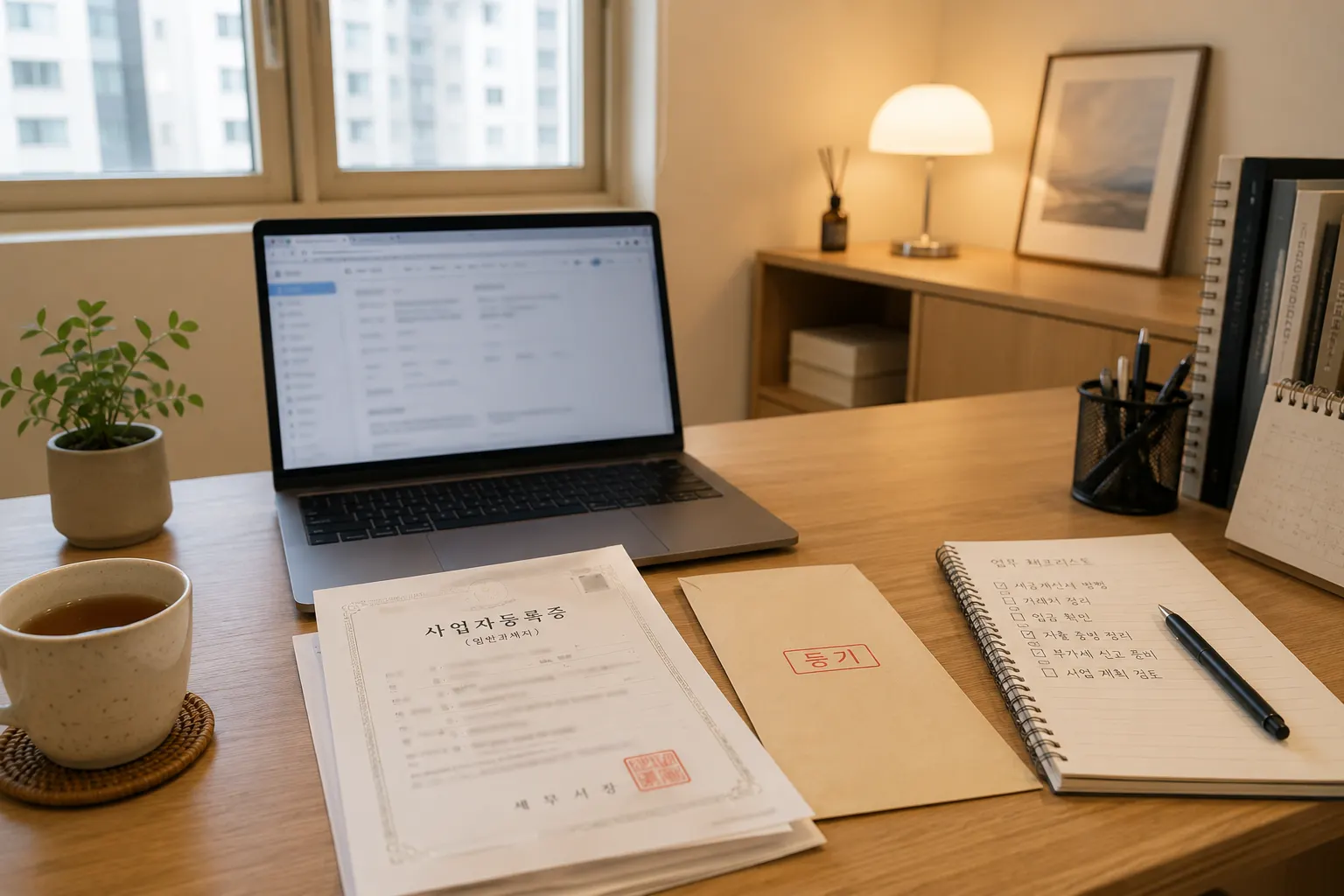
If you're doing freelance or contract work in Korea, whether it's translation, design, consulting, or online content, you'll eventually run into the same question: do you actually need to register as a business, and can your visa even allow it? This trips up a lot of foreign freelancers, because the answer depends less on what work you do and more on what visa you hold.
Here's how business registration for freelancers actually works in Korea, what it requires, and where visa status becomes the real bottleneck.
Why Visa Status Comes First
In most countries, freelancing is primarily a tax question. In Korea, it's primarily an immigration question. Your visa determines whether you're legally allowed to earn independent income at all, before tax registration even becomes relevant.
- E-series work visas (E-7, E-2, etc.) are typically tied to a specific employer, and most don't permit outside freelance income without separate approval from immigration.
- D-10 (job-seeking) visa holders generally cannot register as a freelancer, since the visa is meant for job searching, not independent income generation.
- F-series visas (F-2, F-5, F-6, and some F-4 holders) usually have the most freedom to freelance or register a sole proprietorship, since these are residency-based rather than employer-based.
- D-2 (student) visa holders can sometimes freelance in limited categories with a part-time work permit, but full business registration is generally not available while on this visa.
If you're on an E-series visa and want to freelance on the side, the realistic path is usually getting written permission from your employer and approval from immigration, not registering a business outright.
What Business Registration (사업자등록) Actually Involves
Once your visa status allows it, registering as a freelancer in Korea means applying for a business registration certificate, known as 사업자등록증 (sa-eop-ja-deung-rok-jeung), through the National Tax Service (NTS).
The basic process:
- Prepare your ARC (Alien Registration Card), passport, and a lease or proof of address, since Korean tax registration requires a registered address, even for freelancers without a physical office.
- Decide on a business type, most freelancers register as an individual sole proprietor (개인사업자) rather than a corporation, since it's simpler and doesn't require share capital.
- Visit your local tax office (or apply through Hometax, the NTS's online portal, if you're comfortable navigating it in Korean) and submit the registration form.
- Receive your business registration number, which you'll need for invoicing, tax filing, and in some cases for opening a business bank account.
Processing usually takes a few days to about two weeks, and there's no fee to register.
Taxes You'll Actually Owe
A common misunderstanding is thinking that registering as a freelancer is the end of the paperwork. In reality, registration is just the starting point — ongoing tax obligations follow.
- Income tax: filed annually in May for the previous year's earnings, on a progressive scale similar to salaried income tax.
- Value-added tax (VAT): most freelance service providers are subject to a 10% VAT, filed twice a year, though some categories (like certain creative or educational services) have exemptions or simplified reporting.
- National Pension and Health Insurance: once registered, you may be required to pay these as a self-employed individual, calculated differently than for salaried employees, and often higher than the employer-sponsored equivalent.
Keeping receipts and expense records matters more in Korea's system than many newcomers expect, since deductible expenses can meaningfully reduce your taxable income, but only if they're documented properly through Hometax or a accountant.
Where Foreigners Commonly Get Stuck
- Registering without checking visa eligibility first. The tax office will often let you register regardless of visa restrictions, since immigration and tax are separate systems — this doesn't mean it's legal under your visa, and it can cause problems at visa renewal.
- Assuming a Korean bank account isn't necessary. Most clients, especially Korean companies, expect invoices and payments through a local account, and some banks require business registration to open a dedicated business account.
- Underestimating VAT. Freelancers new to the system sometimes quote clients without factoring in VAT, then have to absorb it themselves.
- Not tracking the address requirement. If you move, your business registration address needs to be updated with the NTS, not just with immigration.
Is It Worth Registering, or Working Informally?
Some foreign freelancers, particularly those doing occasional remote work for overseas clients, avoid Korean business registration entirely and simply pay taxes as a foreign resident or through their home country's system. This can work in narrow cases, but it becomes risky if:
- You're regularly invoicing Korean clients or companies.
- Your visa is tied to demonstrating stable, documented income (common for F-visa renewals).
- You want to open a business bank account or apply for freelancer-specific benefits.
If your freelance income is a meaningful and recurring part of your life in Korea, registering properly tends to cause fewer problems down the line than staying informal.
Quick Summary
- Whether you can freelance in Korea legally depends on your visa type first, and tax registration second — E-series visas are usually restrictive, F-series visas usually allow it.
- Business registration (사업자등록) is done through the National Tax Service, requires an ARC and proof of address, and typically takes days to two weeks.
- Registered freelancers owe income tax annually and VAT (usually 10%) twice a year, plus self-employed pension and health insurance contributions.
- Registering without confirming visa eligibility is a common mistake that can create problems at visa renewal, even though the tax office itself won't stop you from registering.