Business
How Trade Shows and Industry Conferences Work in Korea
By New In Korea TeamPublished Updated
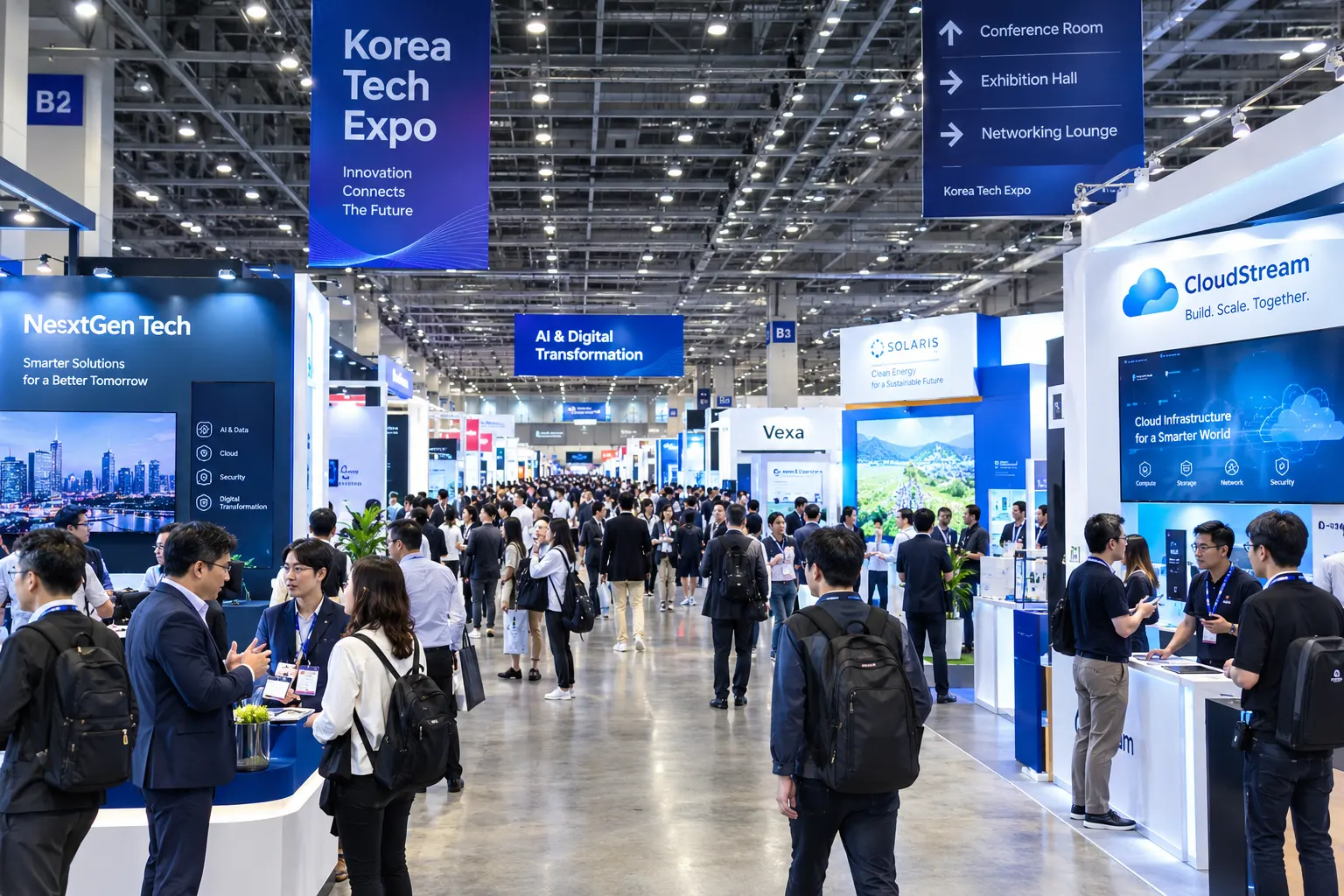
If your work involves attending or exhibiting at a Korean trade show or industry conference for the first time, whether in electronics, beauty, food, or another sector where Korea hosts significant international events, understanding the practical logistics, networking norms, and how these events differ from similar events in other countries helps you actually get value from attending rather than navigating unfamiliar territory on the day itself.
Here's how Korean trade shows and industry conferences typically work, and how to prepare effectively.
Korea's Major Trade Show Venues and Industries
- COEX and KINTEX, Korea's two largest convention and exhibition centers, host the majority of significant international trade shows and conferences, COEX in Seoul's Gangnam area and KINTEX near Goyang, understanding which venue hosts your specific event matters for logistics planning given they're in different parts of the greater Seoul area.
- Korea hosts globally significant events in specific industries, particularly electronics and technology, beauty and cosmetics, and increasingly gaming and content industries, reflecting Korea's genuine global standing in these specific sectors, worth understanding your specific industry's actual prominence within the Korean trade show landscape.
- Both international and domestic-focused events exist, some trade shows specifically target international business development and buyer-seller connections, others are more domestically focused despite occurring in Korea, checking a specific event's actual international orientation before assuming universal English-language accessibility matters for your preparation.
Language and Communication at Trade Shows
- Larger, internationally-oriented trade shows generally offer meaningful English-language support, printed materials, some English-speaking staff, and often simultaneous interpretation for major conference sessions, though the depth of this support varies by specific event's international focus and scale.
- Booth-level interactions, particularly with smaller Korean exhibitors or domestic-focused sections of larger events, may have more limited English capacity, bringing business cards with both English and, ideally, Korean-side information, and having basic industry-specific Korean vocabulary prepared, helps navigate booth-level networking more effectively.
- Professional interpretation services, sometimes bookable in advance for specific significant meetings scheduled around a trade show, are worth considering for particularly important business discussions where precise communication matters significantly more than general booth browsing.
Networking Norms at Korean Industry Events
- Business card exchange remains a central networking ritual, as covered in how Korean business cards and introductions work, bringing an ample supply of properly formatted cards, ideally with a Korean-language side if attending a significant Korean industry event, matters for making a professional impression.
- Formal scheduled meetings versus casual booth networking often follow somewhat different norms, a scheduled business meeting arranged in advance generally warrants more formal preparation and follow-through than a casual booth conversation during general exhibition hours.
- Follow-up after the event matters significantly for converting initial trade show contact into an actual ongoing business relationship, a prompt, appropriately formal follow-up email referencing your specific conversation, as covered in how Korean business email etiquette works, tends to be well received and expected practice.
Practical Logistics to Plan For
- Registration and badge pickup processes, generally requiring advance online registration for most significant events, understanding the specific event's registration deadline and any required documentation avoids a last-minute scramble.
- Venue navigation, both COEX and KINTEX are genuinely large facilities, arriving with some buffer time for navigation, particularly for your first visit to a specific venue, avoids unnecessary stress finding your specific hall or booth.
- Accommodation and transportation planning, particularly relevant if traveling from outside Seoul specifically for the event, booking accommodation near the specific venue well in advance matters given how quickly nearby hotels can book up during major trade show periods.
Common Mistakes Foreign Attendees and Exhibitors Make
- Underestimating venue scale and navigation time, particularly at a first visit to COEX or KINTEX, arriving without sufficient buffer time and struggling to find a specific hall or meeting location.
- Not preparing Korean-language business cards or materials for a significant Korean-focused industry event, missing an opportunity to make a stronger impression with Korean business contacts who appreciate this preparation effort.
- Treating all trade show interactions identically, not distinguishing between formal scheduled meetings warranting more thorough preparation and casual booth networking, potentially underpreparing for an important scheduled discussion.
- Not following up promptly and appropriately after the event, missing the opportunity to convert initial trade show contact into a genuine ongoing business relationship through appropriately formatted follow-up communication.
Quick Summary
- COEX and KINTEX host the majority of Korea's significant trade shows and conferences, understanding which venue hosts your specific event and planning accordingly matters given their different locations within greater Seoul.
- Language support varies by event's international orientation, larger internationally-focused events generally offer more comprehensive English support than smaller or more domestically-focused events.
- Business card exchange remains a central networking ritual, bringing appropriately formatted cards, ideally with Korean-language information for significant Korean industry events, matters for making a professional impression.
- Prompt, appropriately formal follow-up after the event matters significantly for converting initial trade show networking into an actual ongoing business relationship.