How Corporate Mentorship Programs Work at Korean Companies
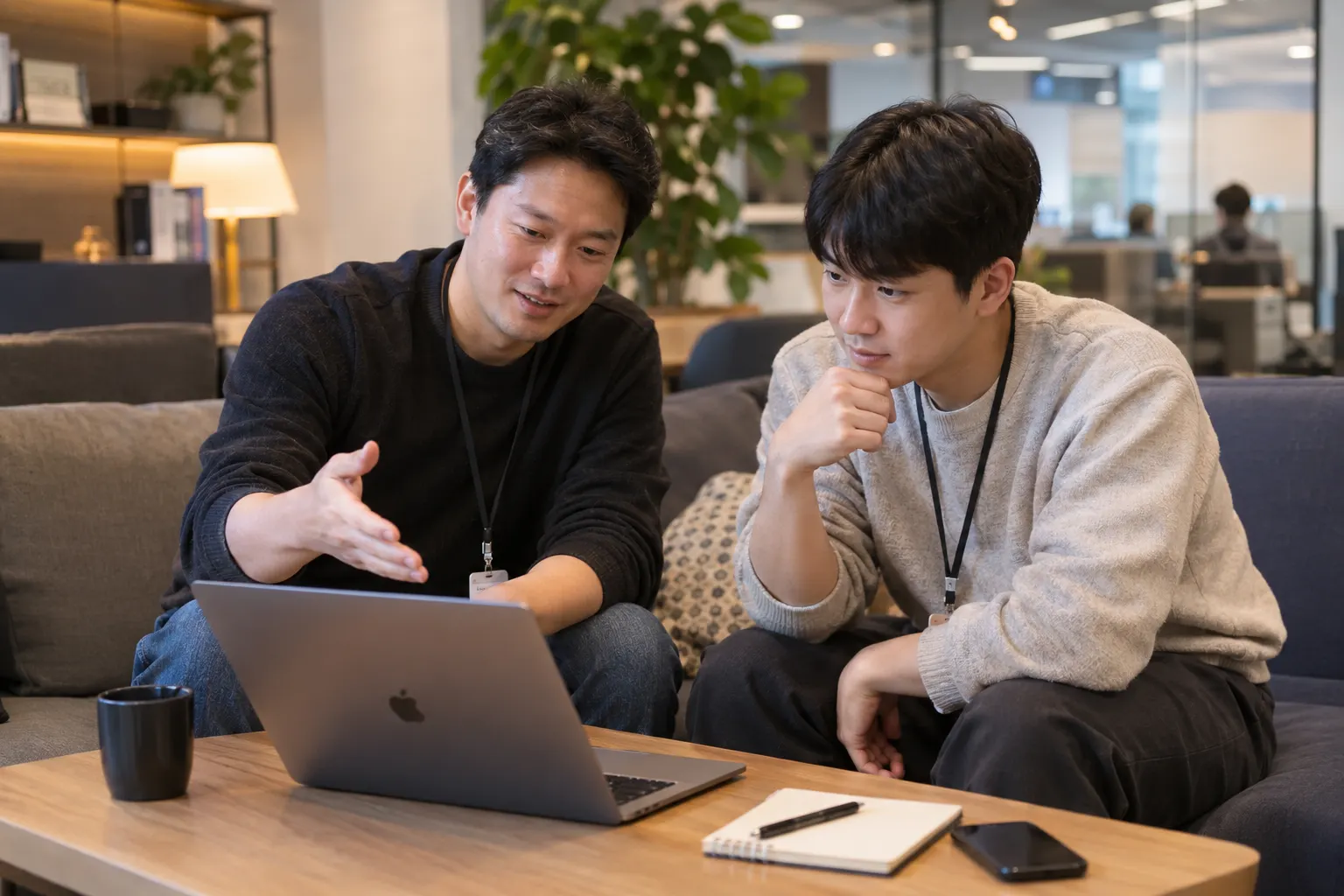
If you've joined a Korean company and been assigned a "sunbae" mentor as part of onboarding, or heard about a formal mentorship program without fully understanding how seriously it's actually treated, corporate mentorship in Korea often carries more structural weight than a casual "reach out if you have questions" arrangement common in some other workplace cultures, understanding how it typically functions helps you get genuine value from the relationship.
Here's how corporate mentorship programs actually work at Korean companies, and how to make the most of one.
Formal vs. Informal Mentorship Structures
- Larger, more traditional companies often run formally structured mentorship programs, particularly for new hires, pairing a junior employee with a specific senior colleague (sunbae) for a defined period, sometimes with official check-in requirements or evaluation components built into the broader onboarding process.
- Smaller companies and startups tend toward more informal mentorship, a designated point of contact for questions without the same structured program framework, understanding your specific company's actual approach, rather than assuming a universal formal structure, matters for calibrating your expectations.
- The sunbae-hoobae (senior-junior) dynamic that shapes this relationship draws on the same broader hierarchy-conscious workplace culture covered in how Korean workplace titles work, your mentor relationship generally carries some of this hierarchy dynamic alongside its practical mentoring function.
What a Mentor Relationship Typically Involves
- Practical onboarding guidance, navigating internal systems, understanding unwritten team norms, and general questions about how things actually work day-to-day, represents the most immediate, practical function of an assigned mentor relationship.
- Career development conversations, at more established programs, sometimes extend beyond immediate onboarding into longer-term career guidance within the company, understanding whether your specific program includes this longer-term dimension or is primarily focused on initial onboarding matters for setting appropriate expectations.
- A social and relationship-building component, often including informal meals or activities together, reflects the broader relationship-conscious nature of Korean workplace culture, treating this purely as a transactional information source rather than also investing in the relationship itself tends to produce a less valuable overall mentorship experience.

How to Actually Use a Mentor Relationship Well
- Ask genuine, specific questions rather than only generic check-ins, coming prepared with actual situations or uncertainties you're navigating tends to produce more useful guidance than a vague "how's everything going" exchange.
- Show genuine appreciation and respect for the time investment, your mentor is generally taking on this role alongside their own regular responsibilities, acknowledging this and being appropriately respectful of their time matters for maintaining a positive, sustainable relationship.
- Follow through visibly on guidance received, when a mentor offers specific advice or guidance, demonstrating that you've genuinely applied it reflects well and tends to deepen the mentor's investment in continuing to support your development.
- Understand appropriate boundaries, while the relationship often extends beyond purely transactional information exchange, respecting your mentor's own workload and not over-relying on them for every minor question matters for a sustainable, mutually respectful dynamic.
What Foreign Employees Sometimes Misunderstand
A frequent assumption among foreign employees, particularly those from more informally structured workplace cultures, is treating an assigned mentor relationship too casually, missing the somewhat more structured, relationship-conscious expectations that often accompany this specific role in Korean workplace culture. Approaching the relationship with a degree of formality and genuine relationship investment, rather than treating it purely as an occasional help-desk resource, tends to align better with how the role is generally understood within Korean corporate culture specifically.
The opposite misunderstanding also occurs, some foreign employees over-formalize the relationship, treating every interaction with excessive stiffness, when many mentor relationships, once initial rapport is established, do warm into a genuinely warmer, more natural dynamic over time, reading your specific mentor's own communication style and adjusting accordingly matters more than applying either extreme uniformly.
Common Mistakes to Avoid
- Underutilizing the relationship, hesitating to ask genuine questions out of concern about imposing, when most assigned mentors genuinely expect and welcome this kind of engagement as part of their role.
- Not reciprocating relationship investment, treating the mentor purely as an information resource without any genuine interest in the relationship itself, missing the broader relationship-building dimension that often matters in Korean workplace mentorship specifically.
- Not understanding your specific program's actual structure and expectations, assuming a universal format applies when your specific company's approach may differ meaningfully from a more formally structured or more informally casual arrangement.
- Over-relying on a mentor for questions better directed elsewhere, not developing independent problem-solving or appropriately routing certain questions to other more relevant colleagues or resources.
Quick Summary
- Korean corporate mentorship ranges from formally structured programs at larger companies to more informal designated point-of-contact arrangements at smaller companies, understanding your specific company's actual approach matters for setting realistic expectations.
- Mentor relationships typically combine practical onboarding guidance with a genuine relationship-building component, treating the relationship purely transactionally tends to produce a less valuable overall experience.
- Asking specific, genuine questions, showing appreciation for the time investment, and visibly following through on guidance received helps you get meaningful value from a mentor relationship.
- Approaching the relationship with appropriate respect and genuine investment, while still respecting your mentor's own workload and boundaries, aligns well with how mentorship is generally understood within Korean corporate culture.