How Coworking Spaces in Korea Compare to Cafés for Remote Work
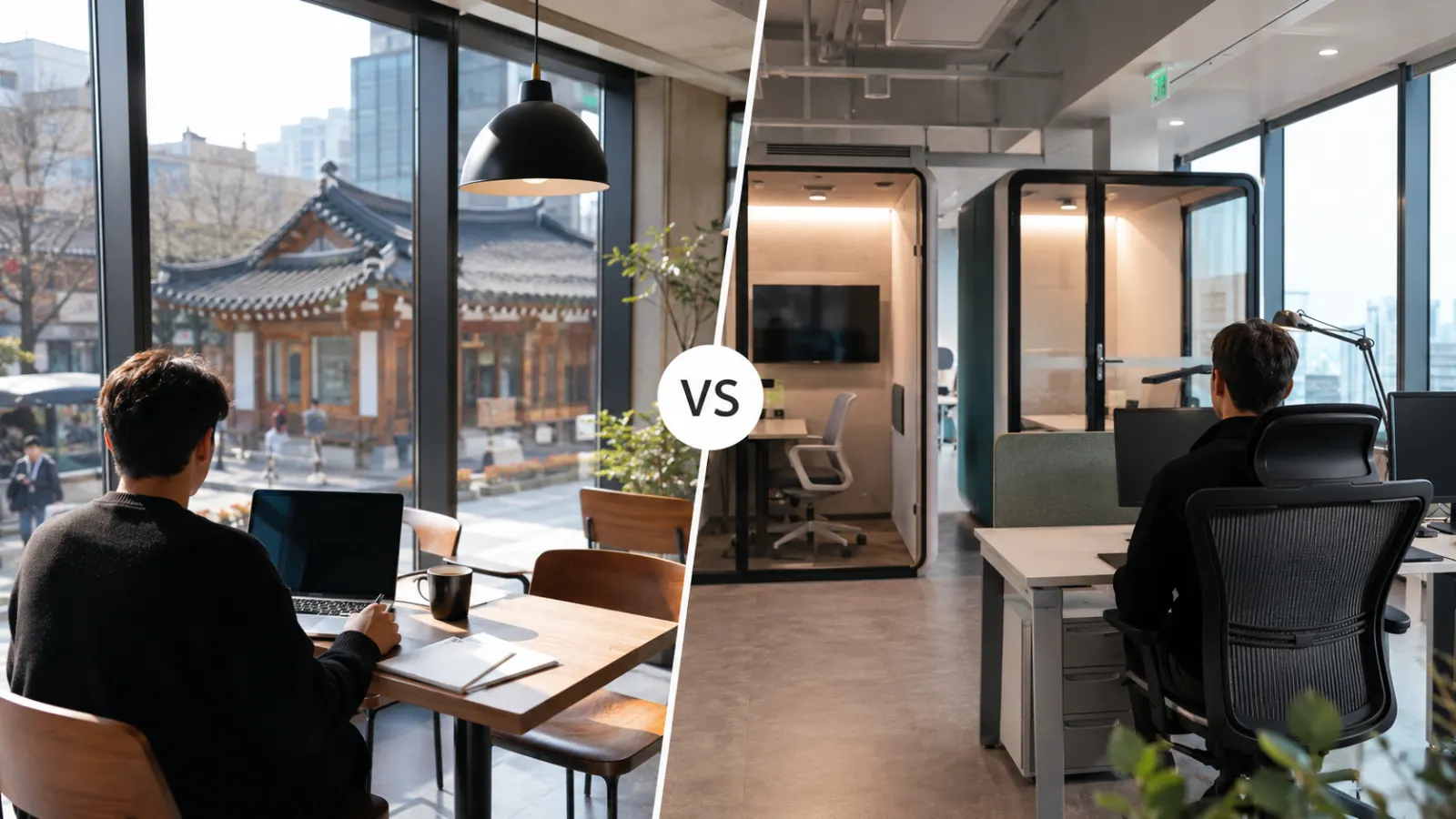
Remote work has become increasingly common, and many foreigners arriving in South Korea assume they can simply work from cafés every day. While Korea has thousands of excellent cafés with fast internet and comfortable interiors, experienced remote workers often discover that cafés are not always the most practical place for a full workday.
Coworking spaces have expanded rapidly across Korea, offering flexible memberships, meeting rooms, reliable internet, and a professional working environment. Choosing between a café and a coworking space depends on your schedule, budget, and the type of work you do.
Before committing to either option, it's worth understanding how each fits into everyday life in Korea.
Why cafés are so popular
Korean cafés are everywhere. In large cities, it's easy to find cafés with:
- Fast Wi-Fi
- Power outlets
- Comfortable seating
- Good coffee
- Air conditioning
- Long opening hours
Many freelancers, students, and remote workers spend several hours working from cafés, especially during the morning or early afternoon. For occasional work sessions, cafés are often the simplest choice.
The limitations of working from cafés
Many newcomers expect cafés to function like informal offices. In reality, there are practical limitations. During busy hours:
- Seats may become difficult to find.
- Power outlets may all be occupied.
- Background noise can increase significantly.
- Some cafés limit seating during peak periods.
- Large video meetings may disturb other customers.
Although purchasing one drink often allows you to stay for some time, occupying a table for an entire workday after buying only a single coffee may be considered inconsiderate in busy locations.
The atmosphere also changes throughout the day. A quiet morning café can become crowded after lunch or in the evening.
What coworking spaces offer
Coworking spaces are designed specifically for work. Depending on the provider, members may have access to:
- Dedicated desks
- High-speed internet
- Meeting rooms
- Phone booths
- Printers
- Lockers
- Kitchen facilities
- Business lounges
- Community events
- 24-hour access
For professionals who regularly attend online meetings or need a quiet environment, these facilities can significantly improve productivity.
Cost comparison
One reason many people continue working from cafés is cost. A coffee is obviously cheaper than a monthly coworking membership. However, the comparison changes if you buy multiple drinks or snacks throughout the day.
A regular remote worker may spend a surprising amount each month on cafés alone. Coworking memberships generally provide predictable monthly costs while eliminating the pressure to continue purchasing food or drinks. The better value depends on how frequently you work outside your home.
Internet reliability
Korea is known for fast internet. Even so, there is a difference between public Wi-Fi and a business-grade network. Coworking spaces typically provide:
- Stable internet connections
- Better upload speeds
- Less network congestion
- More reliable video conferencing
For software developers, designers, consultants, and anyone transferring large files, the consistency can be more important than raw speed.
Video meetings
One area where coworking spaces clearly outperform cafés is online meetings. Taking an important client call inside a crowded café is rarely ideal. Background conversations, music, and coffee machines can quickly become distracting.
Many coworking spaces provide private phone booths or meeting rooms where you can participate in calls without disturbing others. If video meetings are a regular part of your work, this benefit alone may justify the membership.
Networking opportunities
Coworking spaces are not only about desks. Many organize:
- Startup events
- Workshops
- Networking sessions
- Community lunches
- Business seminars
Foreign entrepreneurs, freelancers, and digital professionals often find these events valuable for building local connections. Cafés, by comparison, are generally places where people keep to themselves.
Which option is better?
The answer depends on your work style. A café may be enough if you:
- Work only occasionally.
- Need just a few quiet hours.
- Have a limited budget.
- Rarely join online meetings.
A coworking space may be a better investment if you:
- Work remotely every day.
- Need reliable internet.
- Meet clients regularly.
- Make frequent video calls.
- Want a professional business environment.
Some remote workers even combine both approaches by using coworking spaces during busy workdays and cafés for lighter tasks or creative thinking.
Common mistakes foreigners make
New remote workers often:
- Assume every café welcomes all-day laptop use.
- Expect every table to have power outlets.
- Schedule important meetings in noisy environments.
- Underestimate monthly café spending.
- Ignore coworking options that may actually save time.
Thinking beyond the price of a single coffee often leads to a better long-term decision.
Final Thoughts
South Korea offers excellent options for remote work, whether you prefer the relaxed atmosphere of a neighborhood café or the structure of a professional coworking space. Neither choice is universally better. Cafés provide flexibility and convenience, while coworking spaces offer consistency, privacy, and professional facilities.
Choosing the right workspace depends on how you work, not simply where the coffee is better.
Quick Summary
- Cafés are convenient for occasional work but may become crowded during peak hours.
- Coworking spaces offer dedicated work facilities, meeting rooms, and stable internet.
- Frequent remote workers often find coworking memberships more practical over time.
- Consider your work habits, meeting schedule, and monthly budget before deciding.