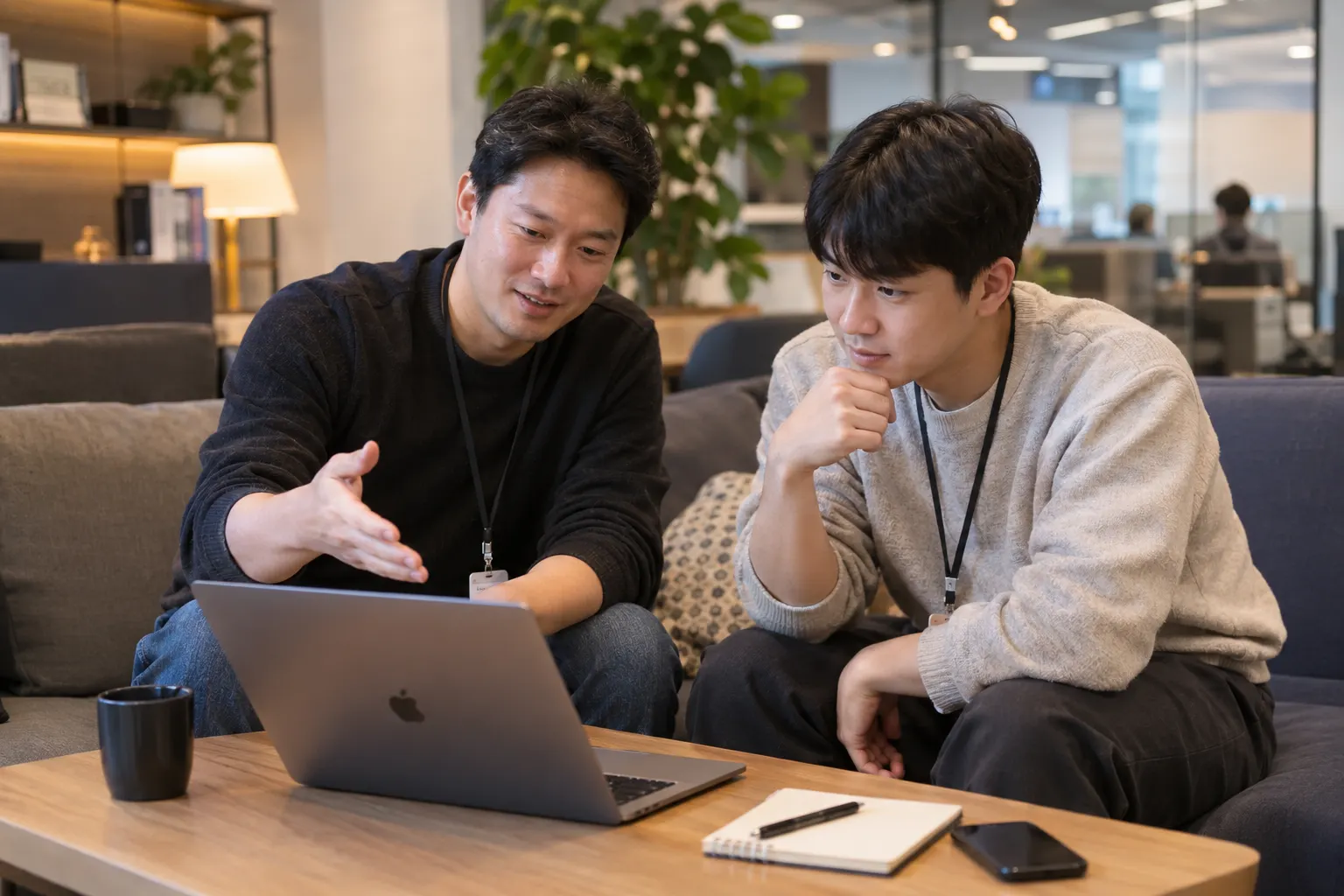
Korean Business Etiquette: What Foreigners Often Get Wrong in Meetings

If you've walked out of a meeting with a Korean company unsure whether it went well, or unintentionally caused a moment of awkward silence, you're not alone. Korean business etiquette runs on a set of unspoken rules around hierarchy, communication style, and decision-making that differ enough from many Western business cultures to cause real friction, even among well-intentioned foreign professionals.
Here's what actually trips people up in Korean business meetings, and how to read the room better.
Hierarchy Shapes Almost Everything
Korean workplaces generally operate with a clearer hierarchy than many foreign professionals are used to, and this shows up concretely in meetings.
- Seating order often reflects seniority, with the most senior person typically seated furthest from the door or at the head of the table, arriving and sitting without checking this can create quiet confusion.
- Who speaks first, and who speaks most frequently follows rank, junior staff often wait for a senior colleague to weigh in before offering their own opinion, even when directly asked a question.
- Business card exchange (명함) still carries real weight, presenting and receiving cards with both hands, and taking a moment to actually look at the card rather than pocketing it immediately, is a small gesture that's noticed.
A common mistake foreign professionals make is directing all communication to whoever seems most fluent in English, rather than the most senior person in the room, this can unintentionally read as overlooking hierarchy, even if unintentional.
Why Meetings Can Feel Indirect
Western business communication often values directness, saying no clearly, raising disagreement openly, pushing back in the room. Korean business culture more often favors indirect signals, especially in group settings.
- A hesitant "it might be difficult" or "we'll need to think about it" often functions as a soft no, rather than a genuine maybe.
- Disagreement is more commonly expressed privately, after the meeting, or through a intermediary, rather than voiced directly in front of a group, particularly if it involves contradicting someone more senior.
- Silence in response to a proposal isn't necessarily agreement, it can also signal discomfort or unspoken reservations that haven't been fully processed yet.
Foreign professionals who push for a direct yes-or-no answer in the room sometimes get one that sounds affirmative but doesn't hold up later, not because of dishonesty, but because open confrontation in a group meeting is culturally avoided in many traditional settings.
Decision-Making Often Happens Outside the Meeting Room
A frequent misunderstanding is assuming the meeting itself is where decisions get made. In many Korean companies, meetings function more as a space to present and confirm decisions that have already been informally discussed beforehand, through a process sometimes called "nunchi" reading, or more formally through internal consensus-building before the meeting takes place.
This means:
- Real influence often happens in informal conversations before the scheduled meeting, not during it.
- A meeting that seems to end without a clear decision isn't necessarily unproductive, the actual decision may already be developing through separate channels.
- Following up individually with key stakeholders after a meeting is sometimes more effective than pushing for resolution in the room itself.
Common Etiquette Mistakes to Avoid
- Using first names too early, especially with senior colleagues, titles and honorifics matter, and even in English conversation, using a title (like "Director Kim" rather than just "Kim") is generally safer until told otherwise.
- Interrupting or talking over someone senior, even with good intentions or added value, can be read as a lack of respect for hierarchy.
- Scheduling meetings without confirming through the appropriate channel, in many companies, meeting requests are expected to go through a specific person or process rather than direct informal outreach.
- Assuming enthusiasm equals commitment, positive-sounding responses in a meeting don't always translate to firm agreement, following up with something concrete in writing afterward helps confirm what was actually decided.
What's Changing
Korean corporate culture, especially at startups, tech companies, and firms with significant international staff, has genuinely shifted toward flatter structures and more direct communication over the past decade. Younger managers in particular are often more comfortable with Western-style directness than older, more traditional corporate leadership. That said, assuming this shift applies uniformly, especially at larger conglomerates or more traditional industries, is a mistake, reading the specific company's culture matters more than applying a single rule everywhere.
A Practical Approach for Foreign Professionals
- Observe before you calibrate, sit through a meeting or two paying attention to who speaks, in what order, and how disagreement (if any) surfaces, before adjusting your own approach.
- When in doubt about hierarchy or protocol, a trusted local colleague is a more reliable guide than general advice, since norms vary by company and industry.
- Confirm important outcomes in writing after the meeting, this isn't distrust, it's a normal and appreciated way to make sure everyone's aligned given how much can be communicated indirectly in the room itself.
Quick Summary
- Seating, speaking order, and business card etiquette in Korean meetings often reflect hierarchy, paying attention to these details matters more than in many Western business settings.
- Indirect responses like "it might be difficult" often function as a soft no, and open disagreement is more commonly handled privately than voiced in the room.
- Real decisions are often shaped before or after the formal meeting through informal conversation, not necessarily during it.
- Corporate culture varies significantly by company and generation, observing specific norms and confirming outcomes in writing tends to work better than applying a single fixed rule.