Korean Business Meeting Etiquette: What Foreign Professionals Often Misunderstand

A business meeting in Korea may look familiar at first: conference room, laptops, coffee, presentation slides, and polite greetings. But the meaning behind small moments can be different. How you introduce yourself, exchange business cards, speak to senior people, follow up, and handle silence can affect how professional you appear.
Foreign professionals do not need to copy every Korean habit perfectly. But understanding the basic expectations can prevent awkward mistakes and make meetings smoother.
Hierarchy still matters
Korean companies vary widely. A startup in Seongsu, a global tech office in Pangyo, a family-owned manufacturer, and a large conglomerate may all feel different. Still, hierarchy often matters more than many foreigners expect.
Seniority, job title, age, department, and company position can influence who speaks first, who makes decisions, and how directly people disagree. This does not mean junior people have no voice. It means communication may be more structured.
A common misunderstanding is assuming that the quietest person has no influence. In some meetings, the final decision-maker may say very little. In other cases, a senior person may listen carefully and decide later rather than debate in the room.
Pay attention to titles, seating, introductions, and who others look toward before answering.
Business cards are not just contact details
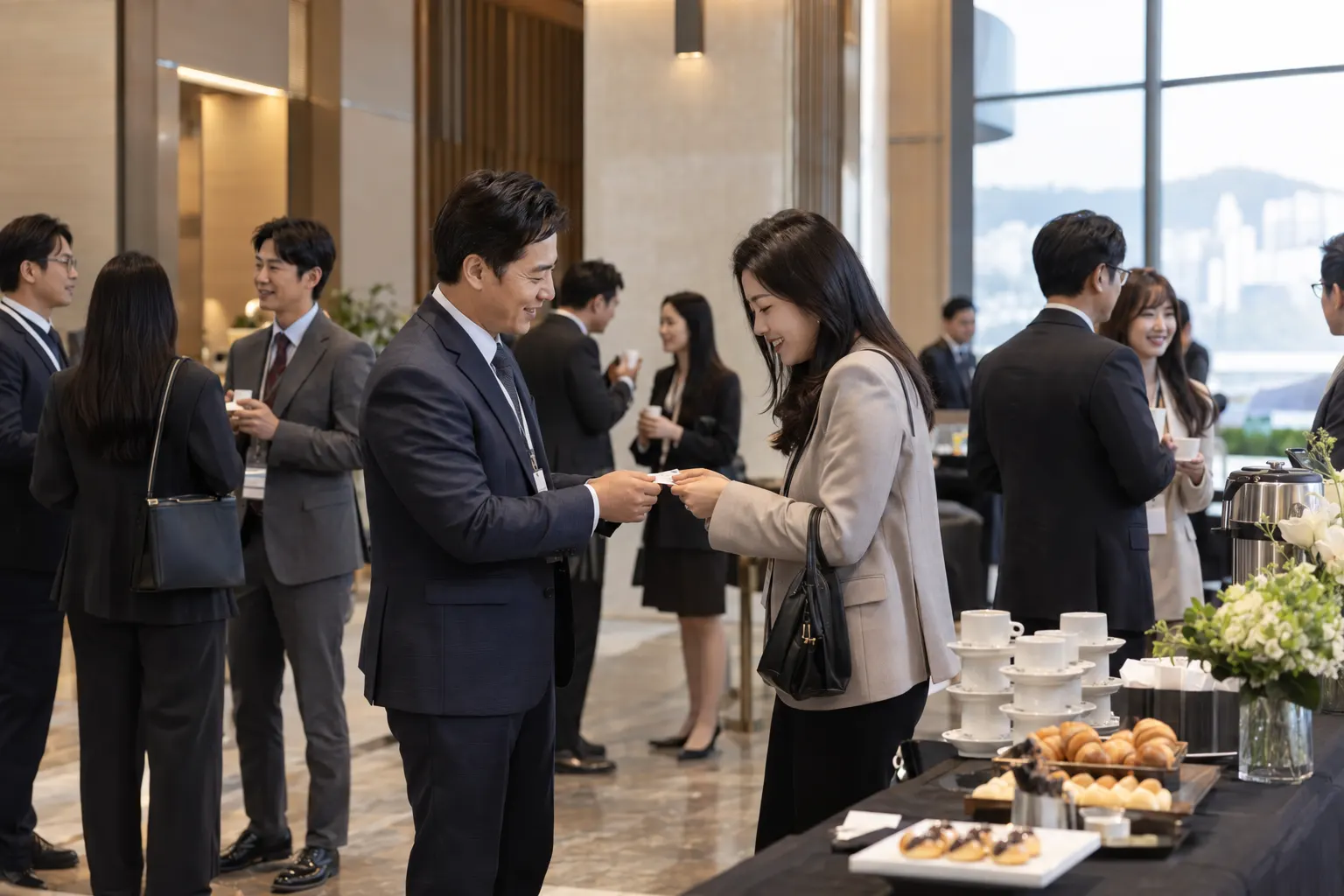
Business cards are still useful in Korean business settings, especially in formal meetings, B2B sales, partnerships, consulting, trade, real estate, and professional services.
When receiving a card, take a moment to look at it. Do not immediately put it in your pocket without attention. The card tells you the person’s name, title, department, and sometimes the company structure.
A simple polite routine works well:
- Give and receive cards with both hands when possible.
- Look at the card briefly before putting it away.
- Place it neatly on the table during the meeting if useful.
- Avoid writing on someone’s card in front of them unless clearly appropriate.
- Keep your own cards clean and easy to read.
You do not need to overperform formality, but careless handling can look disrespectful.
Directness should be adjusted
Some foreign professionals value direct discussion, fast disagreement, and immediate decisions. In Korea, directness can work in some environments, especially with global teams or younger startups. But in more traditional settings, blunt criticism during a first meeting may create discomfort.
This does not mean you should be vague. It means you should separate clarity from harshness. Instead of saying, “This plan will not work,” you might say, “I see the goal, but there may be a risk with timing and budget. Could we review another option?” Instead of rejecting an idea immediately, you can ask, “Would it be possible to compare this with one alternative before deciding?”
This style keeps the conversation practical without making someone lose face in front of others.
Silence does not always mean agreement
Foreigners sometimes leave a Korean meeting thinking everyone agreed because no one strongly objected. That can be a mistake.
Silence may mean agreement, hesitation, politeness, lack of authority to decide, need for internal review, or discomfort with disagreeing publicly. If you need a clear decision, ask for next steps rather than forcing an immediate yes or no.
Better questions include:
- Who should review this internally?
- What information would help your team decide?
- Would it be useful if we send a revised proposal?
- Is there any concern we should address before the next meeting?
- What timeline would be realistic for feedback?
These questions make it easier for the other side to respond without public confrontation.
Decisions may happen after the meeting
In some Korean business settings, the meeting is not where the final decision happens. It may be where information is gathered, relationships are checked, risks are discussed, and internal alignment begins.
This can frustrate foreigners who expect a meeting to end with a firm decision. But pushing too hard can backfire if the Korean side needs approval from a manager, director, client, headquarters, or another department.
A realistic approach is to treat the meeting as one step in a process. After the meeting, send a clear follow-up message with summary, action items, dates, and requested decisions. Good follow-up can matter as much as the meeting itself.
Titles and names need care
Korean professionals may use job titles more often than first names. In English-language meetings, people may introduce themselves with English names or first names, but formal Korean settings can still rely on title-based address.
If you are unsure, use the person’s title with their family name or follow the style used by others. Avoid becoming too casual too quickly, especially with senior people or first-time contacts.
Also check name order. Korean names are usually family name first in Korean, but many professionals use Western order in English. If you are preparing a proposal, email, or slide deck, make sure names and titles are correct.
Small mistakes in names can look careless in a formal business setting.
Meals and coffee can be part of the relationship
Business in Korea is not only about the meeting room. Coffee, lunch, dinner, and informal conversation can help build trust. This does not mean every business relationship requires drinking or long dinners, especially as workplace culture changes. But social time can still matter.
If invited to coffee or a meal, treat it as part of relationship-building. You do not need to discuss business every minute. Personal but appropriate conversation about Korea, travel, food, industry background, or work experience can help.
If alcohol is involved and you do not drink, a polite explanation is usually enough. The key is to be respectful without pretending to be comfortable with something you do not want to do.
Common mistakes foreign professionals make
The most common mistakes are not dramatic. They are small signals. Foreigners may:
- Rush introductions
- Ignore titles
- Handle business cards carelessly
- Push for decisions too early
- Mistake silence for agreement
- Criticize too bluntly in a group
- Send vague follow-up emails
- Arrive without translated materials when needed
- Assume all Korean companies work like startups or global offices
These mistakes are easy to avoid with preparation.
How to prepare for a Korean business meeting
Before the meeting, check who is attending and what their roles are. Prepare a short introduction of your company or project. Bring business cards if the meeting is formal. If language may be an issue, prepare simple English and Korean versions of key points.
During the meeting, be clear but not aggressive. Watch who speaks, who decides, and who stays silent. Confirm next steps before leaving. After the meeting, send a concise summary. Include what was discussed, what you will send, what you need from them, and the expected timeline.
A balanced way to approach Korean etiquette
Korean business etiquette is not about memorizing rigid rules. It is about showing that you respect structure, relationships, and communication style.
You can still be direct, efficient, and international in your approach. But you will usually get better results if you adjust your pace, handle hierarchy thoughtfully, and make follow-up clear.
The goal is not to become Korean. The goal is to make the other side feel that working with you will be smooth, respectful, and reliable.
Quick Summary
- Korean business meetings may place more weight on hierarchy, titles, and internal approval than foreigners expect.
- Business cards should be exchanged and handled carefully in formal settings.
- Silence does not always mean agreement, so confirm next steps clearly.
- A polite follow-up message can be as important as the meeting itself.