How Korean Workplace Job Titles Translate on Business Cards and Resumes
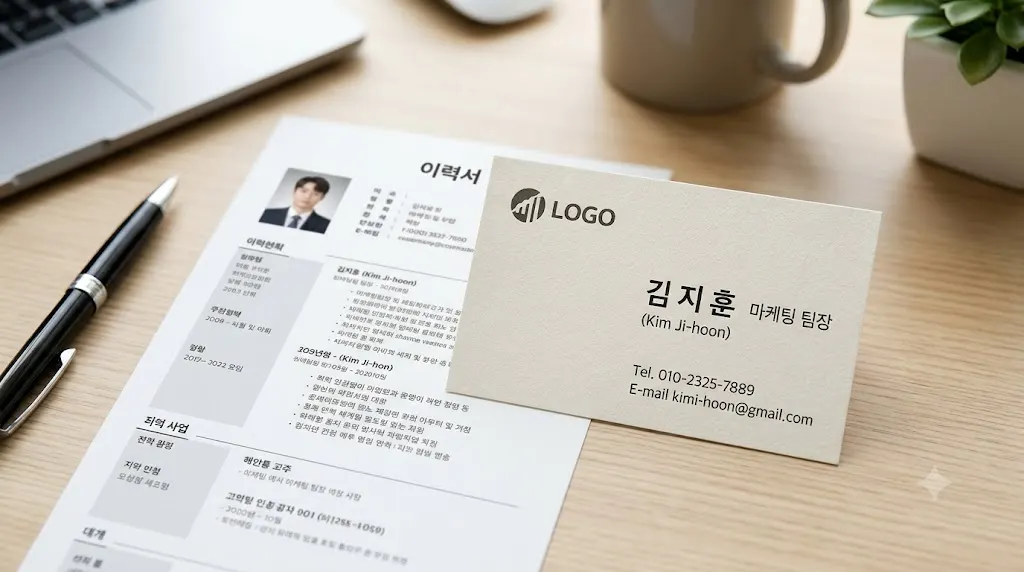
If your Korean business card says 대리 or 과장 and you're not sure how to describe that on a LinkedIn profile or resume, you're running into one of the most common translation problems for foreign workers. Korean titles reflect rank in a company ladder rather than a specific function, so a direct English translation can mislead. Choosing a clear English equivalent helps recruiters outside Korea understand your actual level.
The Quick Answer: Rough Equivalents
Titles vary by company and industry, but a general guide:
- 사원 (Sawon): entry-level staff, similar to associate or junior staff
- 주임 (Jurim): junior-to-mid level, similar to senior associate in some firms
- 대리 (Daeri): assistant manager, often equivalent to a mid-level individual contributor
- 과장 (Gwajang): manager, often a team-level lead or experienced manager
- 차장 (Chajang): deputy general manager, senior manager level
- 부장 (Bujang): general manager or department head
- 이사 (Isa) and above: director and executive levels
As covered in the workplace titles guide, the ladder is a ranking system, so the same title can mean different scopes at different companies.
Why Direct Translation Misleads
A 과장 at a large conglomerate may manage a small group, while the same title at a small firm could mean something quite different. Similarly, "manager" in English often implies people management, which may not be true of every Korean 과장. Rely on what you actually did rather than the literal translation.
How to Present It on a Resume
- Use a clear English title that matches your real scope, such as "Marketing Manager" or "Senior Engineer."
- Optionally add the Korean title in parentheses, for example "Manager (과장)," if it helps Korean-speaking readers.
- Describe responsibilities and results in specific terms, such as team size, budget, and outcomes.
- Note the company size and industry so readers can calibrate the role.
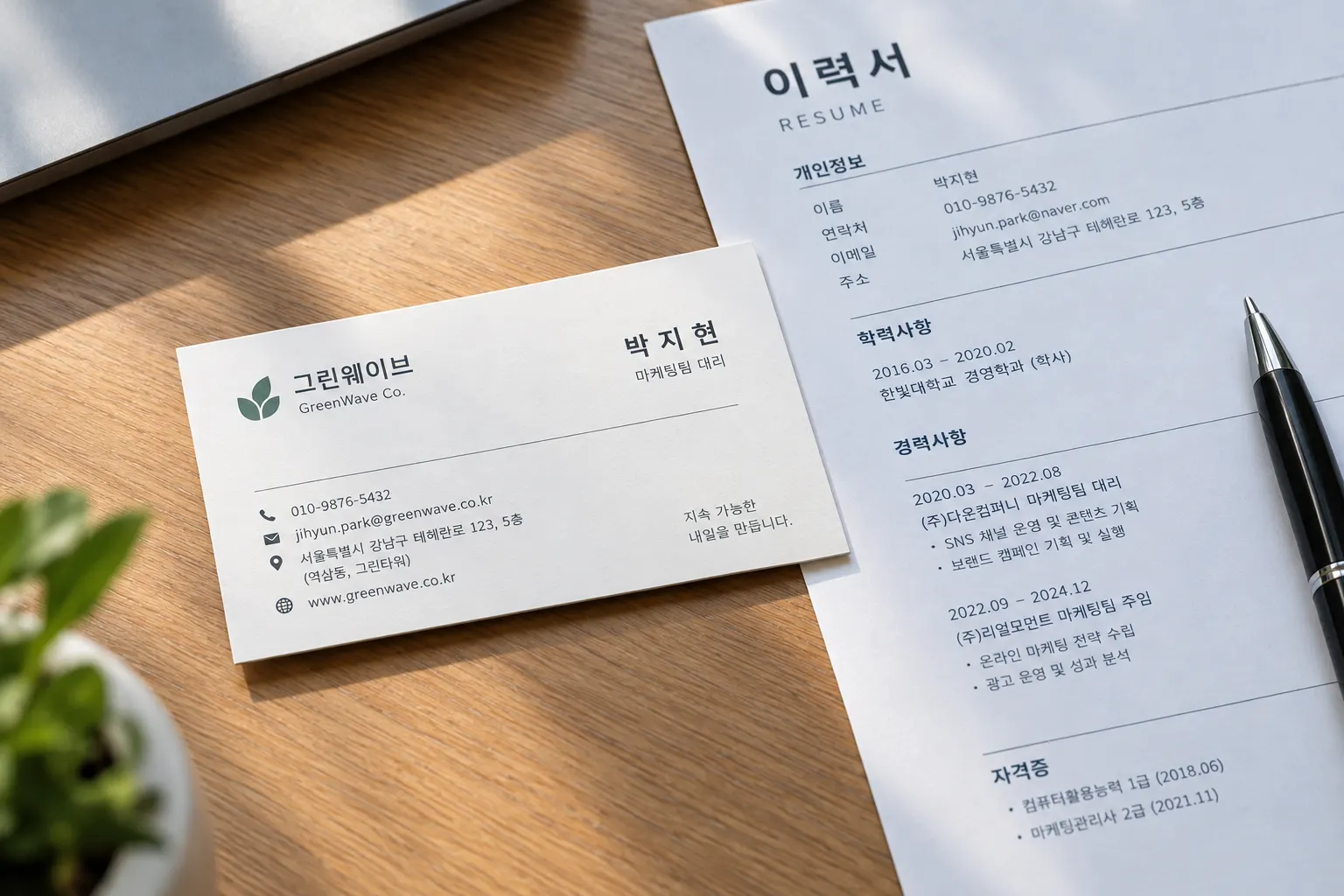
Business Cards
Korean cards often show the Korean title prominently with an English side. If your company chooses the English title, use what is printed, and ask HR if you are unsure. When meeting foreign contacts, you can briefly explain your role in plain English.
Using Titles Day to Day
Inside Korean companies, people are addressed by title, as covered in the business card guide. Outside, in English, use your functional title if it communicates your role better than the literal translation.
Common Mistakes
- Translating titles literally. The result may overstate or understate your level.
- Listing only the Korean title. Non-Korean readers will not understand it.
- Omitting scope details. Team size and results clarify your level.
- Assuming titles are identical across companies. Compare responsibilities, not labels.
Quick Summary
- Korean titles such as 대리, 과장, and 부장 show rank on a ladder, and their English equivalents vary by company.
- On a resume, use an English title that matches your real responsibilities, optionally with the Korean title in parentheses.
- Add team size, budget, and results so readers can judge your actual scope.
- Check your company's official English title with HR before printing cards or updating profiles.