Part-Time Jobs in Korea for International Students: What to Check Before Working
An international student in Korea may want a part-time job for extra money, Korean practice, work experience, or simply to feel more connected to daily life. The idea sounds simple: find a café, restaurant, tutoring job, convenience store, or office assistant position and start working. In reality, student work in Korea is tied to visa status, school approval, immigration permission, work-hour limits, and job type.
This does not mean students cannot work. Many do. But the safest approach is to understand the permission process before accepting a job, not after your first shift.
Why student part-time work is not just a private agreement
In some countries, a student may casually work part time as long as the employer agrees. In Korea, foreign students usually need to think about immigration rules first.
The key issue is that your student visa is granted for study. Work may be allowed only under certain conditions. Depending on your visa type, school, academic record, Korean language level, job type, and approved hours, you may need permission before starting.
This is where students make the biggest mistake. They assume that because the employer is willing to hire them, the job is automatically legal. An employer’s “yes” is not the same as immigration permission.
Before working, you should confirm whether your visa status allows the job and whether you need formal approval from your school and immigration office.
D-2 and D-4 students may face different conditions
Many international students in Korea are on D-2 visas for degree programs or D-4 visas for language training. These categories can have different rules and practical limits.
A university student in a degree program may have more stable eligibility for part-time work once they meet the required conditions. A language student may face stricter timing, attendance, or school-related checks. Exact conditions can vary, so students should confirm with their university international office or immigration guidance rather than relying on social media.
Your school matters because many students must first receive school approval or a recommendation before applying for work permission. If your attendance is poor or your academic standing is weak, approval may become harder.
The practical point is simple: treat the international office as part of the process, not as an afterthought.
Work-hour limits are not just suggestions
Student work permission often comes with limits on how many hours you can work during the semester. There may be different rules for weekdays, weekends, vacations, degree levels, language ability, or academic performance.
Do not assume your friend’s limit is your limit. Two students at the same university can have different situations depending on visa type, program, grades, Korean language level, or previous approval.
This matters because employers may ask you to work more during busy periods. A restaurant may need extra weekend shifts. A café may ask you to cover evenings. A tutoring student may want more classes. If you exceed your allowed hours, the risk is yours, not only the employer’s.
Before accepting a schedule, write down your approved limit and compare it with the actual shift plan. If the employer keeps changing hours casually, be careful.
Not every job is suitable for student visa holders
Some part-time jobs are more common for international students: restaurant work, café work, translation, campus assistance, research support, office support, event staffing, tutoring within allowed conditions, or simple service roles.
But certain work types may be restricted, inappropriate, or risky depending on your visa and permission. Jobs involving adult entertainment, certain nightlife businesses, illegal dispatch work, unreported cash work, or work outside approved conditions can create serious problems.
Online work can also be confusing. A student may think that freelance design, social media editing, content creation, tutoring online, or platform income is separate from Korean rules. But if you are physically in Korea and earning money, the situation may still require careful checking.
The safe question is not “Can I get paid?” It is “Is this type of paid activity allowed under my status, and do I need permission?”
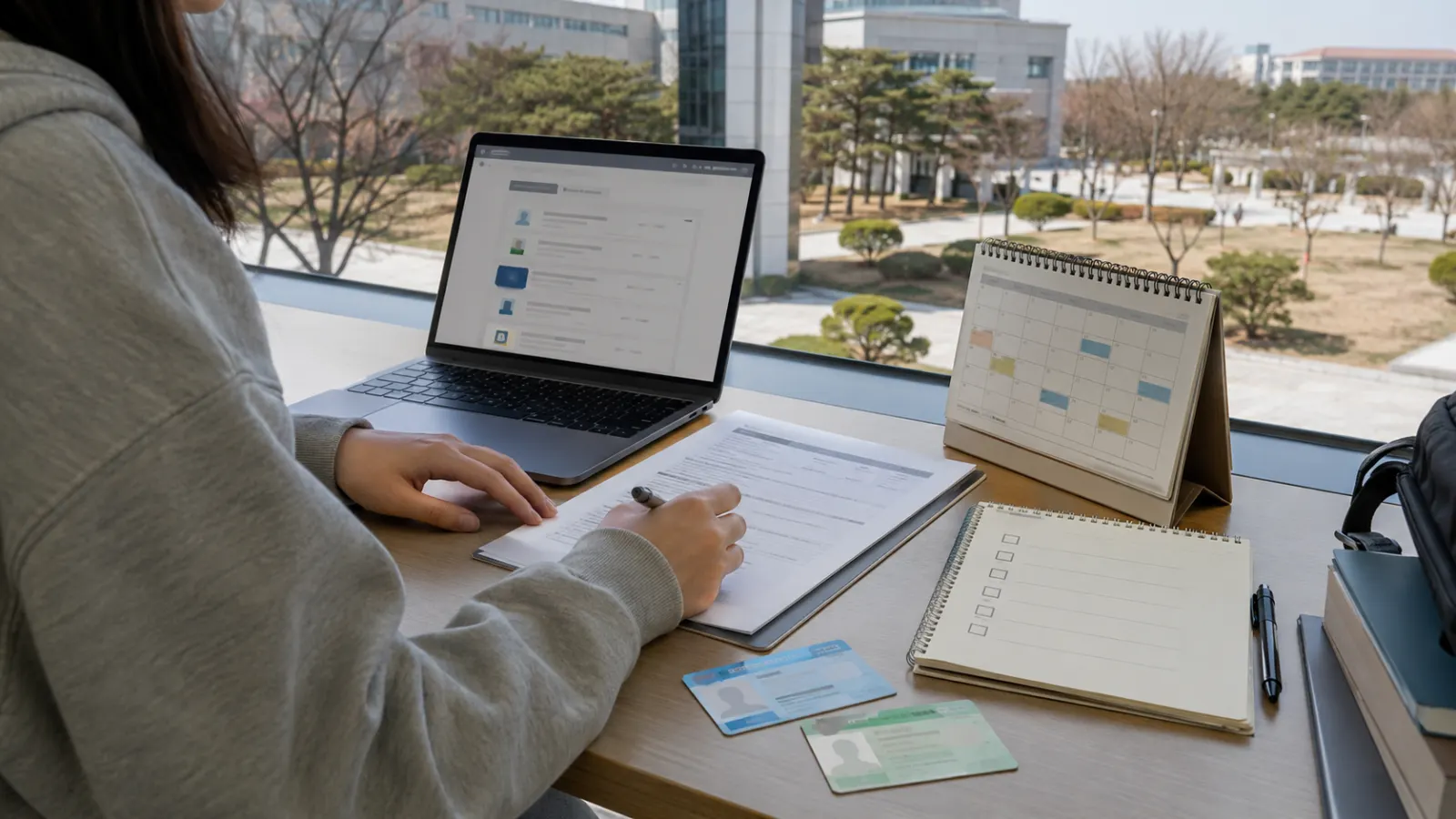
Documents students may need
The exact documents depend on the school, immigration process, and job. Still, students should be ready to prepare several items. Commonly requested items may include:
- Passport
- Foreigner residence card
- Student ID or certificate of enrollment
- Academic transcript or attendance record
- Employment contract
- Business registration certificate from the employer
- Work schedule or job description
- School approval or recommendation form
- Proof of Korean language ability, if relevant
The employment contract is especially important. It should clearly show the employer, work location, job duties, pay, working hours, and period of employment. A vague verbal agreement can cause problems later.
Students should keep copies of every document. If you change jobs, extend work, or modify hours, you may need updated permission.
Pay, contracts, and basic workplace expectations
Korea has a legal minimum wage, and part-time workers should be paid properly. Students should also understand pay dates, break time, overtime expectations, weekend shifts, and whether meals or uniforms are provided.
A common mistake is accepting “training time” without pay or agreeing to cash payment without records. Another is not asking whether taxes or insurance deductions apply. For small part-time jobs, the details may feel awkward to ask about, but written terms protect both sides.
Before starting, ask:
- What is the hourly wage?
- When is payday?
- How are hours recorded?
- Is there a written contract?
- Are breaks included?
- What happens if I miss a shift because of exams?
- Will tax or insurance be deducted?
- Is the work location the same as the approved location?
If an employer refuses to write basic terms, think carefully before accepting.
Korean ability helps, but it is not the only factor
Many student jobs require some Korean, especially customer-facing roles. Convenience stores, restaurants, cafés, and service jobs often involve fast Korean conversation, payment handling, phone calls, or customer complaints.
But not every job requires fluent Korean. Some campus jobs, research support, translation, content work, international student support, English tutoring, or foreign-language service roles may value other skills.
Students should be honest about language ability. A job that looks simple can become stressful if you cannot understand customers, managers, safety instructions, or schedule changes. On the other hand, a part-time job can be one of the fastest ways to improve practical Korean if the workplace is patient and legal.
The best job is not always the highest-paying one. It is the one that fits your visa, schedule, language level, and study responsibilities.
Balancing work and study
International students often underestimate how much energy Korean student life can require. Classes, assignments, language learning, commuting, visa paperwork, social adjustment, and part-time work can quickly become too much.
This matters because your academic record and attendance may affect future permissions, scholarships, visa extensions, or school standing. A part-time job should support your life in Korea, not damage the reason you came.
Before taking a job, calculate the real time cost:
- Commute time
- Shift hours
- Recovery time after late shifts
- Exam periods
- Korean study time
- Meal breaks
- Weekend rest
- Visa or school paperwork
A job near campus with slightly lower pay may be better than a higher-paying job that takes one hour each way.
What to do before accepting a job
Before saying yes, take a step-by-step approach.
First, confirm your visa type and whether part-time work is possible. Second, ask your school’s international office about the process. Third, get a written job offer or contract from the employer. Fourth, apply for required permission before starting. Fifth, keep records of approved hours and job details.
Do not start first and “fix it later.” Immigration issues are much harder to solve after a violation than before a shift begins.
If the employer pressures you to start immediately without documents, that is a warning sign. A legitimate employer hiring foreign students should understand that permission takes time.
A realistic way to think about student jobs in Korea
Part-time work in Korea can be valuable. It can help students earn money, practice Korean, meet people, and understand Korean work culture. But it should be handled as an official activity, not a casual side arrangement.
The safest students are not necessarily the ones who avoid work. They are the ones who check permission, choose suitable jobs, keep schedules within limits, and protect their study status.
If you are an international student, your first priority is your visa and education. A good part-time job should fit inside that structure. If the job puts your status, grades, or health at risk, it is probably not worth the short-term income.
Quick Summary
- International students in Korea may need school and immigration permission before starting part-time work.
- Visa type, academic standing, attendance, Korean ability, and job type can affect eligibility and work-hour limits.
- Students should get written job terms and avoid starting work before approval.
- The best part-time job fits your legal status, class schedule, language level, and long-term study goals.