How to Read a Korean Business Registration Certificate
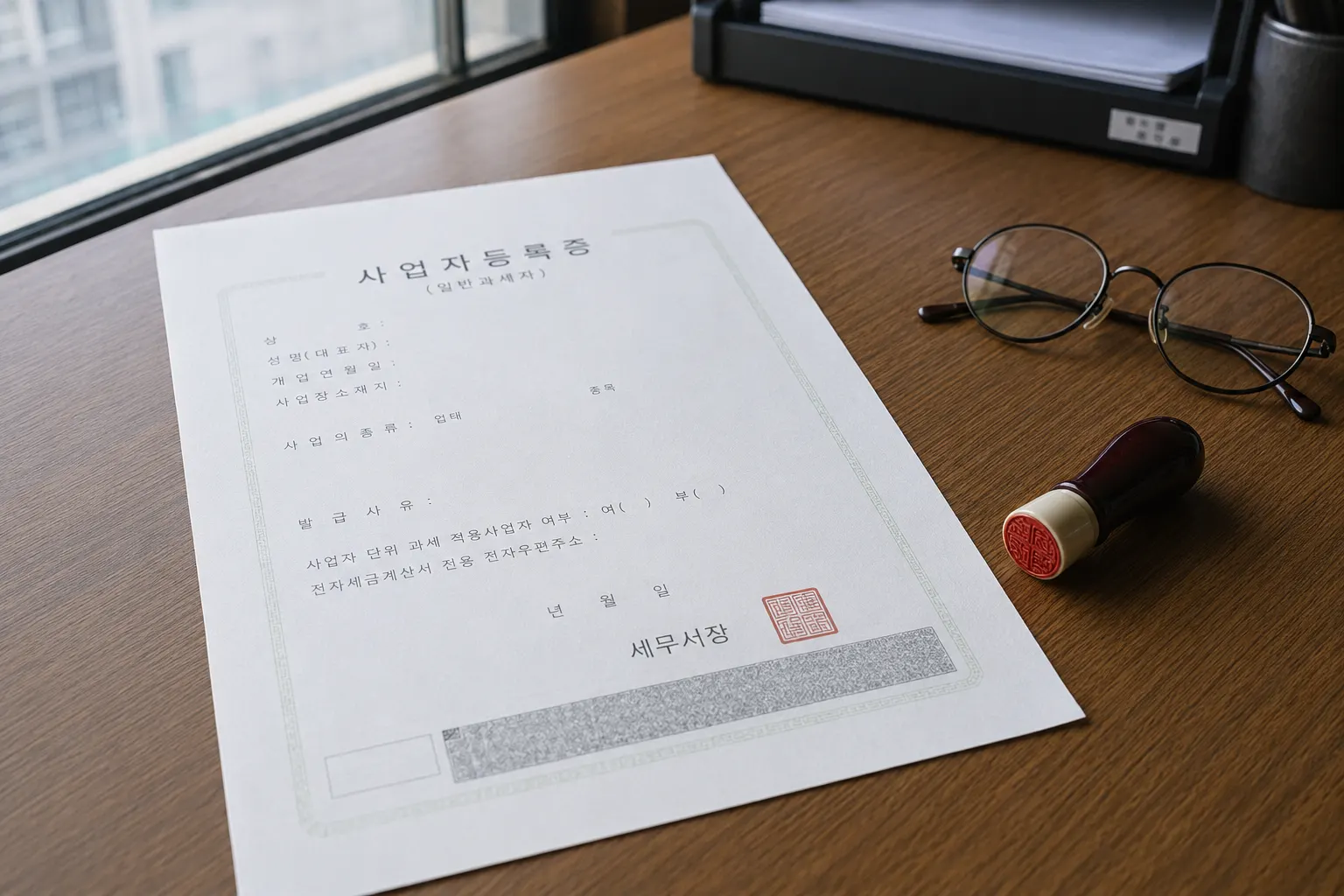
If a Korean supplier, landlord, or business partner has shown you their 사업자등록증 (business registration certificate) as proof of legitimacy, and you nodded along without actually understanding what you were looking at, you're not alone. This document is one of the most commonly referenced pieces of paperwork in Korean business dealings, foreigners setting up their own business need one, and foreigners doing business with Korean companies often need to verify one, but the format and terminology aren't self-explanatory without some context.
Here's how to actually read a Korean business registration certificate, and why checking one matters more than it might seem.
What the Certificate Actually Confirms
A business registration certificate is issued by the National Tax Service (NTS) once a business, whether a sole proprietorship or corporation, completes formal registration. It confirms the business legally exists for tax purposes and is authorized to issue invoices and conduct commercial transactions under that registered name.
This matters in practice because verifying a business's registration is a basic due diligence step in Korea, checking a supplier's, landlord's, or potential business partner's registration status is a normal and expected part of conducting business here, not an unusual or distrustful request.
Key Fields on the Certificate
- 사업자등록번호 (Business Registration Number): a unique 10-digit number identifying the business, this is the reference number used across tax filings, invoices, and official business verification.
- 상호 (Business/Trade Name): the registered name of the business, which may differ slightly from a brand name used in marketing or signage.
- 대표자 (Representative): the name of the business owner or legal representative, for a sole proprietorship this is typically the individual owner, for a corporation, the CEO or designated representative.
- 개업연월일 (Date of Business Commencement): when the business was officially registered, useful context for understanding how established a company is.
- 사업장 소재지 (Business Address): the registered physical address of the business, which should generally match the actual operating location, discrepancies here can sometimes indicate a registration issue worth asking about.
- 업태 / 종목 (Business Type / Business Category): describes what kind of business activity is registered, relevant for understanding whether a company's registration actually covers the services or goods they're offering you.
Why Verification Matters in Practice
- For contracts and invoicing, a legitimate business registration number is generally required for proper tax invoicing (세금계산서) in B2B transactions, working with an unregistered or improperly registered entity can create tax and legal complications down the line.
- For rental agreements, particularly with a landlord who claims to operate as a registered business (relevant for certain commercial leases), confirming registration status adds a layer of verification beyond just trusting a verbal claim.
- For freelance or contract work, if you're a foreign freelancer invoicing a Korean company, or working with one, confirming their registration details helps ensure invoicing and any relevant tax documentation proceeds correctly on both sides.
How to Actually Verify a Registration Number
Korea's National Tax Service provides an online lookup service (through Hometax) where a business registration number can be checked for basic validity and active status, useful for confirming a company you're about to sign a contract with is genuinely registered and active, rather than relying solely on a printed certificate that could be outdated or, in rare cases, fabricated.
- Obtain the business registration number, typically provided directly by the company or visible on invoices, contracts, or their printed certificate.
- Use Hometax's business status lookup feature to confirm the registration is active and matches the basic details you've been given.
- For more significant transactions or long-term agreements, cross-checking the registered business name and representative against other public information (company website, other contracts, business card details) adds an additional layer of confidence.
Common Misunderstandings
A frequent assumption among foreign business visitors or new entrepreneurs is that a printed certificate alone is sufficient proof of a legitimate, currently active business. In practice, registrations can be closed, suspended, or changed after a certificate was originally issued and printed, verifying current status through Hometax, rather than relying solely on a physical document that could be outdated, is the more reliable approach for anything involving real financial commitment.
Another common misunderstanding involves confusing a business registration certificate with other forms of Korean corporate documentation, like a corporate registry extract (법인등기부등본), which provides more detailed legal and ownership information for corporations specifically. For sole proprietorships, the business registration certificate is generally the primary document, for corporations, both documents together provide a fuller picture, worth requesting both for more significant business dealings.
Quick Summary
- A Korean business registration certificate (사업자등록증), issued by the National Tax Service, confirms a business is legally registered and includes key details like the registration number, representative name, and registered address.
- Checking a business's registration is a normal and expected due diligence step in Korean business dealings, not an unusual or distrustful request.
- Hometax's online lookup service allows verification of a business registration number's current active status, more reliable than trusting a printed certificate alone.
- For corporations specifically, a corporate registry extract (법인등기부등본) provides additional legal and ownership detail beyond the basic business registration certificate.