Business
How Virtual Offices and Business Addresses Work for Freelancers in Korea
By New In Korea TeamPublished
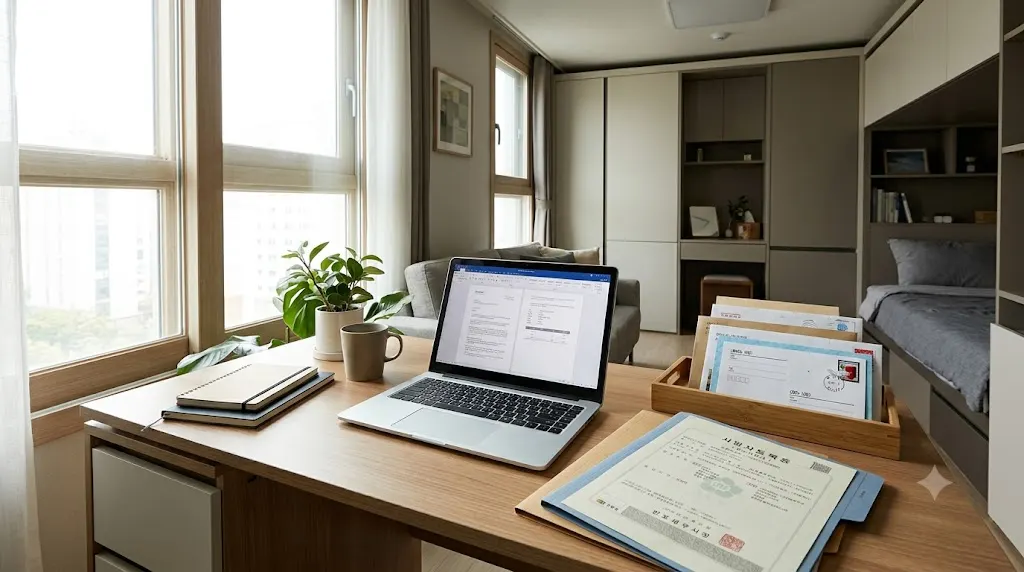
If you're a freelancer or small business owner in Korea working from a home officetel and wondering whether you need an actual commercial address for business registration, or you've heard about "virtual office" services and aren't sure whether they're legitimate for Korean business registration purposes, understanding how business address requirements actually work for smaller operations helps you register properly without paying for unnecessary commercial office space you don't actually need.
Here's how virtual offices and business address requirements work for freelancers and small businesses in Korea.
Do You Actually Need a Commercial Address?
- Korean business registration, as covered in how business registration categories work for foreign entrepreneurs, requires a registered business address, but this doesn't necessarily mean a dedicated commercial office space, many freelancers and sole proprietors legitimately register using their home address, particularly for service-based businesses without a physical retail or client-facing location requirement.
- Some business categories or specific licensing requirements do mandate a genuine commercial-zoned address, particularly for businesses requiring specific health, safety, or zoning permits, understanding whether your specific business category falls under this kind of requirement matters before assuming a home address registration is universally acceptable.
- Landlord or lease restrictions sometimes come into play, some residential lease agreements specifically restrict using the address for business registration purposes, checking your specific lease terms, particularly for an officetel with any restrictions, before registering your home address as your business location avoids a potential lease violation.
What a Virtual Office Service Actually Provides
- Virtual office services provide a legitimate commercial address for business registration and mail handling purposes, without requiring you to actually rent and occupy physical office space, generally including mail receipt and forwarding, and sometimes occasional meeting room access for client meetings.
- This represents a genuinely practical middle ground for freelancers or small business owners who want a more professional business address than their home address, without the cost of an actual dedicated commercial lease, particularly relevant if client perception of a more established-looking business address matters for your specific industry.
- Pricing is generally considerably lower than an actual commercial office lease, a modest monthly fee for the address and mail service, understanding this cost against the actual practical benefit for your specific situation helps you decide whether this service genuinely adds value for your business.

Legitimacy and Registration Compatibility
- Confirm the specific virtual office provider's registration compatibility before committing, some providers specifically market their service as compatible with National Tax Service business registration, worth confirming this explicitly rather than assuming any address service automatically satisfies registration requirements.
- Understand any limitations on the address use, some virtual office arrangements have specific restrictions on the volume of businesses registered at the same address, or specific documentation requirements the provider needs from you, clarifying these details before finalizing your registration avoids complications during the actual National Tax Service registration process.
- Research the provider's actual reputation and track record, similar to any service you're relying on for a formal business registration purpose, checking reviews or asking within relevant freelancer or small business communities helps you avoid a less reputable provider that could create registration complications.
When a Home Address Registration Makes More Sense
- For a genuinely home-based freelance operation, translation work, consulting, content creation, or similar service-based work without client visits or physical inventory, registering your actual home address is often the simplest, most cost-effective option, provided your lease doesn't specifically restrict this use.
- The privacy trade-off, understanding that your registered business address, if it's your home address, may become visible through certain public business registration lookups, as covered in how to read a Korean business registration certificate, worth considering whether this privacy consideration matters enough for your specific situation to justify a virtual office address instead.
- Simplicity and cost savings generally favor home address registration for a genuinely small-scale, home-based freelance operation, reserving virtual office or actual commercial space consideration for situations where either your business category requires it, or the professional presentation genuinely matters for your specific client base or industry.
Common Mistakes Foreign Freelancers Make
- Assuming a commercial address is universally required for any business registration, unnecessarily paying for a virtual office or actual office space when a home address registration would have been entirely appropriate for their specific business type.
- Not checking lease restrictions before registering a home address, potentially creating a landlord dispute or lease violation issue by registering a business address without confirming this is permitted under their specific rental agreement.
- Choosing an unverified virtual office provider without confirming actual National Tax Service registration compatibility, risking a rejected registration attempt after already paying for the service.
- Not weighing the actual practical need for a more professional business address against the added cost, defaulting to a virtual office service without genuinely evaluating whether their specific business and client base actually benefits from this presentation versus a simpler home address registration.
Quick Summary
- Korean business registration requires a registered address, but this doesn't necessarily mean commercial office space, many freelancers legitimately register using their home address for service-based businesses.
- Virtual office services provide a legitimate commercial address and mail handling for business registration purposes without requiring actual office occupancy, worth confirming specific National Tax Service registration compatibility before committing to a provider.
- Checking your lease terms before registering a home address as your business location matters, since some residential leases specifically restrict this use.
- Weighing the actual practical need for a more professional business address, client perception, industry norms, against the added cost of a virtual office service, rather than defaulting to either option automatically, helps you choose appropriately for your specific situation.