Working Remotely from Korea: What Foreign Freelancers Should Check First
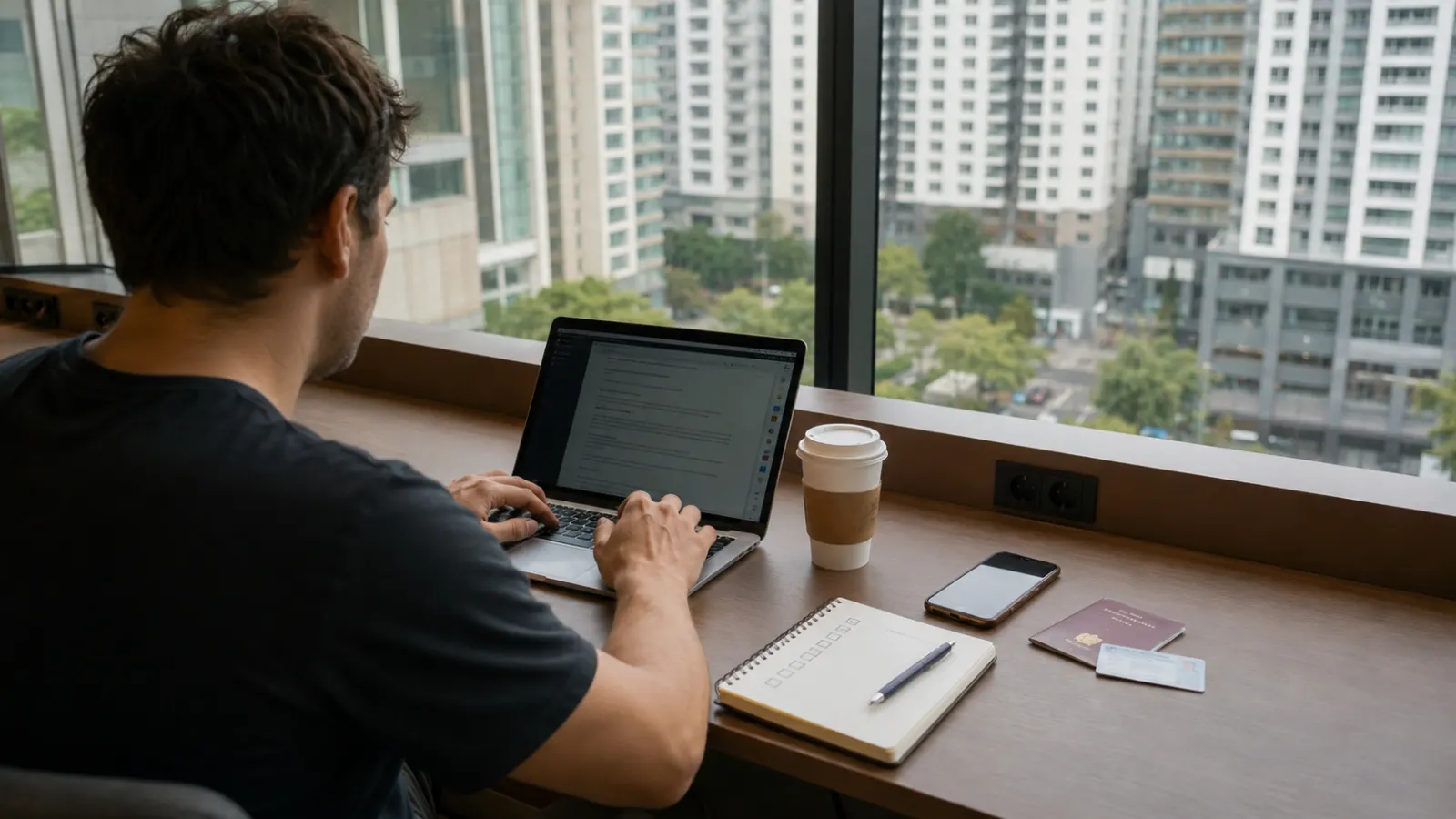
Working from a café in Seoul, Busan, or Jeju sounds simple: laptop, Wi-Fi, coffee, and a flexible schedule. But for foreign freelancers and remote workers, Korea is not just a beautiful place to work online. It is also a country with visa rules, tax questions, banking friction, phone verification, and practical work-life details that can affect your stay.
This does not mean Korea is a bad place for remote work. It can be excellent if your income source, stay length, paperwork, and expectations fit the system. The mistake is treating remote work as if it exists outside immigration, banking, housing, and tax rules.
Remote work is not one situation
Foreigners often use the words freelancer, remote worker, digital nomad, self-employed, contractor, and business owner as if they are the same. In practice, they can mean different things.
A freelancer may work for multiple clients. A remote employee may work full-time for a company outside Korea. A content creator may earn through platforms. A consultant may invoice overseas clients. A foreign resident may do local work in Korea. Each case can raise different questions about visa permission, income reporting, tax residency, and business registration.
The first thing to clarify is not where you want to sit with your laptop. It is what kind of work you are doing, who pays you, where the client or employer is located, how long you will stay in Korea, and whether your visa allows that activity.
If you are unsure, do not rely only on casual online comments. Immigration, tax, and labor rules can depend heavily on your exact facts.
Visa status comes before coworking plans
A common misunderstanding is that remote work is automatically allowed because the client is outside Korea. That may be true in some situations, but it should not be assumed.
Tourist status is usually designed for tourism, short visits, and non-work activities. A long-term residence visa may allow certain activities but restrict others. Student visas, dependent visas, working holiday status, employment visas, and long-stay remote work options all have different boundaries.
Before planning months of remote work in Korea, ask these questions:
- What visa or status will I use to stay in Korea?
- Does that status allow paid work?
- Does it allow only overseas remote work, local Korean work, or both?
- Can I invoice Korean clients?
- Can I receive income into a Korean bank account?
- Do I need permission before adding work activity?
- Does my visa limit working hours or type of work?
This is where people get into trouble. The work may feel “online,” but the legal question is still tied to your presence in Korea and the nature of the activity.
Banking can be harder than getting Wi-Fi
Korea has excellent internet access, but banking can be more complicated for foreigners. If you are only staying briefly, you may be able to keep using overseas banking and cards. If you stay longer, a Korean bank account can become useful for rent, phone bills, local subscriptions, coworking memberships, and daily life.
Opening a Korean bank account often requires identification, a local address, a Korean phone number, and a clear reason for the account. Freelancers may face extra questions if their income is irregular, overseas, platform-based, or business-related.
The practical issue is that remote workers often do not fit the neat boxes banks expect. An employee can show an employment certificate. A student can show enrollment. A freelancer may need to explain income sources more clearly.
If you plan to stay long term, prepare documents that show what you do and why you need local banking. This could include contracts, invoices, proof of overseas employment, business registration from your home country, or other income documents. The exact need depends on the bank and your situation.
Phone verification affects work tools and daily life
A Korean phone number is useful for far more than calls. It can affect banking, online shopping, delivery apps, coworking spaces, business tools, payment apps, local reservations, and account recovery.
For remote workers, this matters because daily friction adds up. You may have fast internet but still struggle to sign up for a service because your phone number does not support identity verification. A tourist eSIM may be enough for maps and messaging, but not enough for local digital systems.
If you will stay for more than a short visit, consider whether your phone plan supports:
- SMS and voice calls
- Identity verification under your legal name
- Long-term number retention
- Banking app authentication
- Local customer service
- Payment method updates
The cheapest data plan is not always the best plan for someone trying to live and work in Korea.
Tax questions should not be left until the end
Remote income can create tax questions in both Korea and your home country. Whether Korea taxes your income can depend on residency, source of income, length of stay, visa status, treaty rules, and the type of work. Your home country may also continue to have reporting requirements.
The dangerous assumption is thinking, “My clients are overseas, so Korea has nothing to do with it.” That may or may not be true. Another dangerous assumption is thinking, “I am in Korea, so all my income is automatically Korean income.” That may also be too simple.
Instead of guessing, organize your situation:
- How many days will you stay in Korea this year?
- Are you registered as a resident in Korea?
- Who pays you?
- Where are your clients located?
- Where is the work contract signed?
- Are you using a Korean bank account?
- Are you doing any work for Korean clients?
- Do you have tax obligations in your home country?
For small amounts or short visits, the practical risk may be different from a long-term freelancer earning full-time income while living in Korea. But the longer and more serious your stay becomes, the more you should speak with a qualified tax professional.
Coworking spaces are useful but not a full solution
Korea has many cafés and coworking options, especially in Seoul. Cafés can be convenient for light work, but they are not always ideal for calls, privacy, long sessions, or client meetings. Coworking spaces can solve some of those problems, but they do not solve visa, tax, banking, or housing issues.
A coworking space is useful if you need:
- Reliable seating and power
- Meeting rooms
- Quiet call booths
- Business address options
- Networking
- Separation between work and home
- More predictable work hours
But check the terms carefully. Some coworking memberships require local payment methods, phone verification, minimum periods, or Korean-language contracts. If you need a business address, confirm whether it is acceptable for your intended use. Not every address service fits every business or visa purpose.
Housing affects remote work more than expected
Remote workers often choose housing based on neighborhood charm, subway access, or rent. Those matter, but work comfort matters too. Before signing a rental contract, check:
- Internet speed and installation status
- Desk space
- Noise from neighbors, roads, or nightlife
- Heating and cooling costs
- Natural light
- Whether video calls are practical
- Nearby cafés or coworking spaces
- Contract length and deposit size
A room that is fine for sleeping may be terrible for working eight hours a day. Officetels can be convenient, but some have high maintenance fees or small layouts. Goshiwons and tiny studios may be affordable but difficult for professional remote work.
If your income depends on stable work output, housing is not just a lifestyle choice. It is part of your work infrastructure.
Korea’s convenience can hide small frictions
Korea feels highly convenient once you are set up. Transport is good, cafés are everywhere, delivery is fast, and internet access is strong. But foreigners who are not fully integrated into local systems may face repeated small blocks: payment verification, name matching, phone authentication, Korean-only forms, app signups, and customer service calls.
This is why remote workers should judge Korea realistically. The country is excellent for daily convenience, but not always frictionless for non-Korean residents. The more you depend on local systems, the more important proper setup becomes.
A tourist-style stay can be easy. A long-term remote work life needs more preparation.
A practical checklist before working remotely from Korea
Before deciding that Korea will be your remote work base, check the basics:
- Visa status and permitted activities
- Expected stay length
- Tax residency risk
- Health insurance coverage
- Korean phone number needs
- Local bank account needs
- Housing deposit and work setup
- Client time zones
- Payment method reliability
- Backup workspace options
- Emergency medical and travel coverage
- Document storage and contract records
This checklist may feel less exciting than choosing a neighborhood, but it prevents bigger problems later.
Who Korea works best for
Korea can be a strong base for remote workers who enjoy urban convenience, safe transport, fast internet, efficient services, and dense café culture. It works especially well for people who plan carefully, have stable overseas income, understand their visa status, and do not expect every local app to work like it does for Korean citizens.
It may be frustrating for people who want everything to be spontaneous, who dislike paperwork, who depend on local Korean clients without the right status, or who need fully English-speaking systems for every task.
The best approach is not to romanticize Korea or avoid it. Treat it like a real operating environment. If your visa, taxes, banking, phone number, housing, and workspace are aligned, working remotely from Korea can be smooth. If they are not, even simple tasks can become unexpectedly difficult.
Quick Summary
- Remote work in Korea depends on visa status, income source, stay length, and whether you work for Korean or overseas clients.
- A Korean phone number and bank account can make daily life easier, but setup may require proper documents and identity matching.
- Tax questions depend on personal circumstances and should be checked early for longer stays.
- Housing, coworking access, time zones, and payment methods are part of the real remote work setup.