How to Budget for Your First Year Living in Korea
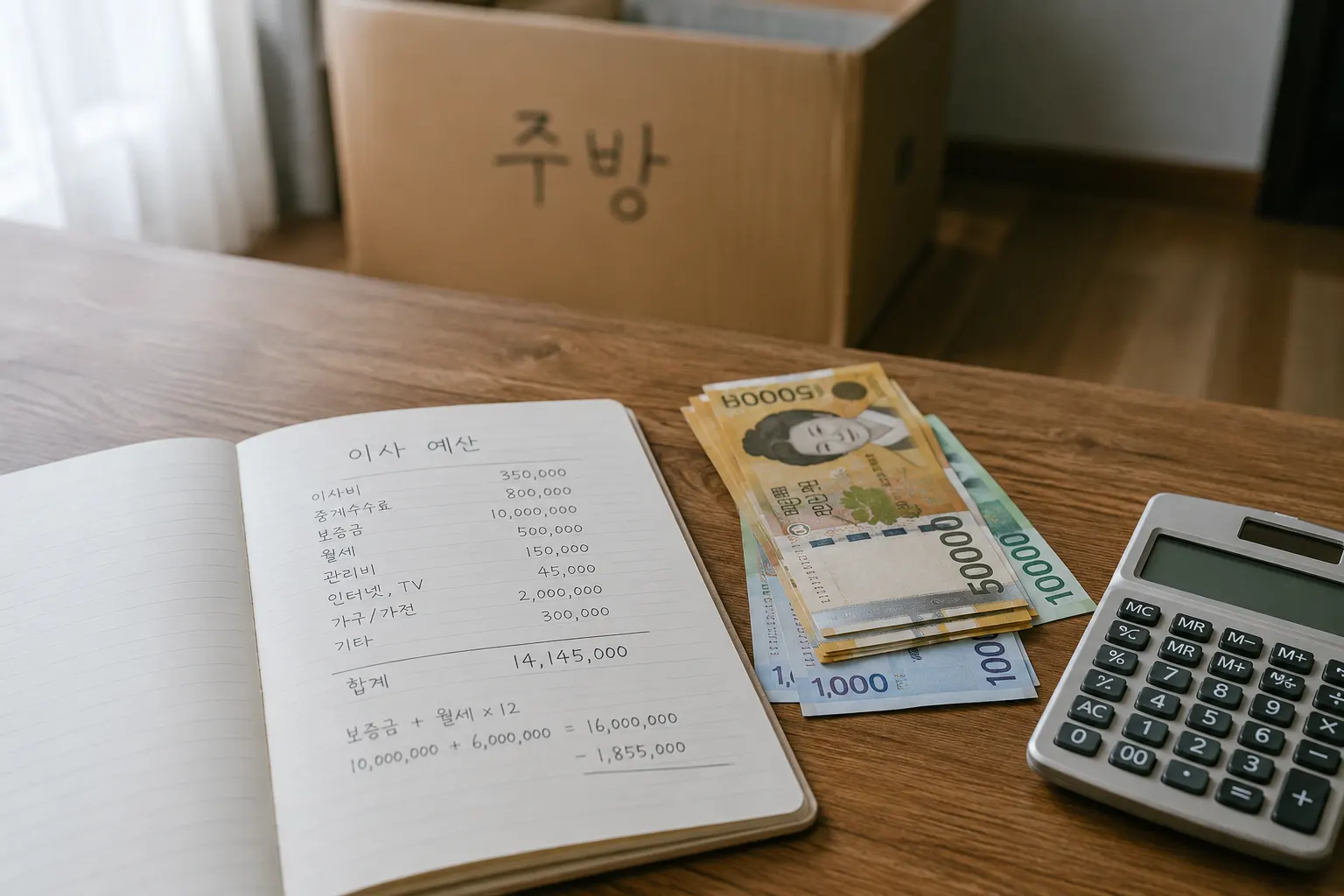
If you're preparing to move to Korea and trying to estimate what your first year will actually cost, beyond the obvious rent and flight, the upfront and easily overlooked costs can catch new arrivals off guard if not planned for realistically. Between deposits, setup fees, and the general adjustment period before you understand where cheaper alternatives exist, the first few months tend to cost meaningfully more than a steady-state monthly budget would suggest.
Here's a realistic breakdown of first-year costs in Korea, and where new arrivals commonly underestimate.
Upfront Housing Costs
Housing represents the largest and most variable first-year expense, and the deposit-heavy Korean rental system means significant upfront cash is needed before you've even settled in.
- Wolse deposits for a typical officetel or studio apartment suitable for a single foreign renter generally run 5–15 million KRW, paid upfront before move-in, a substantial sum that needs to be available before arrival or very shortly after.
- Agency and moving costs, real estate agent fees (typically a fraction of monthly rent, split with the landlord) plus moving costs if you're bringing belongings, add a meaningful one-time expense beyond the deposit itself.
- Furnishing gaps, even furnished officetels sometimes lack specific items (extra kitchenware, bedding, seasonal items), budgeting for some initial furnishing costs beyond what's included avoids a series of small but adding-up purchases in your first weeks.
Administrative Setup Costs
- Phone plan setup, particularly if starting with a prepaid option before transitioning to postpaid once your ARC arrives, involves a modest cost for the SIM or eSIM itself plus initial data/call balance.
- Bank account and related fees are generally minimal to open, but having some buffer cash available during the weeks before an account is fully functional matters for practical daily spending.
- Business registration or visa-related fees, if applicable to your specific situation, freelance registration, visa extensions, ARC issuance, generally involve modest individual fees but can add up as a category across your first few months of paperwork.
Monthly Living Costs Once Settled
Once past the initial setup period, monthly costs stabilize into a more predictable pattern, though this varies significantly based on lifestyle and location within Korea.
- Rent (wolse monthly payment), generally the largest recurring monthly cost, varies significantly by city and specific neighborhood, Seoul commanding a meaningful premium over most other Korean cities.
- Utilities and maintenance fees, often underestimated by new arrivals, add a genuine monthly cost beyond rent itself, particularly relevant for officetels with separate maintenance fee billing.
- Food costs vary enormously based on cooking-at-home versus delivery and restaurant frequency, a genuinely controllable cost category with significant room for budget optimization if managed deliberately.
- Health insurance premiums, mandatory for most long-stay residents, represent a predictable recurring monthly cost worth factoring into a realistic budget from the start rather than treating as a surprise expense.
Where New Arrivals Commonly Underestimate Costs
A frequent budgeting mistake among new arrivals is calculating a projected monthly budget based on steady-state costs without adequately buffering for the disproportionately expensive first month or two, when multiple upfront costs, deposit, agency fees, initial furnishing, phone setup, all land simultaneously before any cost-saving habits or local knowledge have developed.
- Retroactive insurance billing, if enrollment in National Health Insurance is delayed, can result in an unexpected lump-sum charge covering the gap period, budgeting for the possibility of this rather than assuming enrollment timing will be seamless avoids an unpleasant surprise.
- Learning-curve inefficiency, in the first few months, before understanding cheaper local alternatives, better transit routes, or seasonal shopping patterns, spending tends to run somewhat higher than it will once you've developed local knowledge and habits.
- Currency exchange timing and fees, if bringing savings from abroad to cover the initial deposit and setup costs, factoring in exchange rate fluctuation and transfer fees on a potentially large one-time transfer matters for accurate budgeting.
A Realistic Approach to First-Year Budgeting
- Build in a larger buffer for months one through three than your projected steady-state monthly budget would suggest, the adjustment period genuinely costs more than later months once local knowledge and habits develop.
- Prioritize getting foundational administrative pieces sorted early (ARC, bank account, phone plan, health insurance enrollment), since delays in these often compound into other costs or missed cost-saving opportunities elsewhere.
- Track actual spending against your projected budget for the first few months, adjusting expectations based on real data rather than an initial estimate made before you had firsthand experience with actual Korean living costs.
Quick Summary
- Housing deposits (5–15 million KRW for a typical wolse arrangement) represent the largest upfront cost, alongside agency fees and initial furnishing gaps.
- Administrative setup costs, phone, bank account, visa-related fees, are individually modest but add up meaningfully across the first few months of paperwork.
- The first month or two of living in Korea genuinely costs more than steady-state monthly expenses, due to upfront costs landing simultaneously and a learning curve before cost-saving local knowledge develops.
- Building a larger budget buffer for the initial settling-in period, and tracking real spending against projections, produces a more realistic first-year budget than assuming steady-state costs apply from day one.