How to Choose a Phone Plan in Korea as a Foreigner
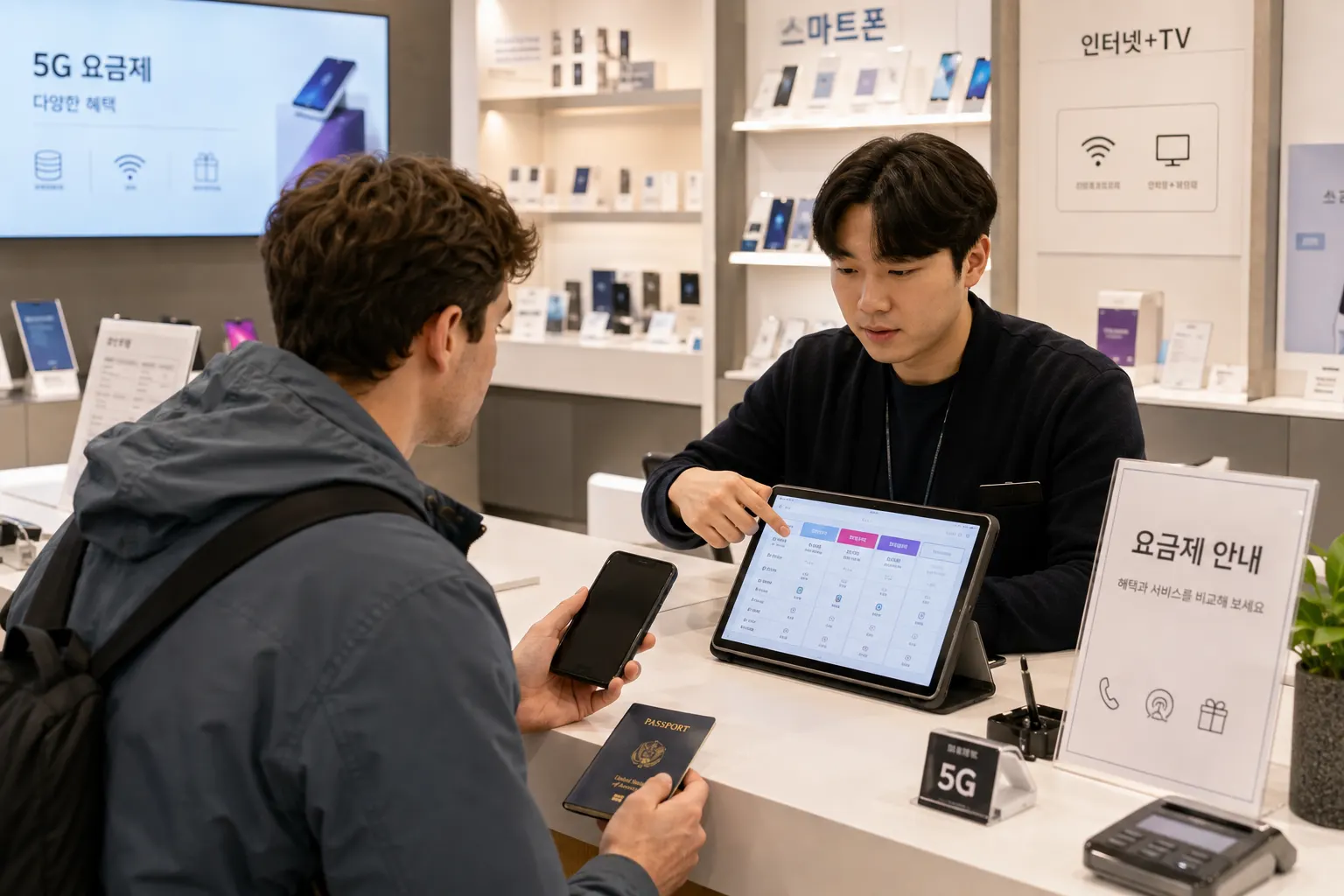
Setting up a phone plan is usually one of the first things people try to do after landing in Korea, and it's often more confusing than expected. Between SIM cards, eSIMs, prepaid plans, postpaid contracts, and the ARC requirement that trips up almost everyone, it's easy to end up overpaying or locking into the wrong option in your first week.
Here's how phone plans in Korea actually break down, what each option costs, and how to figure out which one fits your situation.
The Core Divide: Prepaid vs. Postpaid
The first decision is whether you're eligible for, or want, a prepaid or postpaid plan, since this determines almost everything else.
- Prepaid (선불) plans don't require an Alien Registration Card (ARC) in most cases, just a passport, which makes them the default option for tourists, short-term visitors, and anyone waiting on their ARC to be issued. You pay upfront for a set amount of data, calls, and texts, and top up as needed.
- Postpaid (후불) plans almost always require an ARC, since they involve a monthly contract and credit-based billing. These plans are generally cheaper per gigabyte and come with better data allowances, but they're only available once your residency status is confirmed.
If you're arriving on a long-term visa, the common pattern is starting with a prepaid SIM or eSIM for the first few weeks, then switching to postpaid once the ARC comes through, typically 2–4 weeks after registering at immigration.
What Each Option Actually Costs
- Prepaid SIM/eSIM for short stays: usually 30,000–55,000 KRW for a plan covering 1–2 weeks with a reasonable data allowance, sold at airport kiosks, convenience stores, or online in advance.
- Prepaid monthly plans: roughly 30,000–45,000 KRW per month for a moderate data plan, available through MVNOs (budget carriers) without needing an ARC in most cases.
- Postpaid plans: typically 30,000–70,000 KRW per month depending on data, with the big three carriers — SKT, KT, and LG U+ — generally priced higher than MVNOs for similar data amounts.
- MVNO postpaid plans (budget carriers riding on the big three's networks, like KT M Mobile or SK7mobile) often undercut the major carriers by 10,000–20,000 KRW per month for comparable plans, with the tradeoff being less English-language customer support.
A common misunderstanding is assuming the big three carriers are always the better choice because they're more visible. In practice, MVNOs use the same physical networks, so call quality and coverage are usually identical — the main differences are price, contract flexibility, and customer service language options.
Where the ARC Requirement Actually Bites
This is the part that catches most new arrivals off guard. Many postpaid plans, and even some prepaid monthly plans, require a Korean bank account for auto-payment, and that bank account often requires the same ARC you're waiting on for the phone plan. It's the same loop that affects opening a Korean bank account, and the two often need to be solved together.
A workaround many foreigners use:
- Buy a prepaid eSIM or SIM before or immediately after arrival, using just a passport.
- Register at immigration for the ARC as soon as possible.
- Once the ARC is issued, open a Korean bank account.
- Switch to a postpaid plan once both the ARC and bank account are in place.
This sequence isn't official guidance from any carrier, it's simply the order that avoids the most dead ends.
Choosing Between Carriers
There's no universally "best" carrier, but there are practical differences worth knowing:
- SKT, KT, LG U+ (the major carriers) offer the widest coverage and the most English-language support, including English customer service lines and store staff in areas with more foreign residents.
- MVNOs are cheaper for similar data and call allowances, but store locations are fewer, and most support is Korean-only, which can be a real barrier if something goes wrong with billing.
- Some MVNOs specifically market foreigner-friendly plans with English sign-up processes, often through partnerships advertised near universities or in expat-heavy neighborhoods.
If you're a student or planning to stay over a year, the cost savings from an MVNO usually outweigh the convenience of a major carrier, especially once you're comfortable enough with basic Korean or have a Korean-speaking friend to help if issues come up.
Common Mistakes to Avoid
- Signing a long-term postpaid contract too early, before knowing whether you'll stay in the same city or job, since early cancellation fees can apply.
- Not comparing data rollover or throttling policies — some budget plans throttle speed sharply after your data cap instead of charging overage fees, which matters if you rely on maps or translation apps daily.
- Overlooking eSIM options if your phone supports them, since eSIMs can sometimes be activated online before you even land, skipping the airport kiosk line entirely.
- Assuming your home carrier's international roaming is cheaper — for stays longer than a week or two, a local Korean plan is almost always significantly less expensive.
Quick Summary
- Prepaid plans need only a passport and suit short stays or the ARC waiting period; postpaid plans need an ARC and usually a Korean bank account.
- Prepaid options run roughly 30,000–55,000 KRW depending on duration and data; postpaid plans range from about 30,000–70,000 KRW per month.
- MVNOs use the same networks as SKT, KT, and LG U+ but are often 10,000–20,000 KRW cheaper, with less English support in exchange.
- A common strategy is starting prepaid, getting the ARC, opening a bank account, then switching to postpaid once everything lines up.