Why Korean Apartment Utility Bills Feel Confusing for Foreign Renters
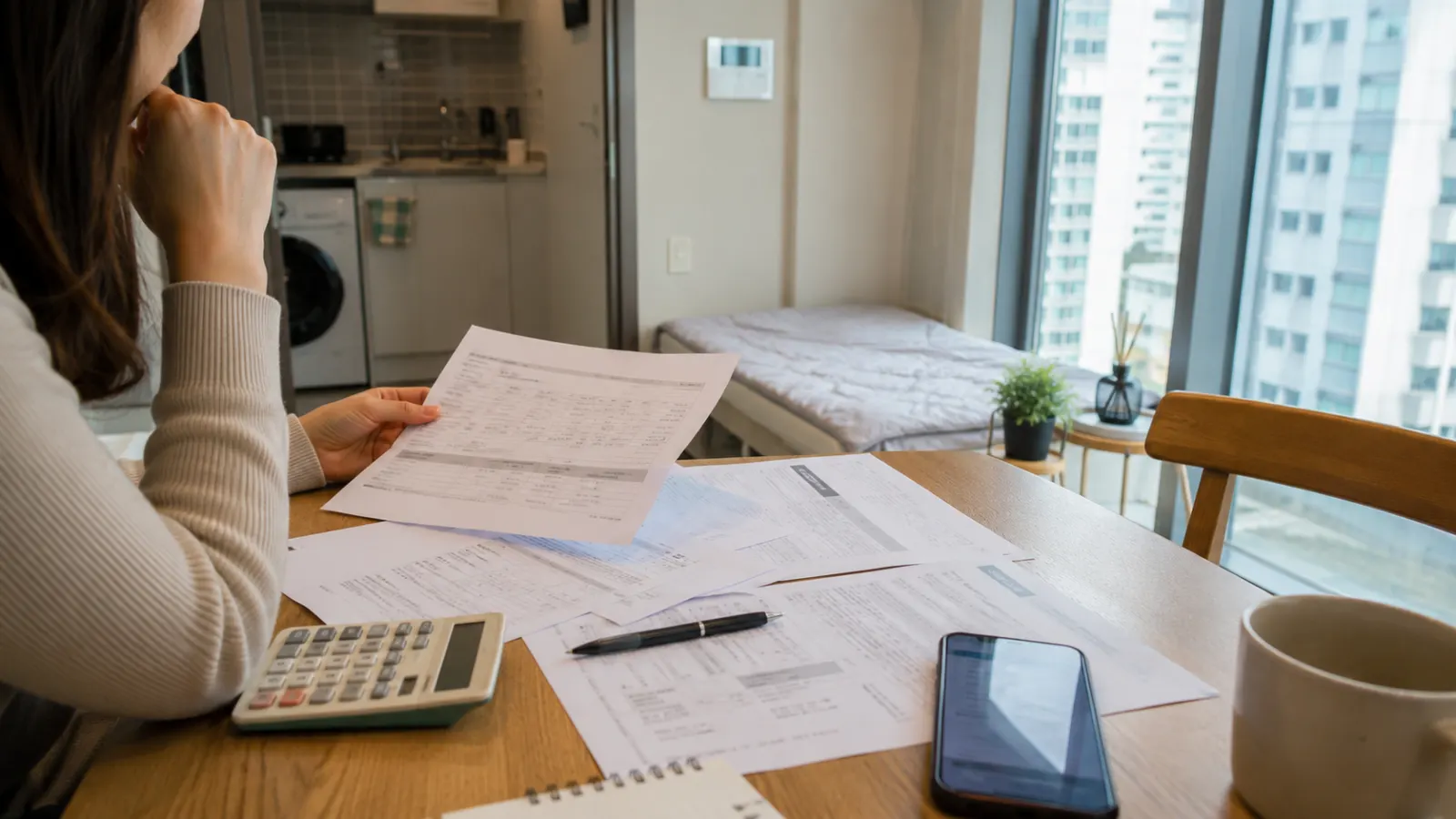
A foreign renter in Korea often checks the monthly rent first, then gets surprised by the second number: 관리비, or building maintenance fee. It can look small in a listing, unclear in a contract, and very different from one building to another.
The confusing part is that “utilities” in Korea are not always one simple bill. Depending on whether you live in an officetel, one-room, villa, apartment, goshiwon, or serviced residence, the same monthly cost may be split between rent, maintenance fee, electricity, gas, water, internet, and sometimes building-wide shared charges.
What 관리비 Actually Means
관리비 is usually translated as “maintenance fee,” but that translation can be misleading. It does not only mean repairs. In many Korean rental buildings, 관리비 is a bundle of building-related costs that may include elevator operation, hallway electricity, cleaning, security staff, trash management, water, common-area heating or cooling, and sometimes basic internet or cable TV.
That is why two rooms with the same rent can feel completely different financially. A ₩650,000 studio with ₩50,000 관리비 may be cheaper in practice than a ₩600,000 officetel with ₩180,000 관리비, especially if heating, water, and internet are not included.
A common misunderstanding among foreigners is assuming 관리비 is optional or negotiable like a service charge. In most cases, it is not. If it is written into the lease or monthly payment terms, the tenant is expected to pay it. The real question is not “Can I avoid it?” but “What exactly is included?”
Why Officetels Often Cost More Than They Look
Officetels are popular with foreign students, teachers, remote workers, and short-term professionals because they are convenient. They are usually near subway stations, have elevators, modern security, package storage, and compact built-in appliances.
But that convenience often shows up in the monthly 관리비.
An officetel may include more shared facilities than a small villa or older one-room building. Even if you never use every facility, you may still contribute to the building’s shared operating cost. In winter and summer, the difference becomes more noticeable because heating and cooling habits can push the total monthly cost higher.
This does not mean officetels are bad value. For someone who wants a clean building, better sound insulation, secure entry, parcel convenience, and a location near work or school, the higher monthly cost may be worth it. But if you are comparing listings only by rent, officetels can trick you into underestimating your real budget.
The Bills Foreign Tenants Usually Need to Check
Before signing a lease in Korea, ask how each cost is billed. Do not settle for “utilities are separate” without details. That phrase can mean different things depending on the landlord, realtor, and building.
The main items to check are:
- Monthly rent: the fixed rent paid to the landlord.
- 관리비: building maintenance fee, sometimes fixed and sometimes variable.
- Electricity: often paid separately based on usage.
- Gas: important in winter because ondol floor heating can increase the bill.
- Water: sometimes included in 관리비, sometimes billed separately.
- Internet and TV: may be included, optional, or fully separate.
- Trash or food waste fees: sometimes indirect, sometimes handled through local disposal bags or building rules.
- Parking: often separate, especially in officetels or newer buildings.
The mistake is not asking only “How much is the rent?” A better question is: “What was the average total monthly cost for the last tenant in summer and winter?” The landlord may not always give a perfect answer, but the question itself signals that you understand the system.
Fixed 관리비 vs Variable 관리비
Some listings show a fixed 관리비, such as ₩70,000 per month. Others show a rough figure, but the actual amount changes depending on usage or building costs. In a few cases, a listing may display a low 관리비 to look attractive, while important items are charged separately.
For foreign renters, fixed 관리비 feels safer because it is easier to budget. However, it is still worth asking what is excluded. A fixed fee that excludes gas, electricity, water, internet, and building heating may not be as cheap as it looks.
Variable 관리비 can be fair if it accurately reflects your usage and building costs, but it can also be harder to predict. This matters most if you are staying during Korea’s cold winter or humid summer. Heating a room with ondol and running air conditioning through humid nights can change your monthly expenses quickly.
Winter Heating Is the Bill That Surprises People
Korean homes often use ondol, a floor-heating system that feels comfortable but can be expensive if used carelessly. Many newcomers expect heating to work like a simple air heater. Instead, ondol heats the floor and space gradually, which means turning it on and off too often may not always save as much as expected.
The practical approach is to keep the room from getting extremely cold, use warmer indoor clothing, close drafts, and learn the thermostat settings early. Some Korean thermostats are not intuitive for foreigners, and the difference between hot water, heating, reservation mode, and temperature settings can be confusing.
If you move into a place in autumn, ask the landlord or realtor to show you how the heating works before winter arrives. A five-minute explanation can save real money.
How to Compare Two Korean Rental Listings
When choosing between apartments, do not compare rent alone. Compare the expected monthly total. For example, imagine two rooms:
- Room A: ₩700,000 rent, ₩60,000 관리비, electricity and gas separate.
- Room B: ₩620,000 rent, ₩170,000 관리비, water and internet included, electricity and gas separate.
At first, Room B looks cheaper because the rent is lower. But before deciding, you need to know whether Room B’s higher 관리비 replaces other bills or simply adds more shared building costs. If the location is better and internet is included, it may still be reasonable. If not, Room A may be the more predictable choice.
The best comparison formula is simple: Rent + 관리비 + expected electricity + expected gas + internet + commuting difference = real monthly housing cost
That last part, commuting difference, is easy to ignore. In Seoul and other Korean cities, paying slightly more for a better location can sometimes save time and transportation stress. But paying more for a building feature you do not need is different.
What to Ask Before Signing
A good renter’s checklist in Korea is not complicated, but it should be specific. Ask the realtor or landlord:
- Is the 관리비 fixed or variable?
- What exactly is included in the 관리비?
- Are electricity, gas, water, internet, and TV separate?
- How much did the previous tenant usually pay in winter and summer?
- Is heating individual, central, or building-controlled?
- Are there extra fees for parking, moving in, cleaning, or waste disposal?
- Can I see a sample monthly bill or 관리비 breakdown?
- Who should I contact if a bill arrives under the previous tenant’s name?
These questions are especially important if your Korean is limited. A friendly realtor may explain the room well but skip billing details unless you ask directly.
When a Higher Monthly Fee Is Still Worth It
The cheapest room is not always the smartest room. For a short stay, a higher monthly cost can be acceptable if it reduces setup stress. A furnished officetel with internet, security, elevator access, and easy package delivery may be better for a student or remote worker arriving in Korea for the first time.
For a longer stay, however, small monthly differences matter. An extra ₩100,000 per month becomes ₩1,200,000 over a year. That is enough to affect your moving budget, travel plans, or emergency savings.
The realistic decision is not “avoid high 관리비.” It is “avoid unclear 관리비.” If the fee is high but transparent and includes things you actually use, it may be fine. If it is vague, inconsistent, or poorly explained, treat it as a warning sign.
Quick Summary
- 관리비 is a Korean building maintenance fee, but it may include more than basic maintenance.
- Officetels can be convenient, but their monthly fees often make the real cost higher than the rent suggests.
- Always compare rent, 관리비, electricity, gas, water, internet, and commuting cost together.
- Before signing, ask whether 관리비 is fixed or variable and request a clear breakdown of what is included.