Address Registration in Korea: Why Foreign Residents Should Check Their Housing Documents
For foreign residents in Korea, an address is more than a place to sleep. It can affect immigration records, bank accounts, phone verification, health insurance notices, parcel delivery, school documents, and public service mail. That is why address registration can become a serious problem if your housing arrangement is informal or poorly documented.
Many newcomers focus on rent, deposit, and location first. Those are important, but the paperwork side of housing matters just as much if you are staying in Korea on a long-term visa.
Why address registration matters
Foreign residents in Korea usually need to keep their stay information accurate. Immigration-related procedures are handled through Korea’s official systems, and the Ministry of Justice has published English stay guidance for foreign residents through its Visa Navigator materials.
In daily life, your registered address may be used by several institutions. Government offices, banks, insurers, phone companies, schools, employers, and delivery services may all ask where you live.
This is where foreigners get surprised. A place that is fine for sleeping may not always be simple for official registration. Short-term rentals, share houses, subleases, dorms, goshiwons, company housing, and temporary stays can each involve different documents.
The common misunderstanding is thinking, “If I paid rent, I can use the address for everything.” In practice, you may need proper proof.
Housing type changes the paperwork
A standard apartment or officetel lease under your name is usually the clearest situation. You can show a rental contract with your name, address, landlord details, deposit, rent, and contract period.
A dormitory may provide a residence confirmation document instead of a normal lease. A university or language school may help with this process, but you should ask early rather than waiting until a deadline.
A goshiwon or share house may be more complicated. Some provide documents easily. Others may not be set up for foreign residents who need official proof. Before moving in, ask whether they can provide the paperwork needed for address registration.
A sublease can be risky if the main tenant, landlord, or building owner has not clearly agreed. You may be paying rent to someone who is not the legal owner, and the documents may not satisfy official requirements.
A hotel or short-term serviced residence may work temporarily in some situations, but it may not be suitable for long-term administrative needs.
What documents may be useful
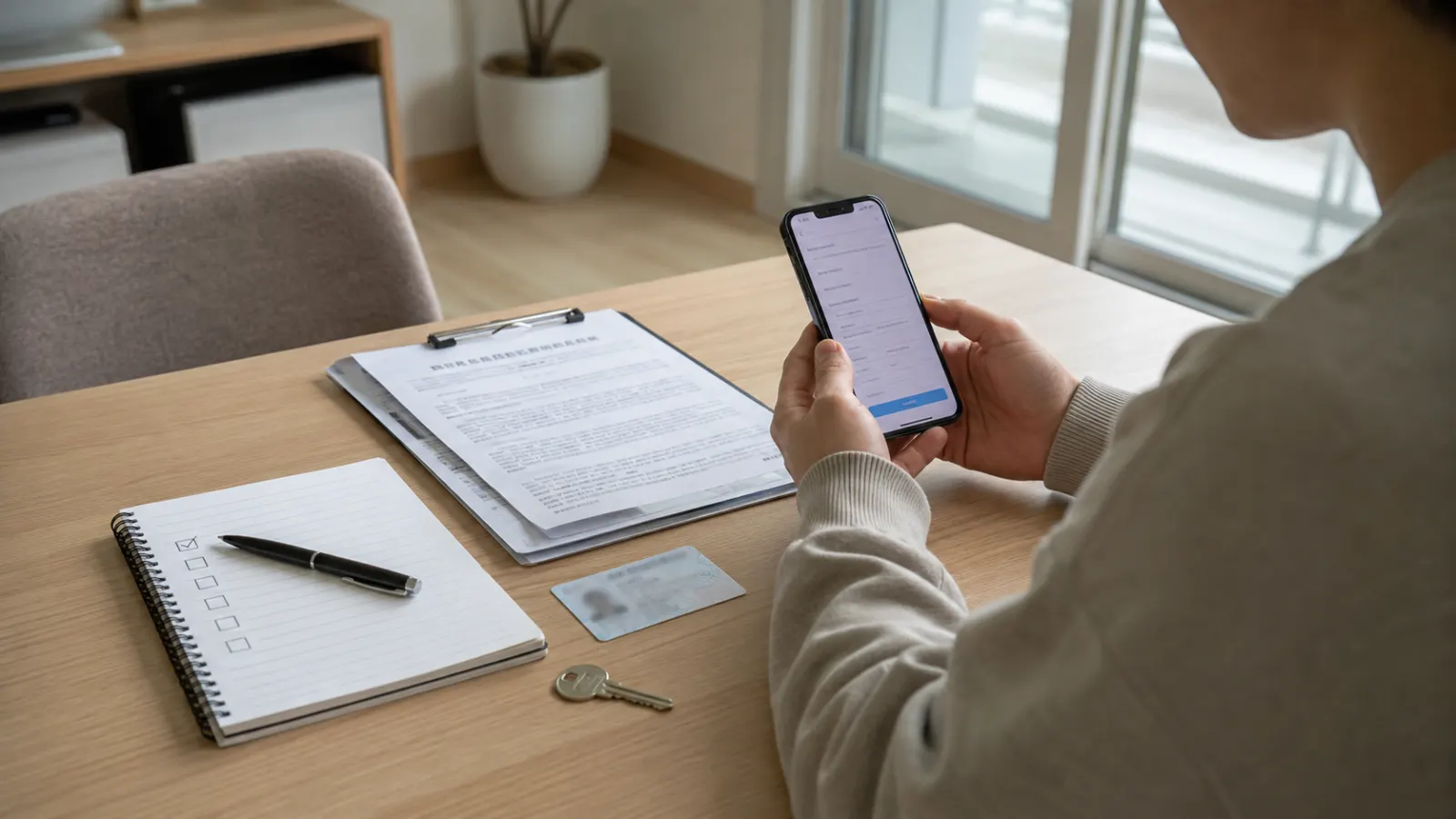
The exact documents depend on your visa status, housing type, and procedure. Still, foreign residents should keep housing documents organized from the beginning. Useful documents may include:
- Passport
- Foreigner residence card
- Lease contract
- Housing confirmation document
- Landlord or provider contact details
- Building address in Korean
- Room or unit number
- School dormitory confirmation, if applicable
- Employer housing confirmation, if applicable
- Utility or management fee notice, if relevant
Keep digital and printed copies. Some offices may accept one format, while others may ask to see the original or a printed document.
The Korean address must be exact
Korean addresses often include details that foreigners overlook: road-name address, building name, dong number, floor, and unit number. A missing unit number can cause problems with mail, delivery, registration, and bank records.
If your address is entered differently across institutions, it may create confusion. Your bank may have one address, immigration another, and your phone company another. That can lead to missed notices or verification trouble.
Before submitting an address, check it in Korean. Do not rely only on an English translation. If you live in a large apartment complex or officetel, make sure the building and unit information are complete.
Address changes should not be ignored
Moving in Korea can be busy. You may focus on deposit transfer, moving boxes, internet setup, furniture, and cleaning. But changing your registered address should also be part of the moving checklist.
If you change housing but do not update the relevant institutions, important mail may go to the wrong place. This can affect immigration notices, health insurance bills, tax documents, bank letters, school notices, or employer records.
A practical moving checklist should include:
- Confirm the new address in Korean.
- Keep a copy of the new lease or housing document.
- Update immigration-related records if required.
- Update bank and card companies.
- Update phone carrier records.
- Update school or employer records.
- Update delivery apps and shopping sites.
- Check where public mail will be sent.
This is not exciting work, but it prevents administrative problems later.
Short-term housing can create long-term problems
Short-term housing is attractive when you first arrive in Korea. It is flexible, furnished, and easier than signing a standard lease. But if you need formal address proof, ask before paying.
Some short-term places are excellent for newcomers. Others are convenient for sleeping but weak for documents. A landlord or host may not understand what foreign residents need for immigration, banking, or school procedures.
Before booking a place for more than a vacation, ask directly:
- Can I use this address for official registration?
- Can you provide a written housing confirmation?
- Is my name shown on the document?
- Is the full Korean address included?
- Is the room or unit number included?
- Who should I contact if an office asks for confirmation?
If the answer is vague, be careful.
Students should use school support early
International students should ask their university, language school, or dormitory office about address paperwork. Schools often know what documents students need, especially for dormitories or school-arranged housing.
The mistake students make is waiting until the last day. If a document needs a stamp, office signature, dorm confirmation, or landlord cooperation, it may take time.
Students living off campus should also check whether their lease or housing confirmation is acceptable. A casual room rental from a friend may feel easy, but it can become difficult when official paperwork is needed.
Workers and freelancers should keep records
Foreign employees may need address records for company HR, payroll, insurance, and visa-related matters. If your company arranged housing, ask for a proper document showing that you live there.
Freelancers and remote workers should be even more careful. Without a school or employer guiding the process, you may need to manage documents yourself. Keep your lease, payment records, landlord messages, and address documents organized.
Your housing paper trail may become useful later for banking, taxes, contracts, or visa changes.
What to do before signing a housing contract
Before you sign or pay a deposit, slow down and check the paperwork side. Ask:
- Is this a legal rental arrangement?
- Is the owner or authorized person signing?
- Can I receive a contract or housing confirmation?
- Is the full Korean address written correctly?
- Can I register this address if required?
- Are the contract dates clear?
- Is my legal name written correctly?
- Can I get a copy before transferring money?
If you do not speak Korean well, ask a trusted Korean speaker, school office, relocation helper, or professional to review the document. Do not rely only on verbal promises when your deposit and visa life are involved.
A practical way to think about address registration
Address registration is not just bureaucracy. It is part of becoming properly connected to Korea’s daily systems. Your home address links your housing, immigration status, banking, insurance, phone account, school, employer, and public mail.
For short-term visitors, this may not matter much. For students, workers, spouses, freelancers, and long-term residents, it matters a lot. The safest housing is not only the place with good rent and location. It is the place where the paperwork also works.
Quick Summary
- A Korean address can affect immigration, banking, phone verification, insurance, school, employer records, and public mail.
- Housing type matters: apartments, dorms, goshiwons, share houses, and short-term rentals may provide different documents.
- Always check whether the address can be used for official registration before paying a deposit.
- After moving, update relevant institutions so important notices do not go to the wrong address.