How Korean Public Restrooms and Everyday Hygiene Norms Work
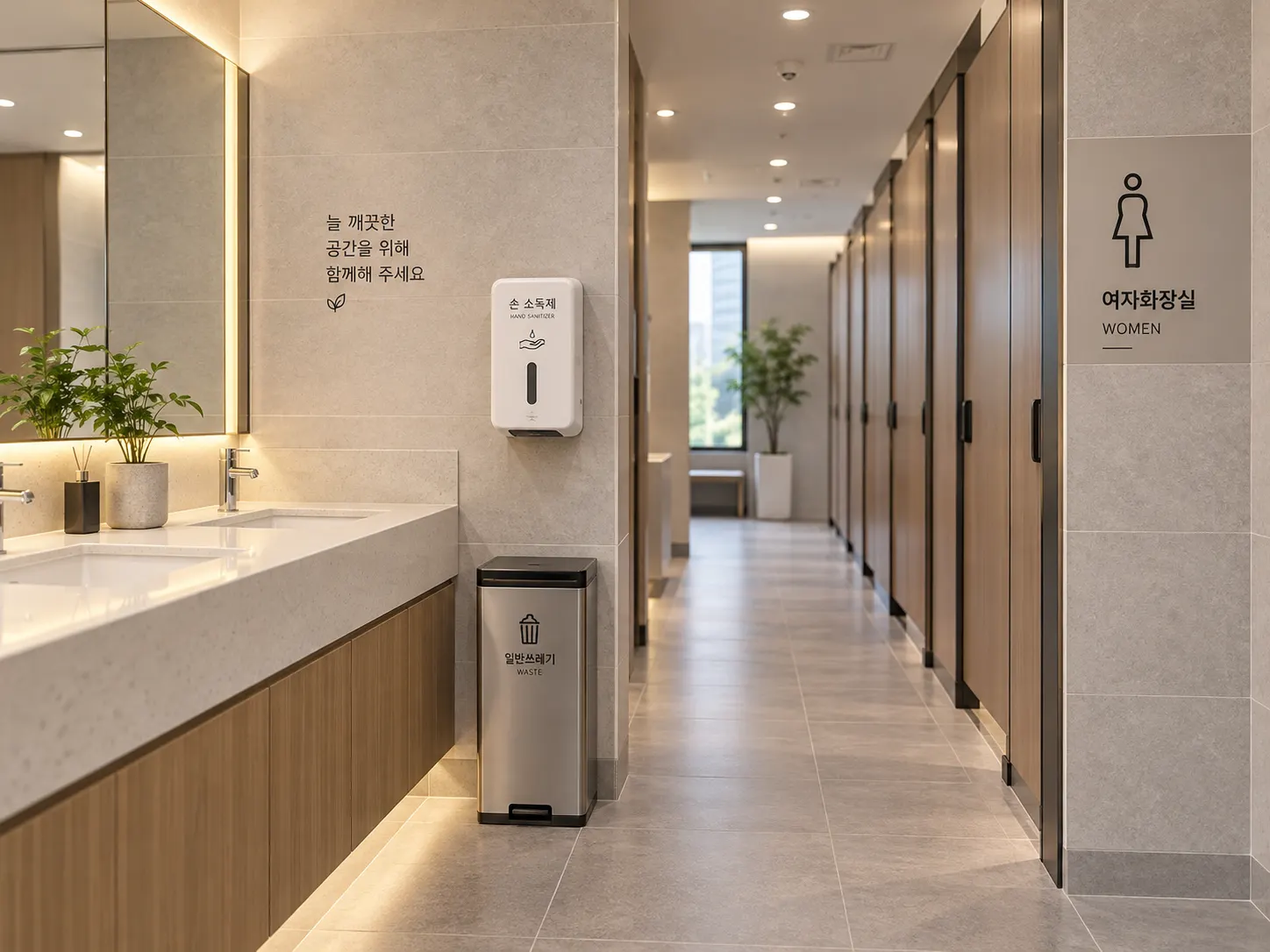
If you've wondered whether you can flush toilet paper in Korea, why some restrooms have a small bin beside the toilet, or where to find a clean public restroom, you've run into a set of norms that surprise many newcomers. Korean public restrooms are generally clean, free, and easy to find, but a few habits differ from many other countries. Knowing them avoids plumbing trouble and awkward moments.
The Quick Answer: The Key Rules
In many older buildings and some public restrooms, used toilet paper goes in the small bin beside the toilet rather than into the bowl, because older plumbing can clog. Newer buildings and many modern restrooms allow flushing, so check for a sign. If there is a bin and a sign asking you to use it, follow it.
Where to Find Public Restrooms
- Subway stations: nearly every station has restrooms, often inside the fare gates, though some are outside.
- Parks and tourist areas: public toilets are common and generally well maintained.
- Department stores, malls, and large cafes: typically clean, though some cafes keep restrooms for customers, sometimes with a door code printed on the receipt.
- Convenience stores: some allow use, others don't, so ask politely.
Most public restrooms are free. Carry a small pack of tissues, since paper is not always stocked.
Types of Toilets
You will see Western-style seats in most places. Older or rural facilities may include squat toilets. Many newer toilets have bidet functions with buttons on the side or a remote panel, which are usually marked with icons. Heated seats are common in homes and modern buildings.
Café Door Codes
Some cafes and small shops keep restrooms locked, with a code often printed on your receipt or posted near the counter. If you can't find it, ask staff. Buying a drink is the polite way to use a customer restroom.
Everyday Hygiene Norms
- Shoes off indoors. In homes, many restaurants with floor seating, and some clinics, you remove shoes at the entrance.
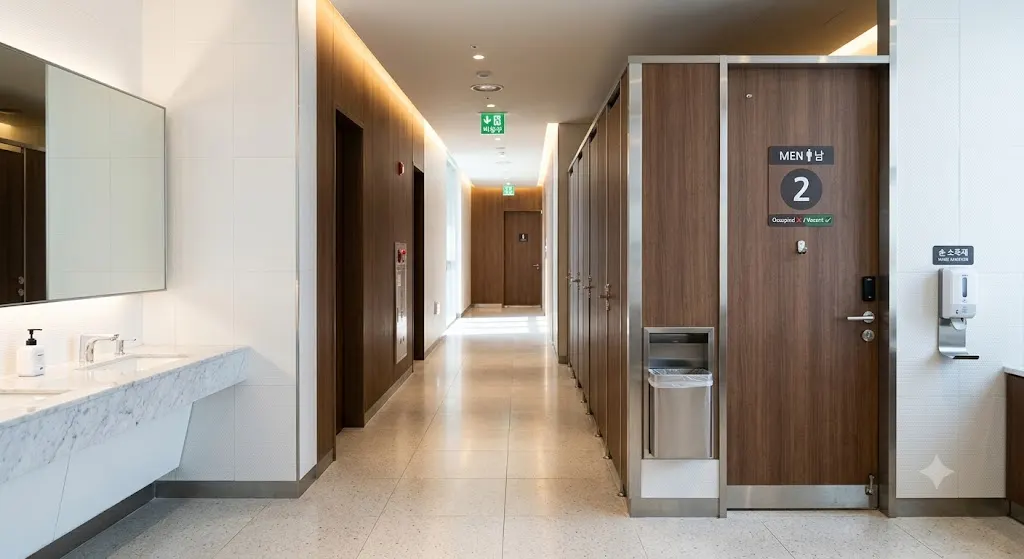
- Hand washing facilities are common, though hand dryers can be missing in smaller places, so carry a small towel or tissue.
- Masks and hand sanitizer are common in public during cold or flu season, and wearing a mask when you're sick is considered considerate.
- Gym and bathhouse norms: showers before shared baths and full nudity in gender-separated bathing areas, as covered in the jjimjilbang guide.
Practical Tips
- Look for a sign before flushing paper in older buildings
- Carry tissues and hand sanitizer
- Ask staff politely if a restroom isn't obvious
- Keep your voice low and leave the space tidy
Common Mistakes
- Flushing paper where a bin is provided. It can block the pipes.
- Expecting paper and soap everywhere. Supplies vary.
- Missing the door code. Check your receipt or ask.
- Wearing shoes where they should be removed. Look at the entrance for a shoe area.
Quick Summary
- Public restrooms in Korea are common, generally clean, and mostly free, especially in subway stations, parks, and malls.
- In older buildings, used toilet paper may need to go in the bin beside the toilet, so follow posted signs.
- Café restrooms may use door codes found on receipts, and carrying tissues helps when supplies are missing.
- Remove shoes where indicated and follow basic hygiene courtesy.