How Korean Apartment Complex Amenities and Community Rules Work
If you've moved into a larger Korean apartment complex and found yourself navigating unspoken rules about trash disposal timing, unclear signage about shared facility access, or a residents' association notice you can't quite read, you've encountered a layer of daily life that doesn't get much attention in general Korea guides but affects day-to-day living significantly. Korean apartment complexes, particularly larger ones, function with more structured shared systems than many foreign residents expect from an apartment building.
Here's how apartment complex amenities and community systems actually work, and what commonly trips up new foreign residents.
Shared Facilities Are More Extensive Than Expected
Larger Korean apartment complexes (아파트단지), particularly newer developments, often include amenities that go well beyond a simple building lobby or small gym.
- Community centers, fitness rooms, and sometimes libraries or study rooms are common in larger complexes, often requiring resident registration or a small usage fee separate from monthly maintenance costs.
- Playgrounds and outdoor common areas are standard in family-oriented complexes, generally open to all residents without separate registration.
- Parking systems, particularly in larger or newer complexes, sometimes use registered vehicle systems tied to your unit, visitor parking often requires separate registration or a phone call to security, worth understanding early if you regularly have guests.
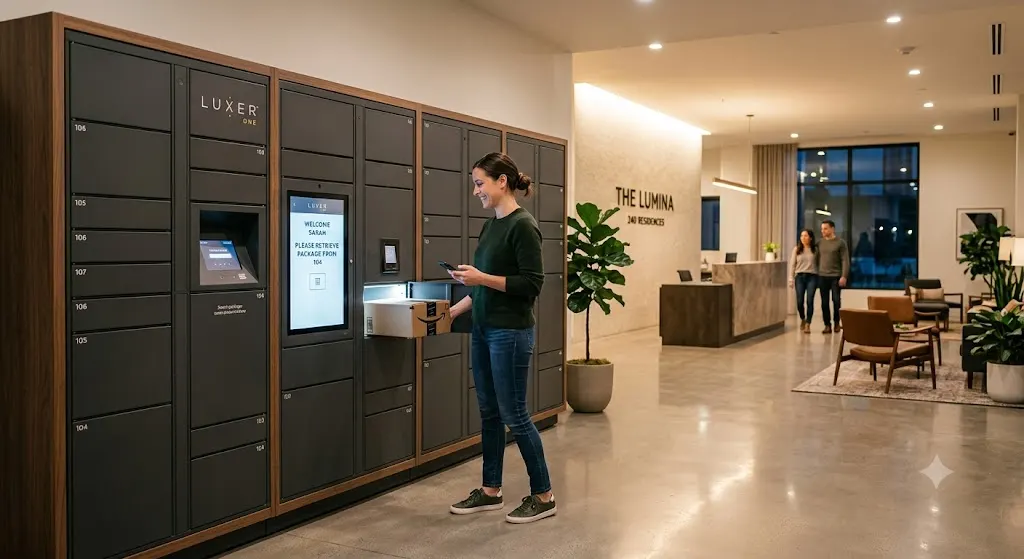
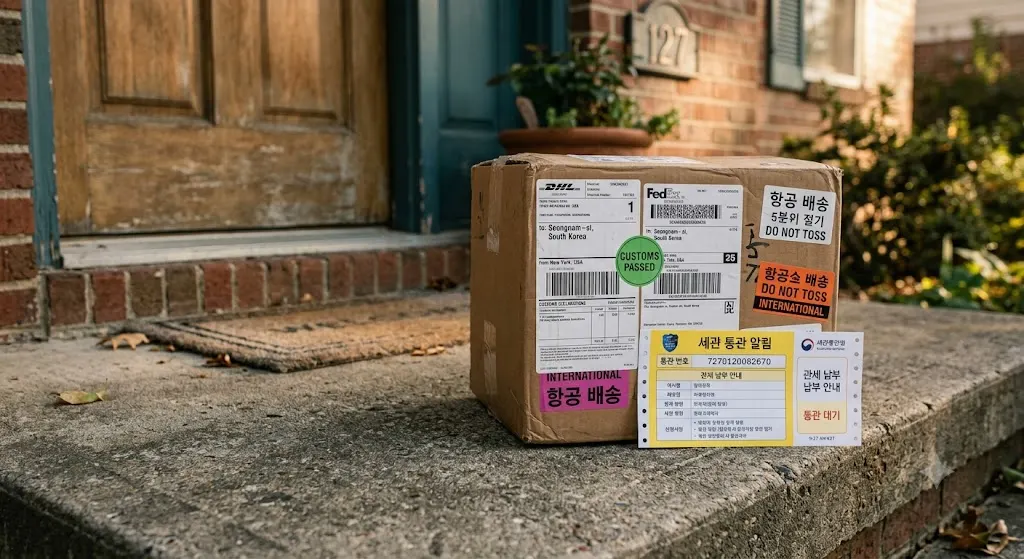
- Package and delivery infrastructure, larger complexes increasingly have dedicated parcel locker systems or a designated delivery drop point near the entrance, distinct from smaller officetel buildings' more ad hoc delivery arrangements.
Trash and Recycling: Where Foreigners Most Commonly Struggle
Korea's waste disposal system is more structured and specific than in many countries, and getting it wrong, even unintentionally, is a genuinely common source of friction with neighbors and building management.
- Designated trash bags (종량제 봉투), purchased specifically for general waste disposal, are required in most areas, using a regular plastic bag instead of the designated type can result in your trash being left uncollected or, in some buildings, a fine.
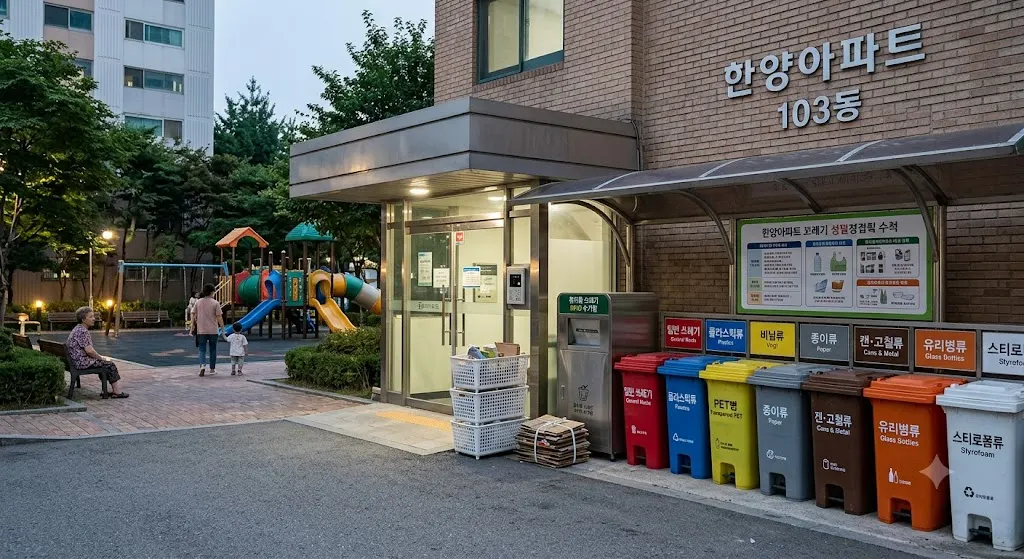
- Recycling categories are more specific than a simple recyclable/non-recyclable split, paper, plastic, glass, and cans are often separated into distinct collection points, and food waste (음식물쓰레기) is collected entirely separately, often requiring its own designated bag or a building-specific food waste disposal system with a card-tap mechanism in newer complexes.
- Disposal timing sometimes matters, some buildings or neighborhoods have specific days or hours for general waste versus recyclables, disposing outside the expected window can result in items being left uncollected.
A common misunderstanding among new residents is assuming trash disposal works the same everywhere in Korea, in practice, specific bag requirements, collection schedules, and recycling categorization can vary somewhat by district and even by specific apartment complex, checking with building management or a neighbor in your first week avoids an early misstep that's more socially noticeable than it might seem.
Resident Association Notices and Building Communication
- Notices from the resident association (입주자대표회의) or building management office are typically posted physically in elevators or lobbies, and sometimes distributed through a building-specific messaging app or group chat, missing these can mean missing maintenance schedules, fee changes, or community rule updates.
- Maintenance fees (관리비), covering shared facility upkeep, security, and sometimes utilities depending on the building, are billed monthly and separate from rent, understanding what's actually included, and what counts as an additional line-item charge, varies by complex and is worth clarifying at move-in.
- Community rules around noise, especially floor-impact noise (층간소음), are a genuinely significant point of community tension in Korean apartment living generally, not just for foreign residents, being mindful of activities that create floor noise, particularly in the evening, is a widely shared social expectation.
Common Mistakes Foreign Residents Make
- Using regular trash bags instead of designated ones, one of the most common and easily avoidable early missteps, worth confirming your building and district's specific bag requirements immediately after moving in.
- Not registering a vehicle with the complex's parking system, leading to confusion or restricted access if the building uses a registered-vehicle-only system.
- Ignoring building notices posted only in Korean, missing maintenance windows, fee changes, or community announcements as a result, asking a neighbor or using a translation app on posted notices helps avoid this.
- Underestimating floor-impact noise sensitivity. What might seem like normal household activity in some countries, running a washing machine late at night, moving furniture, children playing, can generate real complaints in Korean apartment buildings, being mindful of timing and floor coverings helps maintain good community relations.
Quick Summary
- Larger Korean apartment complexes often include extensive shared amenities like fitness rooms, community centers, and structured parking systems, sometimes requiring separate registration or fees.
- Korea's trash and recycling system is more specific than many countries, requiring designated bags and separated categories, confirming your building's specific requirements early avoids a common early misstep.
- Building notices are often posted physically or through building-specific communication channels, frequently only in Korean, worth establishing a way to stay informed even without full fluency.
- Floor-impact noise sensitivity is a significant and widely shared community concern in Korean apartment living, being mindful of timing and noise levels helps maintain good relationships with neighbors.