How to Buy and Register a Used Car in Korea as a Foreigner

If you're considering buying a car in Korea rather than relying entirely on public transit, the used car market here operates through specific verification and registration steps that differ enough from some other countries that skipping them, or not knowing they exist, can leave you with an unexpected paperwork problem or an undisclosed issue with the vehicle itself.
Here's how buying and registering a used car actually works for foreign residents in Korea.
Where to Actually Buy
- Encar is Korea's dominant used car marketplace platform, covering both dealer listings and increasingly some individual seller listings, offering vehicle history reports and inspection details directly within listings.
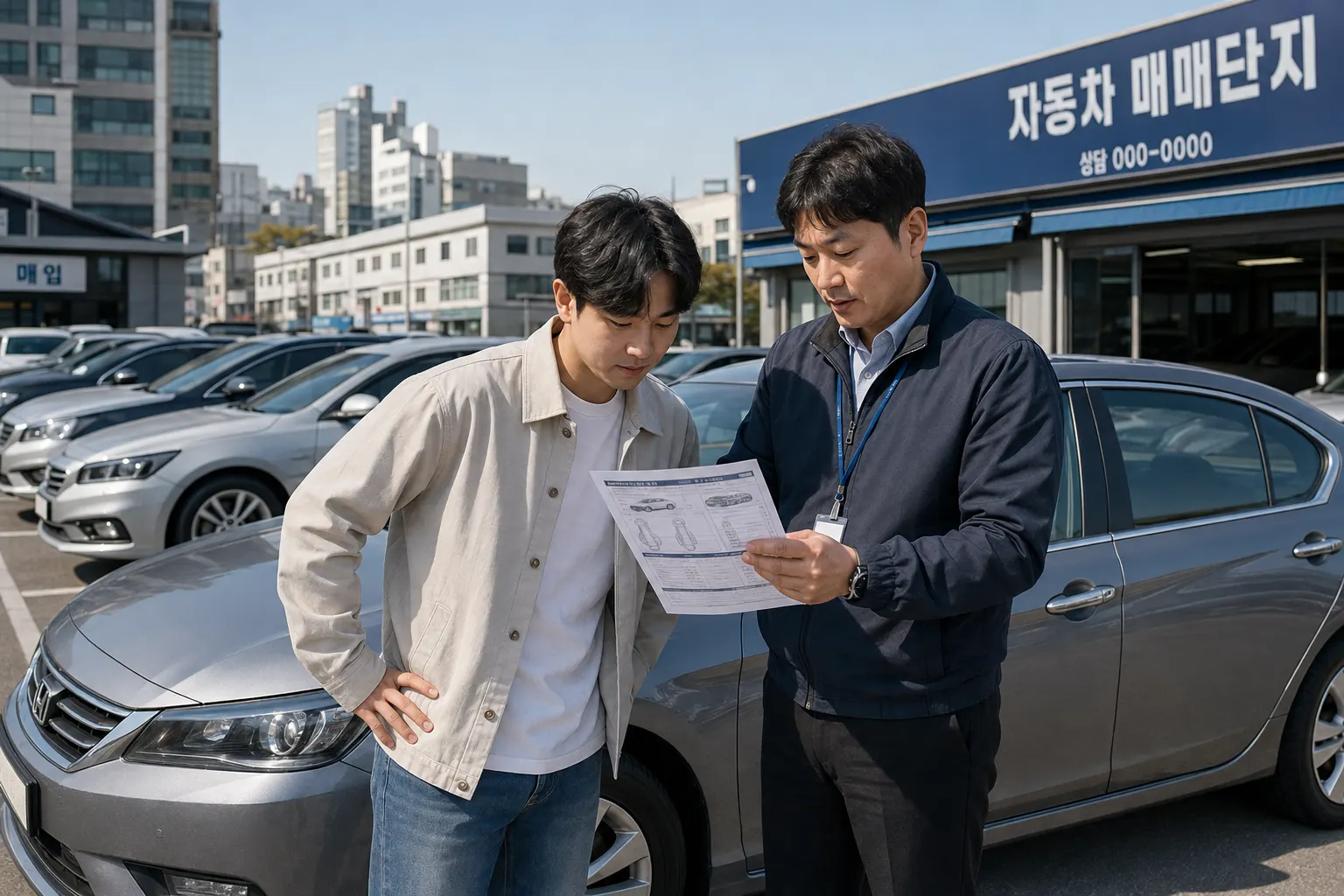
- Dealer lots, particularly larger used car complexes common in some cities, allow in-person browsing and negotiation, generally with more direct assistance navigating paperwork than a pure private-party purchase.
- Private individual sales, while possible, generally require more diligence on your part regarding vehicle history verification and proper transfer paperwork, since you won't have a dealer's administrative support handling the process for you.
What to Check Before Buying
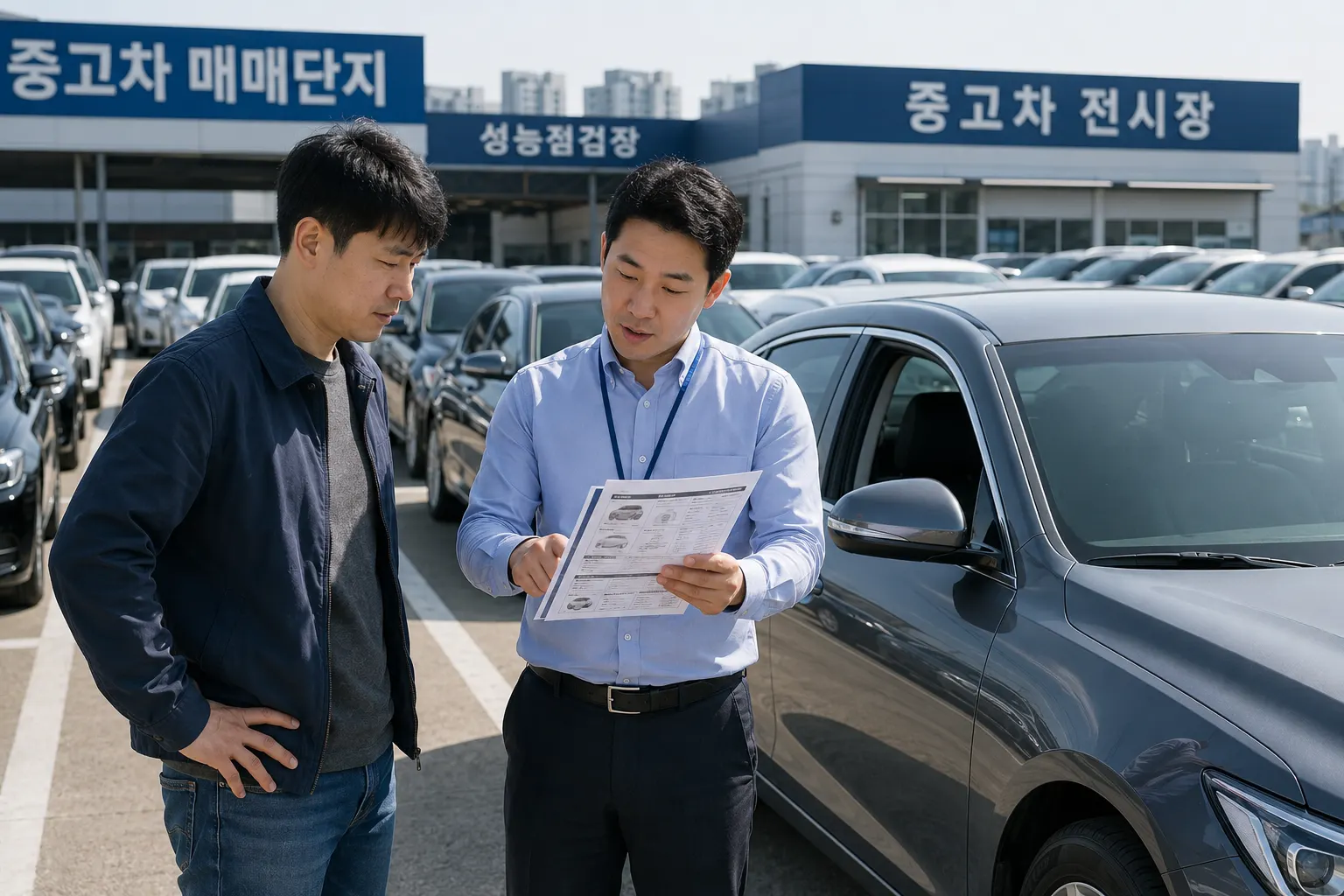
- Vehicle history report (차량 이력 조회), available through Encar or directly through Korea's transportation safety authority, reveals accident history, previous ownership count, and whether the vehicle has had a salvage or flood-damage designation, checking this before committing to a purchase is standard practice and worth doing regardless of how the seller describes the vehicle's condition.
- Outstanding liens or loans on the vehicle, since Korean vehicles can have an existing loan or lien registered against them, confirming a clean title free of outstanding claims prevents inheriting someone else's unresolved debt tied to the car.
- Mandatory inspection status (자동차검사), Korea requires periodic vehicle safety and emissions inspections, confirming the current inspection status and when the next one is due helps you understand upcoming costs and requirements right after purchase.
The Registration Process
- Complete the purchase agreement and payment, generally involving a written sales contract regardless of whether you're buying from a dealer or private seller.
- Register the vehicle under your name at your local district office or through an authorized registration agent, requiring your ARC, proof of address, and the vehicle's existing registration documents.
- Arrange required insurance before or immediately upon registration, since driving without at least mandatory liability insurance is illegal, coordinating insurance and registration timing avoids a gap where the vehicle is technically registered but not legally insured to drive.
- Pay applicable acquisition tax, a percentage-based tax on the vehicle's assessed value, due at the time of registration, similar in concept to property acquisition tax but calculated specifically for vehicles.
Costs Beyond the Purchase Price
- Acquisition tax, generally a percentage of the vehicle's value, due at registration.
- Insurance premiums, as covered in how car insurance works for foreign drivers, vary based on your driving history recognition and the specific vehicle and coverage level chosen.
- Parking, particularly relevant in dense Korean cities, some apartment complexes require vehicle registration with the building's parking system, and street parking availability and cost vary significantly by neighborhood.
- Ongoing inspection and maintenance costs, periodic mandatory inspections carry their own fee, separate from routine maintenance costs at a service center.
Common Mistakes Foreign Buyers Make
- Not checking the vehicle history report before purchase, relying solely on a seller's verbal description of the car's condition and history rather than independently verifying through available tools.
- Overlooking outstanding liens, particularly relevant for private-party purchases without a dealer's administrative verification process, leading to complications after the purchase if an undisclosed lien surfaces.
- Delaying insurance setup, assuming registration alone makes the vehicle legally drivable, without confirming insurance coverage is actually active before driving.
- Not understanding total ownership costs beyond the purchase price, acquisition tax, insurance, parking, and periodic inspection costs add up meaningfully beyond the advertised vehicle price alone.
Whether Car Ownership Makes Sense for You
Given Korea's genuinely efficient and dense public transit network, particularly in Seoul and other major cities, many foreign residents find that car ownership isn't necessary for daily life, and the total cost of ownership, purchase, insurance, parking, inspection, maintenance, is meaningfully higher than relying on transit and occasional taxi or rideshare use. Car ownership tends to make more practical sense for residents in areas with less comprehensive transit coverage, families with specific transportation needs, or those who frequently travel to areas not well served by public transit.
Quick Summary
- Encar is Korea's dominant used car marketplace, offering vehicle history reports that should be checked before any purchase, whether through a dealer or private seller.
- Registration requires your ARC, proof of address, and existing vehicle documents, completed at a local district office or through an authorized registration agent.
- Costs beyond the purchase price include acquisition tax, insurance, periodic mandatory inspections, and potentially parking registration fees, worth budgeting for the full ownership cost rather than just the sticker price.
- Car ownership makes more sense in areas with less transit coverage or specific family transportation needs, many residents in major cities find Korea's public transit sufficient without needing to own a vehicle at all.