How Korean Convenience Store Meals and Instant Food Actually Work
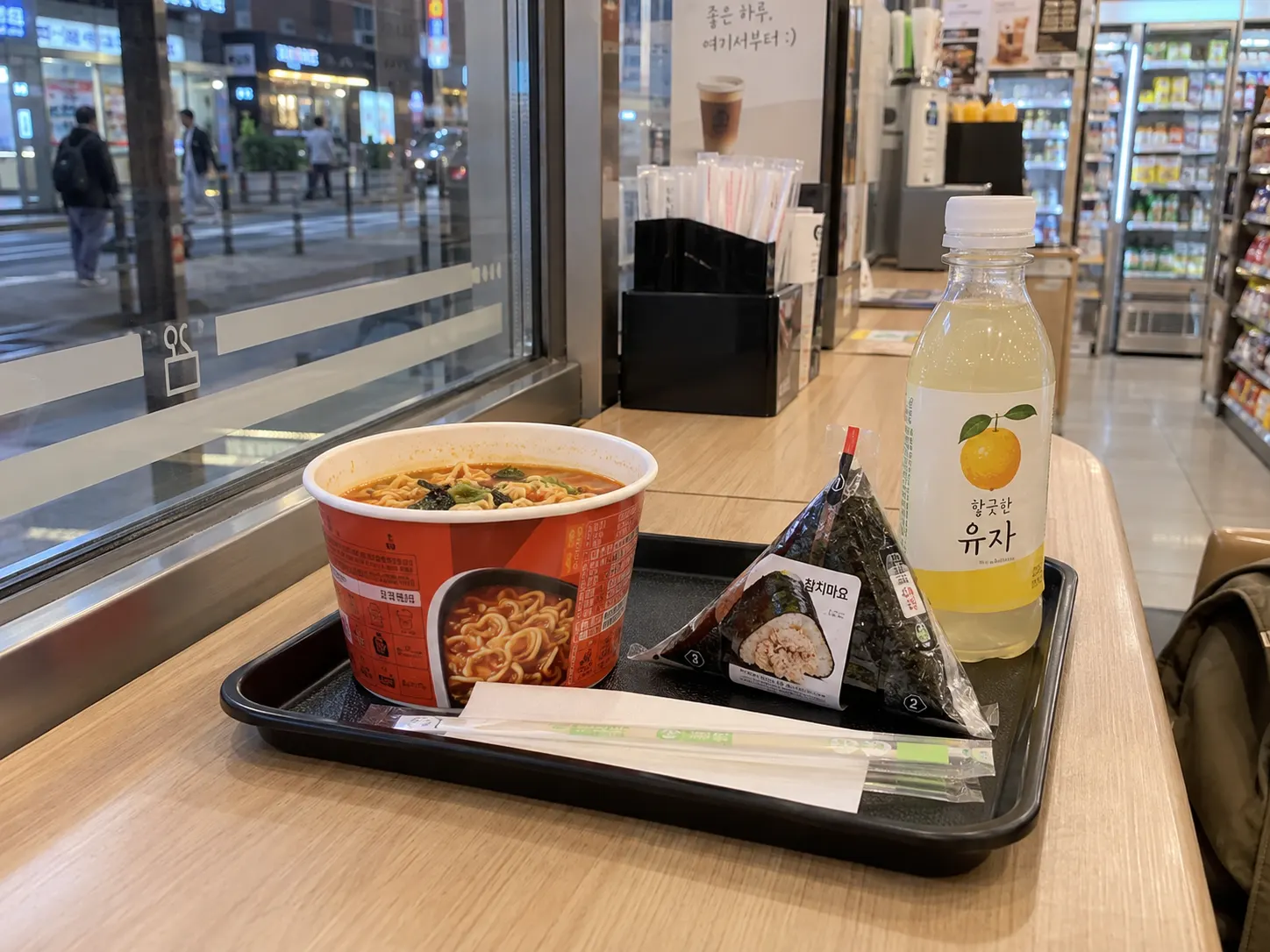
If you've stood in front of a Korean convenience store fridge wondering what the triangle rice balls, boxed lunches, and instant noodle cups actually are, you're not alone. Convenience store food in Korea is a real meal option, not just a snack stop, and it is often cheaper and faster than a restaurant. Knowing how to heat, pair, and choose items makes a quick meal far better.
Here is how it works and what to try.
The Quick Answer: What You Can Eat
Most stores sell:
- Triangle kimbap and rice balls (삼각김밥): a quick, cheap snack or breakfast
- Boxed meals (도시락): rice with side dishes, often heated in-store
- Instant noodles (라면, 컵라면): cooked right in the store with hot water
- Sandwiches, salads, and bread: for lighter meals
- Hot items: hot dogs, fried chicken, and steamed buns near the register
Prices are usually modest, with many items under a few thousand won.
How to Heat and Prepare Food
- Take your item to the counter and ask the clerk to heat it, or use the self-service microwave if there is one.
- For cup noodles, fill the cup with hot water at the dispenser, close the lid, and wait the time printed on the label.
- Eat at the in-store counter, which is normal and often provides chopsticks and a trash bin.
Pre-packaged rice usually needs a minute or two in the microwave. Follow the instructions on the label.
A Few Reliable Combinations
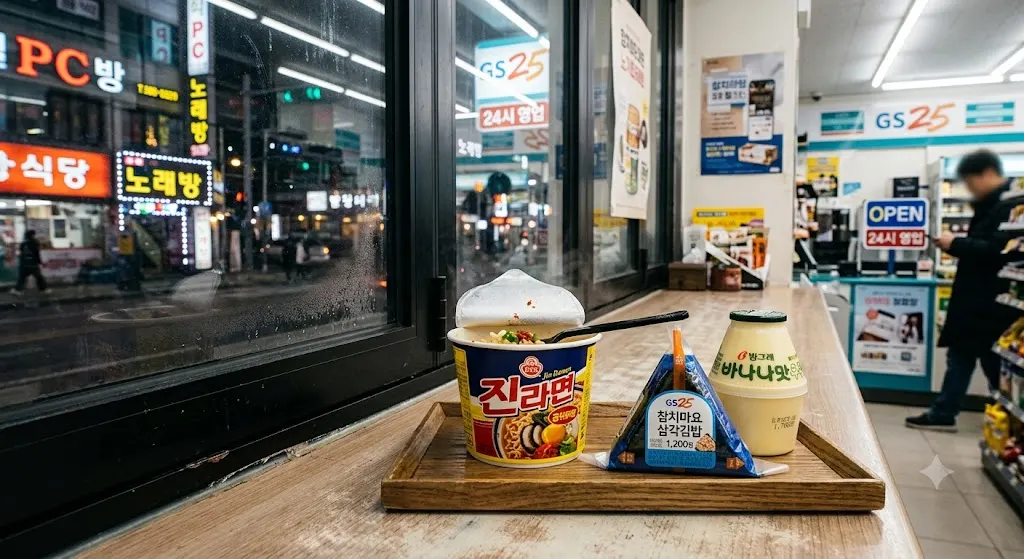
- Cup ramen with a triangle kimbap, a classic budget meal
- A boxed meal with a drink and a small dessert
- A sandwich with yogurt or milk for a light breakfast
Many stores run combo deals and "1+1" promotions, so check the price tags and the app for discounts, as touched on in the loyalty points guide.
Reading Labels
Packaging is mostly in Korean, so use a translation app, especially if you have allergies. Ingredient lists appear on the back, and allergens are often flagged, as covered in the allergy guide, though labeling may be less detailed than in some countries. If you have a serious allergy, check carefully or ask staff.
Nutrition and Value
Convenience meals are convenient, but they are often high in sodium and light on vegetables. Pairing them with fruit, salad, or a vegetable side improves balance. For regular meals, supermarkets and markets usually offer better value, as covered in the traditional market guide.
Common Mistakes
- Not asking for items to be heated. Many are meant to be warmed.
- Skipping the label for allergies. Check ingredients if you have restrictions.
- Relying on them for every meal. Variety matters for health and budget.
- Missing promotions. Combo and 1+1 deals can cut costs.
Quick Summary
- Korean convenience stores sell real meals, including triangle kimbap, boxed lunches, instant noodles, and hot snacks, usually at low prices.
- You can heat food at the counter and eat in-store, with free hot water for cup noodles.
- Use a translation app for labels, especially if you have allergies.
- Convenience meals are fast and cheap, but balance them with fresh food and watch for promotions.