How Garbage Sorting Works in Korea: A Practical Guide for Foreign Residents
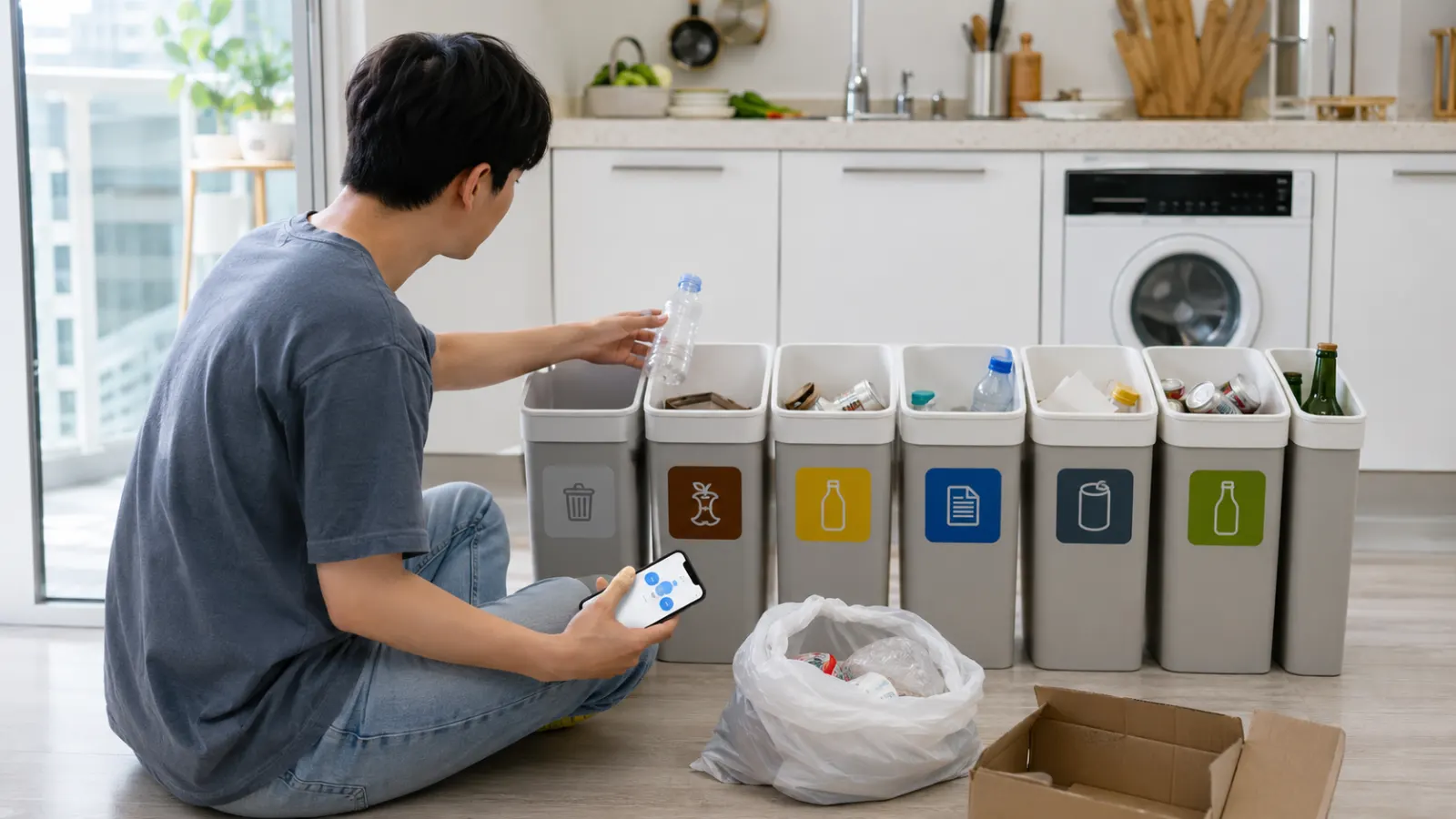
Moving into a Korean apartment or studio can feel easy until the first trash day. Suddenly you need to know which bag to buy, where food waste goes, what counts as recycling, why labels should be removed, and why your neighbor seems to know a schedule that was never explained to you.
Garbage sorting in Korea is not just a small household habit. It is part of daily residential life, and doing it wrong can create fines, building complaints, or awkward conversations with landlords and neighbors.
Why trash disposal feels strict in Korea
Korea has dense cities, high apartment living, and limited space. Waste systems are designed to separate general trash, food waste, recyclables, large items, and sometimes special items like batteries, electronics, clothing, or fluorescent lights.
For foreigners, the system can feel strict because it is not enough to put everything in one black bag. In many buildings, general waste must go into official volume-based bags. Food waste may have a separate container or paid disposal system. Recycling may have specific days and sorting rules.
The common misunderstanding is thinking that “recycling” means one mixed bin. In Korea, recycling often requires more separation and cleaning than newcomers expect.
General waste uses official bags
In many areas, ordinary non-recyclable trash must be placed in official district waste bags. These are not just regular plastic bags. They are sold by local district or city and are part of the pay-as-you-throw system.
You can usually buy them at convenience stores, supermarkets, or local shops. The confusing part is that the bag must match your area. A bag bought in one district may not be accepted in another. This matters if you move between neighborhoods or buy bags near work instead of near home.
General waste usually includes items that cannot be recycled or separated into food waste. But rules can vary, so check your building notice or local district guidance. A mistake point: do not use random shopping bags for regular household trash unless your building specifically allows it. In many cases, it needs to be the official bag.
Food waste is separate
Food waste is one of the most confusing parts for foreigners. In Korea, food scraps usually do not go into general trash. They are collected separately because they may be processed differently from ordinary waste.
However, not everything that looks like food is treated as food waste. Bones, shells, hard seeds, tea bags, and certain tough materials may not belong in the food waste bin depending on local rules. This surprises many people because they assume all leftovers are the same.
Apartment buildings may use shared food waste bins, card-based machines, or special bags. Villas, officetels, and small buildings may have different systems. Goshiwons and share houses may have house-specific rules.
The safest approach is to ask your landlord, building manager, or neighbor during the first week: “Where do I throw food waste, and what day?”
Recycling needs preparation
Korean recycling often expects items to be emptied, rinsed, flattened, and separated. Plastic bottles, cans, glass, paper, cardboard, vinyl, and styrofoam may have different collection areas.
Practical recycling habits include:
- Empty bottles and cans before disposal.
- Rinse food containers when possible.
- Flatten cardboard boxes.
- Remove tape from boxes if required.
- Separate plastic labels from bottles where requested.
- Keep styrofoam clean and free of food residue.
- Do not throw oily or dirty paper with clean paper recycling.
The mistake is tossing dirty food containers into recycling because the material is technically plastic. If it is too contaminated, it may need to go into general waste.
Buildings have their own schedules
Even if the district has general rules, your building may have specific collection times. Some apartments have recycling areas open daily. Others allow disposal only on certain evenings. Smaller villas may require residents to place bags outside on designated days.
This is why online advice is only partially useful. Trash rules are local and building-specific. A friend in Gangnam, Mapo, Busan, or Suwon may follow a different schedule from you.
When moving in, check:
- Where to put general waste
- Where to put food waste
- Where to put recycling
- Which days and times are allowed
- Where to dispose of large items
- Whether official bags are required
- Whether there is CCTV or a penalty system
- Who to ask if unsure
A five-minute explanation can prevent weeks of confusion.
Large items need separate disposal
Furniture, mattresses, chairs, appliances, shelves, and large household items usually cannot be left casually near the trash area. They may require a paid sticker, online reservation, building office request, or district pickup system.
Foreigners often make this mistake when moving out. They leave furniture downstairs, assuming someone will take it. In Korea, that can cause complaints or fees. If you buy used furniture, also think about future disposal. A cheap desk may become annoying if you need to pay, schedule, and carry it out later. Before move-out, ask the building manager how to dispose of large items. Do not wait until the final night.
Clothing, batteries, and electronics may have special bins
Some neighborhoods and buildings have separate collection for clothing, batteries, small electronics, fluorescent lights, or used cooking oil. These are not always in the same place as regular recycling.
Clothing donation bins are common, but not every textile belongs there. Dirty, wet, or unusable items may need a different disposal method. Batteries and electronics should not be thrown into general trash casually.
If your building has a recycling room, spend a few minutes looking at the labels. Even if you cannot read all the Korean, icons and examples can help. A translation app can also make the signs easier.
What happens if you do it wrong?
In some buildings, incorrect disposal may lead to warning notices, fines, returned trash bags, or complaints from management. CCTV is common in apartment and officetel trash areas, especially where illegal dumping has been a problem.
This can feel embarrassing, but most mistakes are avoidable once you understand the local system. If your trash bag is rejected or a notice appears, do not ignore it. Ask what was wrong and adjust.
Foreigners sometimes feel targeted when trash rules are enforced. Usually, the issue is not nationality. It is that the system expects everyone to follow detailed sorting rules, and newcomers simply have not been taught.
Share houses and goshiwons need extra care
If you live in a share house, goshiwon, dormitory, or serviced residence, the rules may be different from a normal apartment. The manager may collect trash, or residents may have assigned days. Food waste may be handled centrally. Recycling may be stricter because many people use the same bins.
In shared housing, trash mistakes affect other residents quickly. Smell, pests, overflowing bins, and wrong disposal can become social problems. Ask for written instructions when you move in. If the rules are only explained verbally, take a photo of the disposal area and signs so you can check later.
A practical beginner system
During your first week in a Korean home, set up a small sorting station. You do not need anything fancy. Use separate containers or bags for:
- General waste
- Food waste
- Plastic and vinyl
- Paper and cardboard
- Cans and glass
- Items to ask about later
This reduces panic on collection day. It also helps you notice which waste you produce most. If you cook often, food waste matters more. If you shop online often, cardboard and packaging become the main issue.
Quick Summary
- Korean trash disposal usually separates general waste, food waste, recyclables, and large items.
- General waste often requires official district bags, not random plastic bags.
- Food waste and recycling rules vary by building and local area.
- Ask your landlord or building manager about disposal location, schedule, official bags, and large-item pickup during your first week.