Hiring a Moving Company in Korea: What Foreign Residents Should Check Before Moving Day
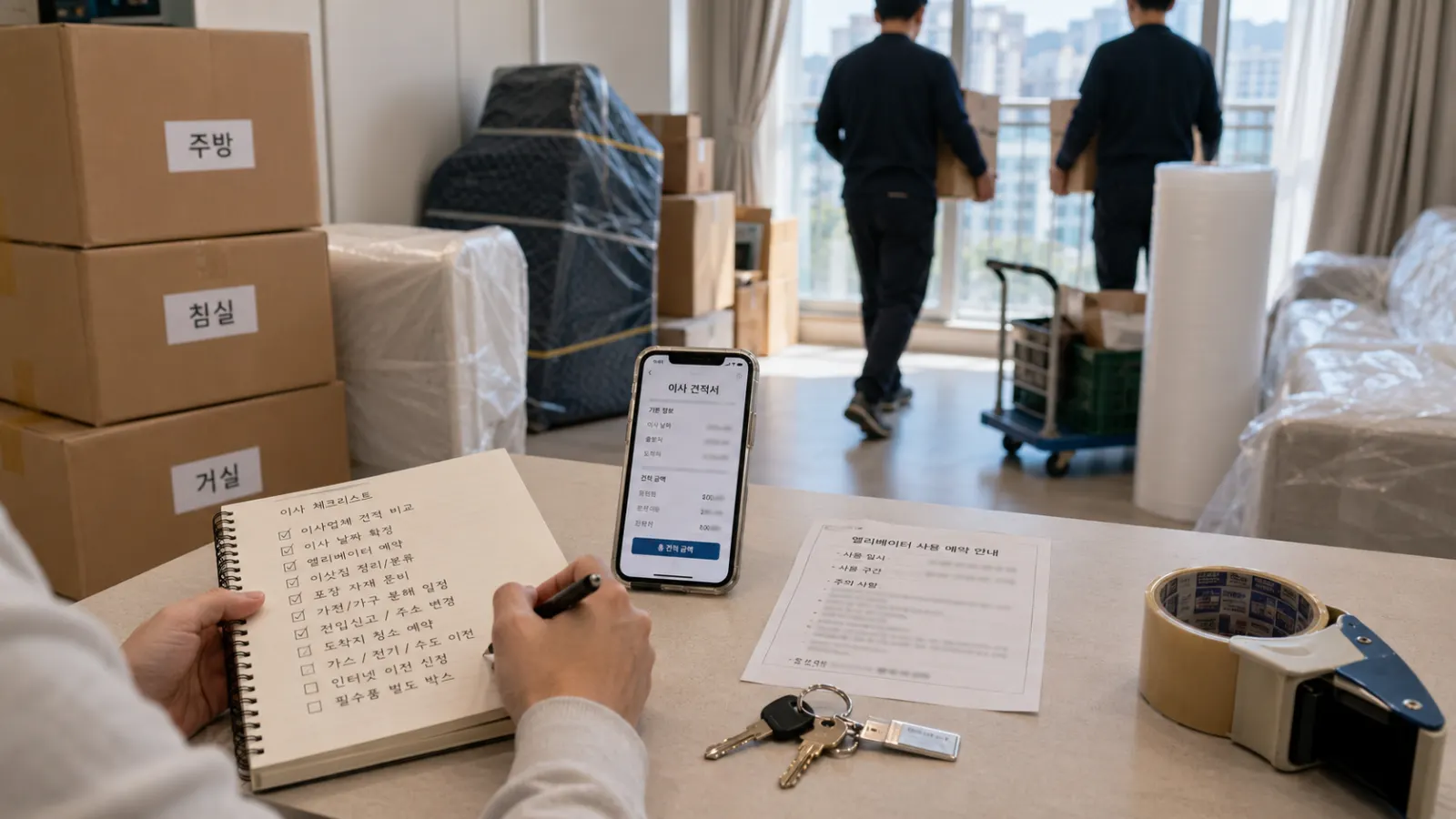
Moving between homes in Korea can involve much more than loading boxes into a truck. Apartment access, elevators, parking, large-item disposal, air-conditioner removal, appliance installation, cleaning, and the return of your housing deposit may all need to happen within the same narrow time window.
Foreign residents often focus on the quoted moving price and overlook what the service actually includes. The safest approach is to compare written estimates, show the company everything that must be moved, and coordinate the move with both buildings before moving day.
The main types of moving service
Korean moving companies may offer several service levels.
A basic transport service usually expects the customer to pack most items before the crew arrives. The movers load, transport, and unload the belongings, but organization and unpacking remain the customer’s responsibility.
A packaging move, commonly described as 포장이사, is more comprehensive. The crew may pack household items, protect furniture, transport everything, and place or partially unpack items in the new home.
A half-packaged or mixed service can fall between these options. The customer may pack personal items while the movers handle furniture, appliances, kitchenware, or other difficult belongings.
Do not choose only by the service name. Ask exactly who will:
- Supply boxes and packing materials
- Pack clothing and kitchen items
- Disassemble furniture
- Reassemble beds and shelves
- Disconnect appliances
- Reconnect washing machines
- Move air conditioners
- Remove packaging waste
- Clean the old or new home
- Carry items when an elevator cannot be used
Two companies can use the same label while providing different work.
Request an in-person or detailed estimate
A price based only on the number of rooms may be inaccurate. The company should understand:
- Total amount of furniture
- Number of boxes
- Large appliances
- Fragile items
- Building floors
- Elevator availability
- Parking distance
- Narrow stairs
- Special equipment
- Travel distance
- Desired moving date
- Storage requirements
Video estimates can be convenient, but show every closet, balcony, storage room, and large item. A forgotten wardrobe, exercise machine, or extra appliance can create an additional charge on moving day.
Ask for the estimate in writing. It should identify the service, vehicle, crew, equipment, and expected additional charges.
Moving dates affect availability
Certain dates are more popular because of lease schedules, weekends, school calendars, and traditional preferences. A company may have limited crews or higher demand on those days. Book early when the moving date cannot change. However, avoid paying a large nonrefundable amount before checking the cancellation and date-change rules. Ask:
- Is the reservation deposit refundable?
- What happens if the landlord changes the move-in time?
- What happens during severe weather?
- Can the company change the crew or subcontract the job?
- Is there an additional charge for weekend or early-morning work?
- What happens if the previous resident has not left?
Housing schedules in Korea can be tightly connected. A delay in returning one tenant’s deposit can affect the next move, so keep the real estate agent, landlord, and moving company informed.
Elevators and ladder trucks
Large apartment buildings may require residents to reserve the service elevator. The management office may limit moving times, request protective floor coverings, or collect a temporary deposit.
In buildings where furniture cannot pass through stairs or elevators, a ladder truck may be used to move items through a window or balcony. Ask both buildings:
- Is an elevator reservation required?
- Is there an elevator-use fee?
- Is a ladder truck permitted?
- Where can the truck park?
- Is building protection required?
- Are there restricted moving hours?
- Does the management office need advance notice?
Do not assume the moving company will make these arrangements automatically. A ladder truck may require safe outdoor access and suitable building conditions. The moving company should confirm feasibility before the move.
Parking can create hidden charges
A moving truck needs space close to the entrance. In dense neighborhoods, officetel areas, villas, and traditional markets, parking may be difficult. If the truck must stop far away, movers may charge for additional carrying distance or labor. Illegal parking can also interrupt the move. Photograph the entrances to both homes and send them to the company. Show:
- Road width
- Gate
- Underground parking height
- Loading area
- Stairs
- Elevator entrance
- Distance from road to building
Ask the landlord or building manager whether temporary parking can be arranged.
Appliances need separate planning
Moving a refrigerator is different from uninstalling an air conditioner or connecting a washing machine. Check each appliance individually:
- Refrigerator
- Washing machine
- Dryer
- Television
- Dishwasher
- Water purifier
- Air conditioner
- Induction cooktop
- Gas appliance
The moving crew may transport an appliance without being qualified or equipped to reinstall it.
Air conditioners often require specialized removal and installation. Water purifiers may belong to a rental company and need an official relocation request. Internet equipment may need to be returned or installed by the provider.
Contact each service provider before moving day rather than asking the moving crew to solve everything on arrival.
Large waste is not automatically removed
Moving is a common time to discard beds, desks, chairs, mattresses, appliances, and other bulky items.
Do not leave them beside the building without checking local disposal rules. Bulky waste may require an online report, disposal sticker, scheduled pickup, or collection through a retailer or appliance service.
Ask the moving company whether disposal is included. Some companies can remove items for a fee, while others transport only the belongings going to the new home. Separate unwanted items early. Waiting until the truck is loaded can lead to confusion about what should be moved and what should be discarded.
Protect important and valuable items yourself
Carry the following personally when possible:
- Passport
- Residence card
- Bank documents
- Lease
- Medication
- Jewelry
- Cash
- Laptop containing sensitive work
- Irreplaceable photographs
- Keys
- Moving-company contract
Photograph valuable furniture and electronics before packing. Back up important digital files. Label boxes containing fragile items and tell the crew directly rather than assuming the label will be noticed. If an item is unusually valuable, ask whether it is covered and whether separate documentation is needed.
Check damage and missing items immediately
Before the crew leaves the new home:
- Count major boxes and furniture.
- Check appliances for visible damage.
- Test doors, drawers, and furniture assembly.
- Inspect walls, floors, elevators, and hallways.
- Confirm that no items remain in the truck.
- Photograph any damage.
- Write the problem on the completion document.
- Keep the estimate and payment record.
Do not sign a statement saying the move was completed without problems when you have already found damage. Claims are easier to discuss when evidence is collected immediately.
Moving-day payments
Confirm the payment method before the move. Ask whether the company accepts:
- Bank transfer
- Card
- Cash
- Deposit plus final payment
- Additional on-site charges
Request a receipt or written confirmation.
Do not transfer unexpected extra money to an individual account without asking what the charge covers. If the final amount differs from the estimate, request an itemized explanation.
A practical preparation timeline
One or two weeks before moving, confirm the company, elevator reservations, parking, appliance services, internet transfer, and bulky-waste disposal. Several days before moving, pack personal documents, medication, valuables, and a first-night bag. The day before moving, photograph the old home, confirm the deposit-return process, empty and prepare appliances as instructed, and verify the arrival time.
On moving day, keep the contract, addresses, contacts, and payment records accessible.
Quick Summary
- Compare moving companies by included services, not only the quoted price.
- Confirm elevators, parking, ladder-truck access, and building restrictions in advance.
- Appliance installation, internet relocation, cleaning, and bulky-waste removal may require separate services.
- Carry identity documents and valuables personally, and document damage before the crew leaves.