Repairing Home Appliances in Korea: Warranties, Service Visits, and Landlord Responsibility
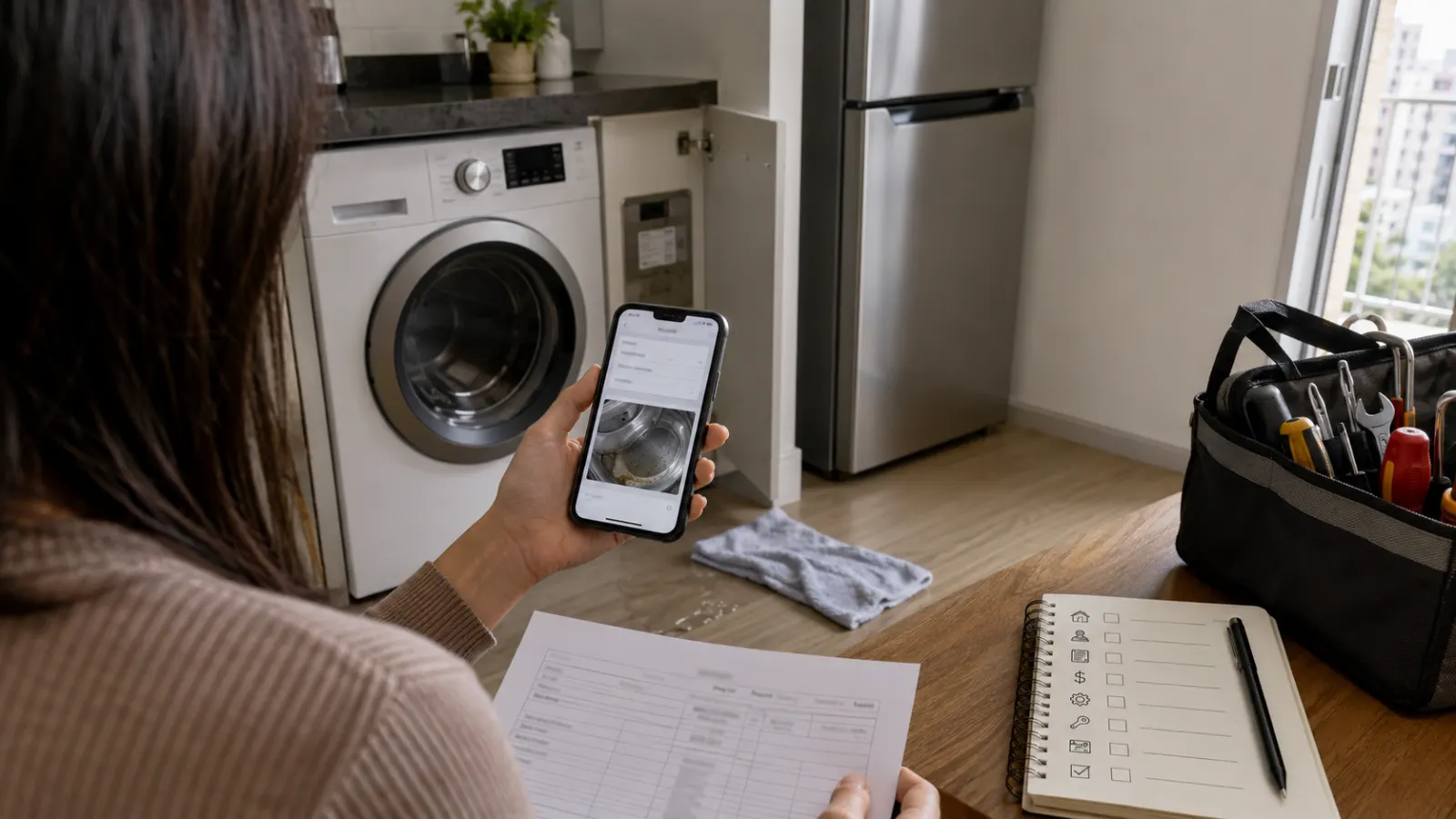
A washing machine that stops draining, an air conditioner that leaks, a refrigerator that becomes warm, or an induction cooktop that displays an error can quickly disrupt daily life in Korea.
The correct repair process depends on who owns the appliance. It may belong to the tenant, landlord, building, rental company, or subscription provider. Calling an unofficial technician before checking ownership can create unnecessary charges or make a warranty claim more difficult.
The safest first step is to identify the appliance, record the problem, and contact the responsible owner or authorized service channel.
Determine who owns the appliance
An appliance in a furnished Korean home is not automatically the tenant’s responsibility. It may be:
- Included by the landlord
- Installed by the building
- Left by a previous tenant
- Rented from a service provider
- Purchased by the current tenant
- Shared by residents
- Included in an officetel unit
Check the lease, inventory list, move-in photographs, and messages with the landlord. Ask:
- Who owns it?
- Was it working at move-in?
- Who pays for repair?
- Who chooses the technician?
- Is replacement possible?
- Is there a warranty?
- Can the tenant dispose of it?
Do not remove or replace a landlord-owned appliance without written permission.
Record the problem
Before requesting service, collect:
- Brand
- Model number
- Serial number
- Error code
- Purchase date
- Installation date
- Photos
- Video
- Sounds
- Smell
- Leak location
- Conditions when the problem occurs
The model label may be on the side, rear, door frame, or inside the appliance. Do not move a heavy appliance unsafely to find the label. Use a mirror or phone camera when possible. A clear video can help customer service determine whether a visit is necessary.
Basic checks
Some problems have simple causes. Before arranging repair, safely check:
- Power connection
- Circuit breaker
- Water valve
- Drain hose
- Filter
- Door closure
- Remote-control batteries
- Settings
- Child lock
- Error code
- Ventilation
Use the official manual. Do not open sealed panels, touch electrical wiring, disconnect gas lines, or dismantle equipment beyond ordinary user maintenance. Stop using an appliance that smells burned, sparks, leaks near electricity, overheats, or makes dangerous mechanical sounds.
Contact the landlord early
For a furnished rental, notify the landlord or property manager promptly. Use a written message containing:
- Appliance
- Problem
- Start date
- Photos or video
- Effect on living conditions
- Request for repair instructions
- Availability for a technician
Do not wait several weeks and then report extensive water damage caused by an untreated leak. The question of who pays can depend on ownership, age, cause, lease terms, ordinary wear, and whether the tenant misused the appliance. Do not admit fault without understanding what caused the problem.
Manufacturer service centers
Major appliance manufacturers usually have authorized service channels. An authorized technician may have access to:
- Model history
- Genuine parts
- Warranty records
- Technical manuals
- Repair documentation
- Product-specific tools
Use the official manufacturer website, app, or verified customer-service number. Be cautious with search advertisements that imitate an official service center. Confirm the company name before sharing your address or paying a booking fee.
Warranty
Warranty coverage can depend on:
- Purchase date
- Product
- Part
- Installation
- Original buyer
- Commercial or residential use
- Damage cause
- Previous repair
- Registration
- Proof of purchase
A product can be within a general warranty period while a particular issue is excluded. Ask:
- Is the visit fee covered?
- Is labor covered?
- Are parts covered?
- Is transportation covered?
- Does the warranty transfer to a new owner?
- What proof is needed?
- What happens if no defect is found?
Do not assume that every service visit is free.
Visit and inspection fees
A technician may charge for travel or inspection even when no repair is completed. Before confirming the appointment, ask:
- Basic visit fee
- Diagnostic fee
- Estimated labor
- Parts cost
- Weekend or evening surcharge
- Parking charge
- Cancellation fee
- Payment method
- Receipt
- Warranty on repair
The final price may not be known until inspection. Request approval before the technician performs an expensive repair that exceeds the expected amount.
Washing machines
Common concerns include:
- Failure to drain
- Water leak
- Door lock
- Strong vibration
- Odor
- Error code
- Poor spinning
- Water not entering
Check the filter, drain hose, load balance, and water valve according to the manual. Do not force the door open. A leak should be addressed quickly to prevent damage to the floor or neighboring units.
For a built-in or landlord-owned machine, contact the property manager before moving it.
Refrigerators
A refrigerator problem can spoil food quickly. Check:
- Power
- Temperature setting
- Door closure
- Ventilation
- Frost buildup
- Unusual noise
- Warm compartments
- Interior light
Avoid repeatedly opening the door. Move temperature-sensitive medicine or essential food to safe storage when necessary. Do not use sharp tools to remove ice.
If the appliance belongs to the landlord, report both the failure and any risk of floor or wall damage.
Air conditioners
Air-conditioner problems may involve:
- Weak cooling
- Water leak
- Odor
- Noise
- Error code
- Frozen unit
- Remote control
- Filter
Clean only the user-accessible filter according to instructions. A water leak can result from drainage, installation, blockage, or internal problems. Do not allow water to continue running onto electrical equipment, wallpaper, or flooring.
Air-conditioner removal, gas handling, and internal cleaning should be performed by an appropriate service provider.
Gas and heating appliances
Gas boilers, cooktops, and heating systems require special caution. If you smell gas or suspect carbon monoxide:
- Avoid flames
- Avoid creating sparks
- Ventilate when safe
- Leave the area
- Contact the appropriate emergency or gas service
- Follow official instructions
Do not attempt a repair yourself. A boiler problem in winter can also create a risk of frozen pipes. Notify the landlord or service provider immediately.
Rental and subscription appliances
Water purifiers, bidets, mattresses, massage chairs, and some other products may be rented under a service contract. The provider may handle:
- Regular maintenance
- Filter replacement
- Repair
- Relocation
- Pickup
- Replacement
Do not call an outside technician before contacting the rental company. Unauthorized work can affect the contract or create repair charges. Keep the service account, model, and customer number accessible.
Repair or replacement
An old appliance may cost more to repair than replace. Consider:
- Repair estimate
- Appliance age
- Part availability
- Energy use
- Reliability
- Warranty
- Ownership
- Delivery cost
- Disposal cost
- Installation
For a landlord-owned appliance, the tenant should not decide replacement alone. Ask who will choose the new model and who owns it afterward.
Access to the home
A technician may need:
- Resident present
- Building access
- Parking
- Elevator
- Space around appliance
- Water or power shutoff
- Landlord permission
Secure valuables and sensitive documents before the visit. Do not share a permanent door code unnecessarily. When using a temporary access code, change it after the appointment when appropriate.
After the repair
Before the technician leaves:
- Test the appliance.
- Check the original problem.
- Inspect for leaks.
- Confirm the replaced part.
- Ask for care instructions.
- Obtain the receipt.
- Record the repair date.
- Ask about the repair warranty.
- Inform the landlord.
- Save the service report.
Do not discard a replaced landlord-owned appliance or part without authorization.
Moving out
Before moving, clarify whether tenant-owned appliances will be removed and whether landlord-owned appliances must remain. For rental appliances, arrange relocation or return. Do not leave an unwanted appliance in the home or recycling area without approval.
Large appliances usually require a proper collection process. Photograph the appliances and their condition during the final inspection.
Quick Summary
- Identify whether the appliance belongs to the tenant, landlord, building, or rental company before arranging repair.
- Record the model, error code, photos, video, and circumstances of the problem.
- Confirm visit, diagnosis, labor, parts, and warranty charges before approving work.
- Gas, electrical, overheating, and major leak problems require immediate safety precautions and qualified service.