Korean Address Registration for Foreign Residents: What to Do After Moving
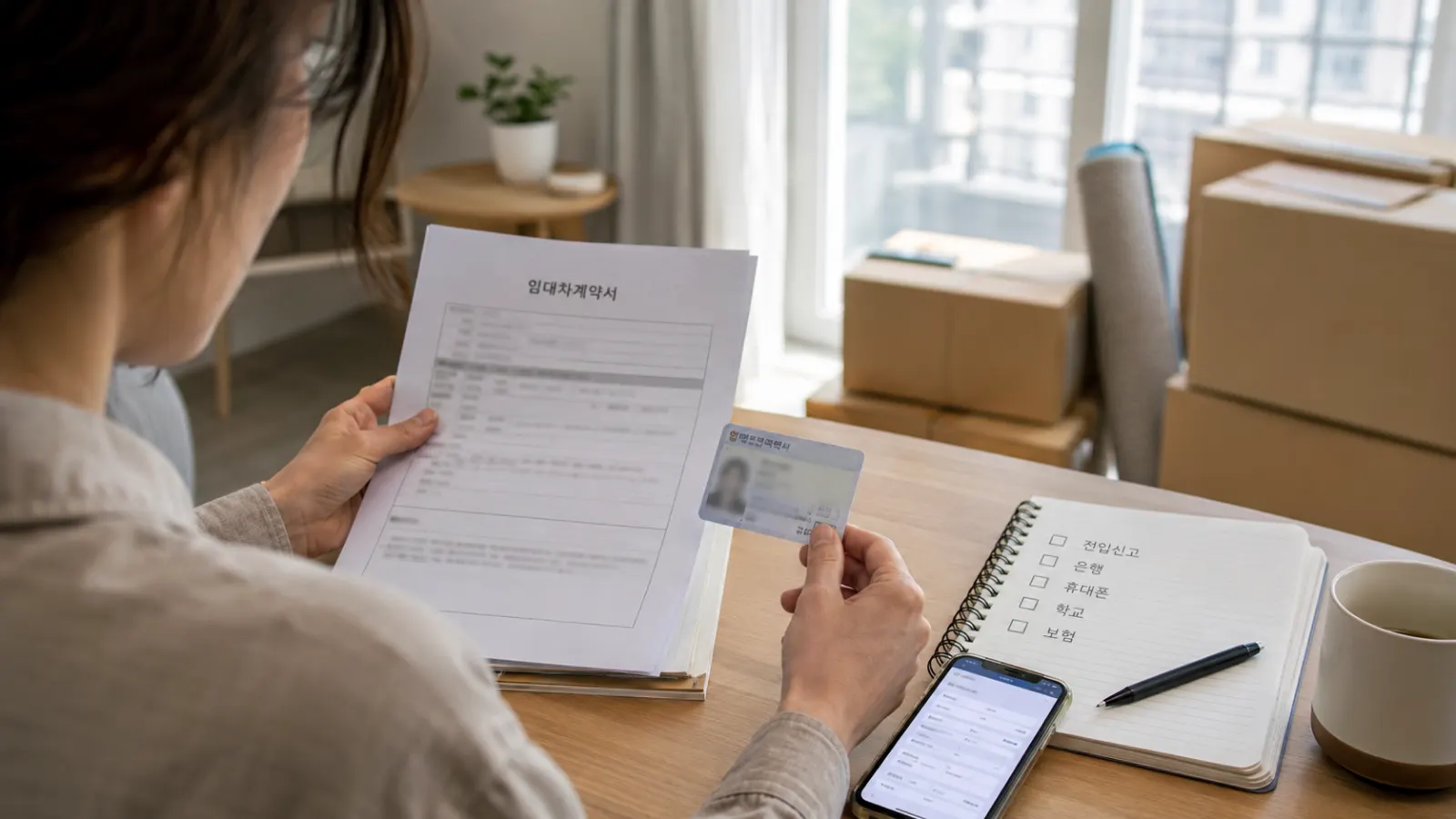
Moving in Korea is not finished when your boxes arrive. For foreign residents, a new address can affect immigration records, banking, phone verification, health insurance, school documents, workplace records, and even mail delivery. This is why address registration is one of the most important but easily forgotten parts of living in Korea.
The process is not difficult, but the mistake many foreigners make is treating it like a casual update. In Korea, your registered address is part of your official resident record, so it should match where you actually live.
Why your registered address matters
Foreign residents in Korea are usually expected to keep their residence information accurate. Your address may be used when you renew a visa, open or update a bank account, receive government mail, register for health insurance, deal with a school or employer, or prove where you live.
A wrong or outdated address can create small problems that later become stressful. You may miss important notices, have trouble proving your residence, or find that your documents do not match when applying for services.
The common misunderstanding is thinking that your landlord, real estate agent, school, or employer will automatically update everything for you. They may help with documents, but the responsibility is usually yours.
When you need to update your address
If you move from one home to another in Korea, you should update your address promptly. This applies whether you move from a dormitory to an officetel, from a goshiwon to an apartment, from Seoul to Busan, or even within the same district.
Short-term visitors usually do not deal with the same process because they are not registered long-term residents. But students, workers, spouses, job seekers, long-term language learners, and other foreign residents should take address updates seriously.
Do not wait until visa renewal season. If your official address is outdated, you may discover the problem only when you urgently need another service.
Documents you may need
The exact documents can vary by office and situation, but foreign residents should prepare more than the minimum. Commonly useful documents include:
- Passport
- Residence card
- Housing contract or lease agreement
- Confirmation of residence from a dormitory, goshiwon, school, employer, or landlord
- New address in Korean
- Phone number
- Previous address, if asked
If your name appears differently on different documents, bring the document that most clearly connects you to the new address. A lease contract under your exact legal name is usually easier than an informal arrangement.
For shared housing, sublets, company housing, dormitories, or temporary accommodation, ask in advance what proof can be provided. The most frustrating cases often happen when someone is living somewhere legally but has no document that clearly proves it.
Where to report the change
Foreign residents may be able to report address changes through immigration-related channels or local offices depending on the case. In practice, many people use local district offices, community centers, or online services when available.
The best option depends on your visa status, location, documentation, and whether your situation is straightforward. If you are unsure, check with the local office before going, or ask your university international office, employer, or landlord for the correct document format.
The important point is not the building name of the office. It is whether your new address is officially recorded and reflected in your residence information.
Korean address formats can be confusing
Foreigners often struggle with Korean addresses because buildings, room numbers, road names, neighborhood names, and postal codes may appear in different orders. A Korean address may include:
- Province or city
- District
- Road name
- Building number
- Building name
- Floor or room number
- Postal code
For official paperwork, do not translate your address loosely. Use the exact Korean version from your lease, building registration, postal lookup, or landlord. If you live in an officetel or apartment, the room number matters.
A small typo can create problems when documents are checked later. Save your Korean address on your phone in a copyable format.
Address registration and banking
Banks in Korea often care about accurate resident information. If your bank account, phone number, and residence card show inconsistent details, you may face friction when updating services, increasing transfer limits, receiving cards, or handling security verification.
After moving, consider whether your bank also needs your updated address. Some banks allow app-based updates, while others may require a branch visit or additional verification.
This is especially important if you expect to receive a card, bank notice, tax document, or other mailed item. Korean banking can be efficient, but only if your identity information remains consistent.
Address registration and phone verification
Your phone number may be connected to your legal name and resident information. If you change address, your telecom provider may not always be the first place you think about, but phone verification is tied deeply into Korean digital life.
Some services may not care about your address. Others may ask for identity details that should match official records. For long-term residents, keeping immigration, banking, telecom, and housing records aligned is simply safer.
The practical rule is this: when you move, make a short checklist of every major service that may need your new address.
Who should be extra careful?
Students should be careful because dormitory changes, temporary housing, and semester moves can happen frequently. Your school may have one address on file, immigration may have another, and your bank may have a third.
Workers should be careful if they move after changing jobs or housing arranged by an employer. Do not assume the company has updated every official system. Freelancers and remote workers should be careful because they may rely on their address for banking, taxes, mail, and business-related documents.
People in short-term rentals should confirm whether the address can be used officially before depending on it for paperwork.
A moving checklist for foreign residents
Before or immediately after moving, check the following:
- Do you have a written document proving your new address?
- Is the address written correctly in Korean?
- Does the document show your name clearly?
- Have you updated your residence information?
- Have you updated your bank, school, employer, or insurance records if needed?
- Can you receive mail at the new address?
- Does your room number appear correctly?
- Did you keep a photo or scan of the housing document?
This checklist is simple, but it prevents many common problems.
A practical way to handle address changes
Treat your Korean address like a core identity detail, not just a place where you sleep. When your address changes, your official life in Korea should change with it.
If you are new to Korea, create a folder on your phone for residence-related documents. Save your lease, address in Korean, residence card photo, school or employer documents, and office visit records. This makes future updates much easier.
Korea’s systems work best when your records match. The fewer mismatches you create, the smoother banking, immigration, insurance, delivery, and daily life become.
Quick Summary
- Foreign residents should keep their Korean address records accurate after moving.
- A lease, dormitory confirmation, or housing proof may be needed to update records.
- Save your Korean address exactly as written, including room number and postal code.
- After moving, check immigration, bank, school, employer, insurance, and mail-related records.