How Korean Café Culture and Etiquette Actually Works
If you've sat in a Korean café working on a laptop for hours and wondered whether that's actually acceptable, or been unsure whether ordering just one drink to share a table with a friend is fine, Korean café culture has specific, if largely unspoken, norms that differ from café etiquette in some other countries. Understanding them helps you use these spaces comfortably, whether you're there to work, socialize, or just grab a quick coffee.
Here's how Korean café culture and etiquette actually work, and what tends to confuse first-time visitors.
The "Study Café" Phenomenon
Korea has a genuinely distinct café culture built around long-term individual work and study, reflected in both regular cafés and a specific category of dedicated study spaces.
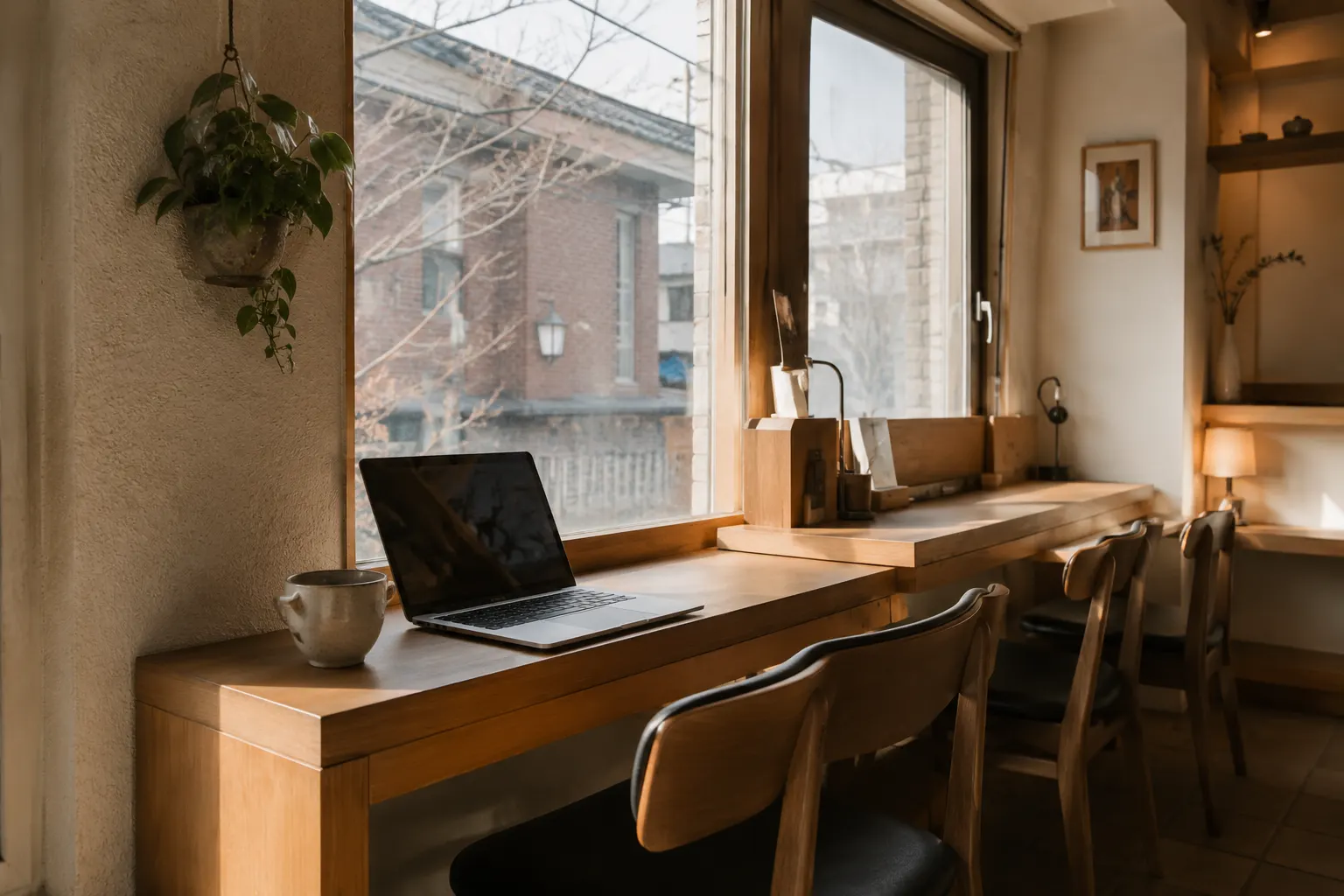
- Regular cafés being used as informal workspaces or study spots for extended periods, sometimes several hours, is broadly normal and accepted in many Korean cafés, particularly larger chain locations with ample seating and outlets, a different norm than cafés in some countries where lingering for hours over one drink might draw disapproval.
- Dedicated "study cafés" (스터디카페) exist specifically for this purpose, generally charging by time rather than requiring a drink purchase, offering individual desk spaces, quiet enforcement, and sometimes amenities like printing or private booth seating, a genuinely different business model than a standard café.
- Coffee shop chains popular for long-term laptop use are generally identifiable by their higher proportion of individual desk-style seating with outlets, compared to smaller independent cafés that may have more limited seating meant for shorter visits.
What's Actually Expected When You Sit for Hours
Despite the broad acceptance of long café work sessions, some unspoken norms still apply:
- A minimum purchase, generally just one drink, is the standard expectation even for an extended stay, nursing a single drink for several hours is broadly accepted, but arriving and using space without any purchase at all isn't.
- Peak hours and busy periods sometimes carry a more implicit social expectation to be mindful of turnover, particularly at smaller cafés with limited seating during a lunch rush, reading the room during obviously busy periods is a reasonable courtesy even where no explicit time limit is posted.
- Some smaller or more traditional cafés without extensive individual workspace seating may be less suited to extended laptop use simply due to space constraints, choosing a café with appropriate seating for your intended purpose avoids monopolizing limited table space meant for shorter café visits.
Ordering and Payment Norms
- Ordering at the counter and paying upfront, rather than table service with payment at the end, is standard at the vast majority of Korean cafés, similar to counter-service coffee shop conventions common internationally.
- Splitting a single drink between two people at a table is broadly accepted as normal, particularly among students, unlike some café cultures with an unspoken one-drink-per-person expectation.
- Mobile ordering through café-specific apps has become increasingly common, particularly for popular chains, allowing order-ahead pickup, a convenient option once you understand the specific app for a given chain.
Common Misunderstandings
A frequent assumption among visitors is that Korean café culture mirrors either a strictly transactional "quick coffee and leave" model or an entirely unrestricted "stay as long as you want with no purchase needed" model. In practice, it's a specific middle ground, extended stays are genuinely normal and accepted, but a purchase is still the baseline expectation, and choosing an appropriately seated café for your intended length of stay matters for actually fitting into local norms smoothly.
Another common misunderstanding involves assuming all Korean cafés are equally suited for laptop work. Smaller specialty or independent cafés, particularly those emphasizing a specific coffee craft experience or limited, intimate seating, may be less appropriate for extended individual work sessions than larger chain locations specifically designed with that use case in mind, reading a café's actual seating and atmosphere before settling in for hours helps match your behavior to the specific space.
Café-Based Social Norms Beyond Work
- Meeting friends at a café rather than at home is a common default social setting in Korea, partly reflecting smaller typical home sizes making café meetups more practical than hosting.
- Café-hopping, visiting multiple aesthetically distinct cafés in sequence during a single outing, has become a genuinely popular social activity, particularly among younger Koreans, reflecting the broader cultural emphasis on café atmosphere and photogenic presentation, not just the coffee itself.
- Specialty and themed cafés, animal cafés, book cafés, dessert-focused cafés, represent a distinct category from a standard coffee shop, often with a specific cover charge or minimum order structure tied to the themed experience itself.
Quick Summary
- Korean café culture broadly accepts extended individual work or study sessions, particularly at larger chain cafés with ample workspace-style seating, though a minimum purchase is still the standard baseline expectation.
- Dedicated study cafés (스터디카페) exist specifically for long-term individual work, charging by time rather than requiring a drink purchase, a genuinely different model than a standard café.
- Splitting a single drink between two people at a table is broadly accepted, and mobile ordering apps are increasingly common at popular chains.
- Matching your intended length of stay and work needs to an appropriately seated café, rather than assuming all cafés are equally suited to extended laptop use, helps you fit smoothly into local norms.