How Korean Funeral Customs Work and What Foreigners Should Know
If a coworker or friend in Korea has experienced a death in the family and you're unsure whether to attend the funeral, what to wear, how much condolence money to give, or what's expected of you as an acquaintance rather than close family, Korean funeral customs follow a genuinely distinct format with specific etiquette that matters for showing appropriate respect, even with imperfect knowledge of every detail.
Here's how Korean funeral customs work, and what's actually expected of guests.
The Funeral Hall System
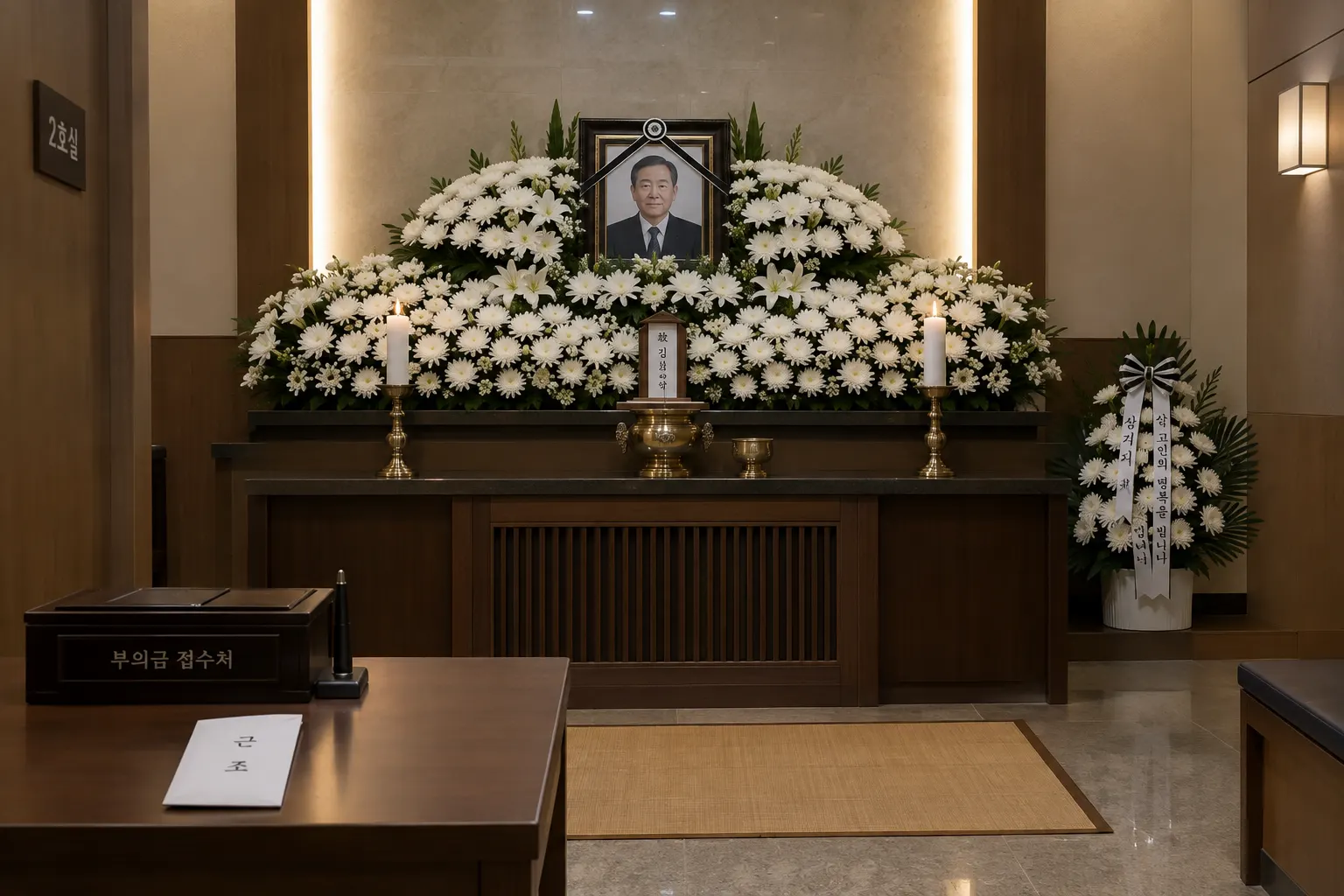
Similar to how weddings operate through dedicated wedding halls, Korean funerals commonly take place at hospital-affiliated funeral halls (장례식장), specialized facilities handling the multi-day mourning period, rather than a funeral home model separate from medical facilities as common in some other countries.
- The mourning period generally spans three days, during which the family receives visitors, with the actual burial or cremation typically occurring on the third day, a structured timeline distinct from funeral customs in many other countries.
- Visiting hours are generally flexible across the mourning period, rather than a single scheduled service, allowing guests to pay respects at whatever time works within their own schedule during the multi-day period, though checking with a mutual contact about appropriate timing, avoiding very early morning or very late hours specifically, remains a reasonable courtesy.
- Different rooms within the same funeral hall building often host multiple separate families' mourning periods simultaneously, confirming the specific room number for the family you're visiting, generally available at the building's directory or from whoever informed you of the death, avoids confusion upon arrival.
What to Wear and Bring
- Dark, formal, conservative clothing is standard, black specifically is the most universally appropriate choice, avoiding bright colors or overly casual attire, similar in spirit to funeral dress expectations in many other cultures though with Korea's own specific conventions around appropriate formality.
- Condolence money (조의금), similar in concept to the congratulatory cash gift at weddings but for the opposite occasion, is the standard and expected gift, presented in a specific white envelope, generally purchased pre-made from a stationery store or sometimes available at the funeral hall itself.
- The amount generally scales with your relationship closeness, similar logic to wedding congratulatory money, a colleague or more distant acquaintance typically gives a more modest amount than close family or close friends, asking a mutual contact for appropriate guidance specific to your relationship remains a reasonable and normal question.
What Actually Happens During a Visit
- A formal bow or respect gesture toward a photo of the deceased, typically displayed at a small memorial altar within the mourning room, is the central ritual gesture expected of visitors, following the lead of those ahead of you in line, or asking quietly beforehand if uncertain of the specific expected gesture, helps navigate this respectfully.
- Offering condolences to the family, generally brief and simple, a short expression of sympathy rather than an extended conversation, reflects the somber, restrained tone appropriate to the occasion.
- Sharing a simple meal, funeral halls generally provide food for visitors as part of the mourning period hospitality, similar in spirit to the shared meal component of Korean weddings though obviously different in tone, accepting this hospitality briefly is generally appropriate rather than declining out of hesitation.
Common Mistakes and Misunderstandings for Foreign Visitors
- Not bringing condolence money, similar to the wedding cash gift expectation, showing up without this near-universal gift format, or bringing a different type of gift instead (flowers alone, for example, without the accompanying cash gift), misses a core expected element of the visit.
- Wearing inappropriately bright or casual clothing, underestimating how much formal, somber dress matters for this specific occasion compared to potentially more flexible dress norms at other social gatherings.
- Overstaying or engaging in extended casual conversation, the appropriate visit is generally relatively brief and focused, rather than treating it as an extended social visit, respecting the somber tone and the family's need to receive many visitors over the mourning period.
- Not knowing the appropriate bow or respect gesture, hesitating or performing it incorrectly, watching others ahead of you or quietly asking for guidance beforehand helps you navigate this respectfully rather than guessing.
If You're Closer to the Family or the Deceased
For a closer relationship, a colleague you worked with directly, a close friend's family member, additional involvement beyond a brief condolence visit sometimes applies, potentially including offering to help with practical arrangements during the mourning period, or extended presence supporting the family, understanding your specific relationship's appropriate level of involvement, rather than applying a single generic visitor expectation, matters for navigating a closer relationship's funeral appropriately.
Quick Summary
- Korean funerals typically take place at hospital-affiliated funeral halls over a three-day mourning period, with flexible visiting hours allowing guests to pay respects at a convenient time within that window.
- Condolence money (조의금) in a specific white envelope is the near-universal expected gift, scaling with your relationship closeness to the deceased or their family, similar in structure to wedding congratulatory money.
- Dark, formal, conservative clothing, a respectful bow toward the memorial photo, and a brief, appropriately somber visit represent the core expected etiquette for attending as an acquaintance or colleague.
- Asking a mutual contact for specific guidance on appropriate condolence money amount and visit timing is a normal, expected question rather than something to navigate entirely by guesswork.