How Korean Etiquette Around Gift-Giving Actually Works
If you've been invited to a Korean colleague's housewarming, or handed a small gift after a first business meeting and weren't sure how to respond, gift-giving in Korea carries more unspoken rules than it might seem from the outside. The gesture itself is common and genuinely appreciated, but a few specific conventions, what you give, how you present it, and how you respond when receiving one, can make the difference between a gift landing well or creating quiet awkwardness.
Here's how Korean gift-giving etiquette actually works, and where foreigners most commonly get it slightly wrong.
When Gifts Are Commonly Exchanged
Gift-giving in Korea shows up across a wider range of everyday situations than many foreigners initially expect, not just major holidays or birthdays.
- Chuseok and Seollal (Korean Thanksgiving and Lunar New Year) are the two biggest gift-giving occasions nationally, with specific gift sets, often food or health products, sold specifically for these holidays.
- Housewarmings (집들이) typically call for a practical gift, household items like detergent or toilet paper are common and not considered impersonal, they're actually a traditional symbolic gift tied to wishes for the household's prosperity.
- First meetings in a business context, particularly with an international dimension, sometimes involve a small gift exchange, though this is less universal than the holiday conventions and varies by industry and company culture.
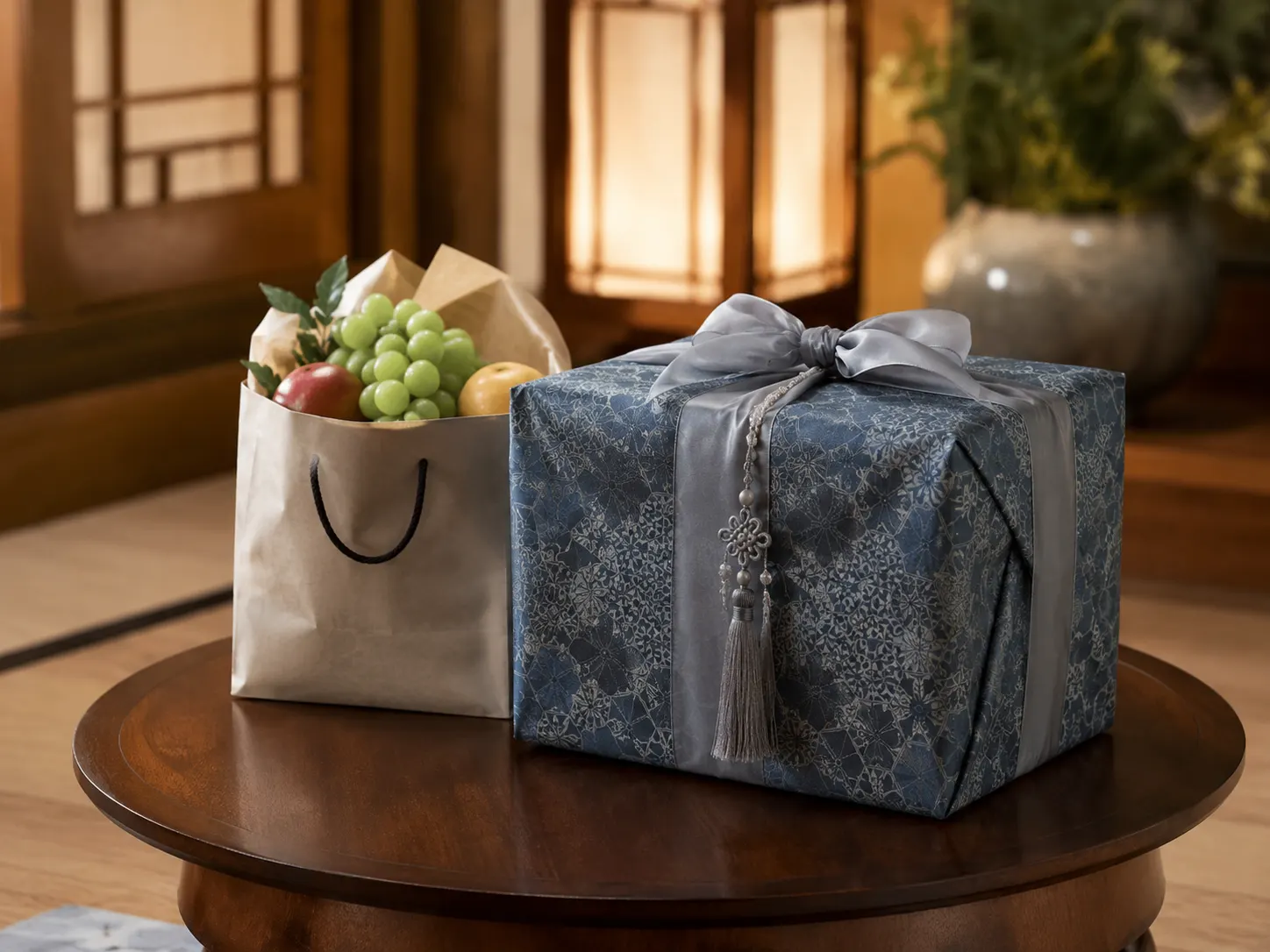
- Visiting someone's home for the first time, even outside a formal housewarming, generally calls for bringing something small, fruit, snacks, or a small gift, rather than arriving empty-handed.
What Makes a Good Gift
- Practical, consumable gifts (food, drinks, household items) are broadly safe and commonly appreciated, more so than in some other gift-giving cultures where a highly personal or sentimental object might be expected.
- Branded, well-packaged items carry more weight than the same item without notable packaging, presentation matters more in Korean gift-giving than the raw value or practicality of the item alone in many contexts.
- Odd numbers are sometimes avoided in certain traditional contexts, particularly the number 4, which carries an unlucky association in Korean culture similar to associations with certain numbers in other East Asian cultures, due to its pronunciation resembling the word for death, this matters more for things like floor numbers or specific gift quantities than for everyday casual gift-giving, but it's worth being aware of for anything more formal.
- Alcohol, particularly Korean traditional liquor or well-known international brands, is a common and generally well-received gift in both social and business contexts, though checking a recipient's personal preference or health considerations first is a reasonable courtesy.
How to Present and Receive a Gift
- Presenting a gift with both hands, similar to the convention around business cards, is the generally expected gesture, particularly with someone older or in a more formal context.
- Gifts are often not opened immediately in front of the giver, a differing convention from cultures where opening a gift on the spot is expected and appreciated, in Korea, setting a gift aside to open later is common and not considered rude, though this varies by relationship closeness and specific family or company culture.
- A polite, brief refusal before accepting is a traditional gesture in some interactions, someone might initially wave off a gift once or twice before accepting it, this exchange is largely ritualized rather than a genuine reluctance to receive, insisting gently and offering it again is the expected response rather than withdrawing the offer.
Common Misunderstandings
A frequent assumption among foreigners is that gift value should scale directly with the importance of the occasion or relationship, similar to gift-giving norms in some Western contexts. While thoughtfulness matters, Korean gift-giving often favors appropriateness and presentation over expense, an modestly priced but well-chosen and nicely presented gift is often received better than an expensive but poorly matched one.
Another common misstep is giving overly personal gifts, like clothing or perfume, in a business or new-acquaintance context, these can feel presumptuous outside close personal relationships, food, drink, or general household items are generally safer choices until a relationship is more established.
Gift-Giving in the Workplace
Korean workplace gift culture has specific conventions worth understanding separately from general social gift-giving:
- Team or department gifts during major holidays are common, sometimes organized collectively by HR or a senior team member rather than individually.
- Gifts to a direct manager or senior colleague should generally be modest and appropriate, avoiding anything that could be perceived as an attempt to curry favor, particularly relevant given Korea's anti-corruption regulations (the Kim Young-ran Act) which set specific legal limits on gift values in certain professional and public-sector contexts.
- Receiving a gift from a subordinate or junior colleague sometimes calls for reciprocation at an appropriate later point, rather than being treated as a one-directional gesture.
Quick Summary
- Gift-giving in Korea extends well beyond major holidays, covering housewarmings, first home visits, and some business contexts, practical and consumable gifts are generally safe choices.
- Presentation and packaging often matter as much as the gift's actual value, and gifts are frequently not opened immediately in front of the giver.
- A polite initial refusal before accepting a gift is a common ritualized gesture, not genuine reluctance, offering again is the expected response.
- Workplace gift-giving has specific conventions, including legal limits on gift value in certain professional contexts under Korea's anti-corruption regulations.