How Korean Language Learning Programs Work for Long-Term Residents
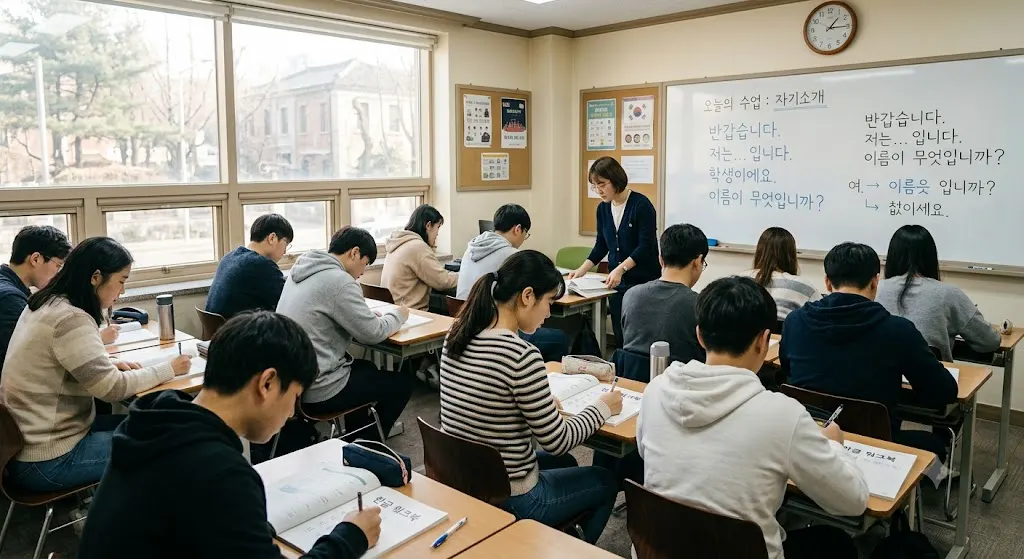
If you've been in Korea long enough to get by day-to-day but still feel stuck at a basic conversational level, you've probably wondered whether a structured language program would actually move the needle, and which of Korea's many options, university programs, government-run classes, private academies, are worth the time and cost for someone balancing work or family alongside study. Korean language learning options vary enormously in structure, price, and pace, and picking the wrong one for your actual goals can mean months of limited progress.
Here's how the main Korean language learning paths work, and how to figure out which fits your situation.
University Language Programs
Most major Korean universities run dedicated language institutes offering intensive Korean courses, generally structured in 10-week terms with several proficiency levels.
- Intensive full-time programs typically involve around 4 hours of class per day, five days a week, designed for students on a D-4 language study visa who are treating Korean study as their primary activity rather than a side pursuit.
- Part-time or evening programs, offered by some university institutes specifically for working residents, meet less frequently, useful for those balancing a job but generally progressing more slowly than the intensive track.
- Cost for a 10-week university program term generally runs in a moderate range depending on the specific university and program intensity, with additional costs for textbooks and materials.
A common misunderstanding is assuming all university language programs are equivalent in quality and pace, in practice, class size, teaching methodology, and how strictly levels are enforced vary meaningfully between institutions, researching a specific program rather than assuming any university option works the same as another matters if language acquisition speed is a priority.
Government-Run and Subsidized Options
- Local government multicultural family support centers and community centers in many districts offer subsidized or free Korean classes, originally aimed at marriage migrants and long-term resident families, but often open more broadly to community members.
- KIIP (Korea Immigration & Integration Program), run through the Ministry of Justice, is a structured Korean language and culture program that, notably, can also count toward certain visa or naturalization requirements for eligible participants, making it relevant beyond just language acquisition for some long-term residents.
- These options are generally significantly cheaper than university or private programs, though class availability, scheduling flexibility, and teaching intensity vary considerably by location and specific center.
Private Academies (Hagwon) and Private Tutoring
- Private language hagwon offer more schedule flexibility than university programs, with class times often available in the morning, evening, or weekend slots better suited to working adults.
- One-on-one private tutoring, whether through an agency or independently arranged, offers the most schedule flexibility and can be tailored specifically to conversational goals, business Korean, or specific weak areas, but is generally the most expensive per-hour option.
- Online and app-based options (language exchange apps, structured online courses) have grown significantly and offer the most flexibility for extremely busy schedules, though self-directed progress generally requires more discipline than structured in-person classes.
What Actually Determines Which Option Fits
- Your visa status and available time. A D-4 visa specifically for language study suits an intensive university program, a work visa holder balancing a job needs an evening, weekend, or private tutoring option instead.
- Your actual goal. General conversational fluency, business Korean for workplace use, or passing a specific proficiency exam (TOPIK) call for different program structures and intensities.
- Budget realities. University intensive programs and private tutoring sit at different price points than government-subsidized community classes, worth being realistic about sustained cost over multiple months or years, since language learning generally requires sustained time investment.
Common Mistakes Long-Term Residents Make
- Underestimating how much progress requires consistency over intensity. A once-a-week class attended consistently for a year often outperforms an intensive month followed by months of no structured study, sustainability matters more than initial intensity for most working residents.
- Not considering TOPIK (Test of Proficiency in Korean) even if not immediately needed, since a recognized proficiency benchmark can matter later for certain visa categories, university admission, or job applications, worth factoring in even if language study started as a general life-quality goal.
- Overlooking subsidized community options because they're less visible or well-marketed than university or private programs, checking with your local district office about available classes can reveal genuinely useful, low-cost resources many residents don't know exist.
- Choosing a program based solely on convenience of location rather than actual teaching quality or pace fit, a slightly longer commute to a genuinely well-matched program often outperforms a conveniently located but poorly fitting one.
Quick Summary
- University language institutes offer structured, level-based programs, intensive tracks suit D-4 visa students, while some universities also offer slower-paced options for working residents.
- KIIP and local government-subsidized classes offer significantly cheaper options, and KIIP specifically can count toward certain visa or naturalization requirements for eligible participants.
- Private hagwon and tutoring offer the most schedule flexibility, useful for working adults, but are generally the most expensive per-hour option.
- Consistency over time tends to matter more for actual progress than initial program intensity, worth choosing a sustainable option over a demanding one you're unlikely to maintain long-term.