How Korean Wedding Culture and Wedding Halls Actually Work
If you've been invited to a Korean wedding and weren't sure about the actual etiquette, how much cash to give, why the ceremony seems to move so quickly, or why everyone seems to be eating a buffet meal in a separate room, Korean wedding culture follows a genuinely distinct format from Western wedding conventions, and understanding the structure beforehand helps you navigate both attending and, if relevant, planning one yourself.
Here's how Korean wedding culture and the wedding hall system actually work.
The Wedding Hall System
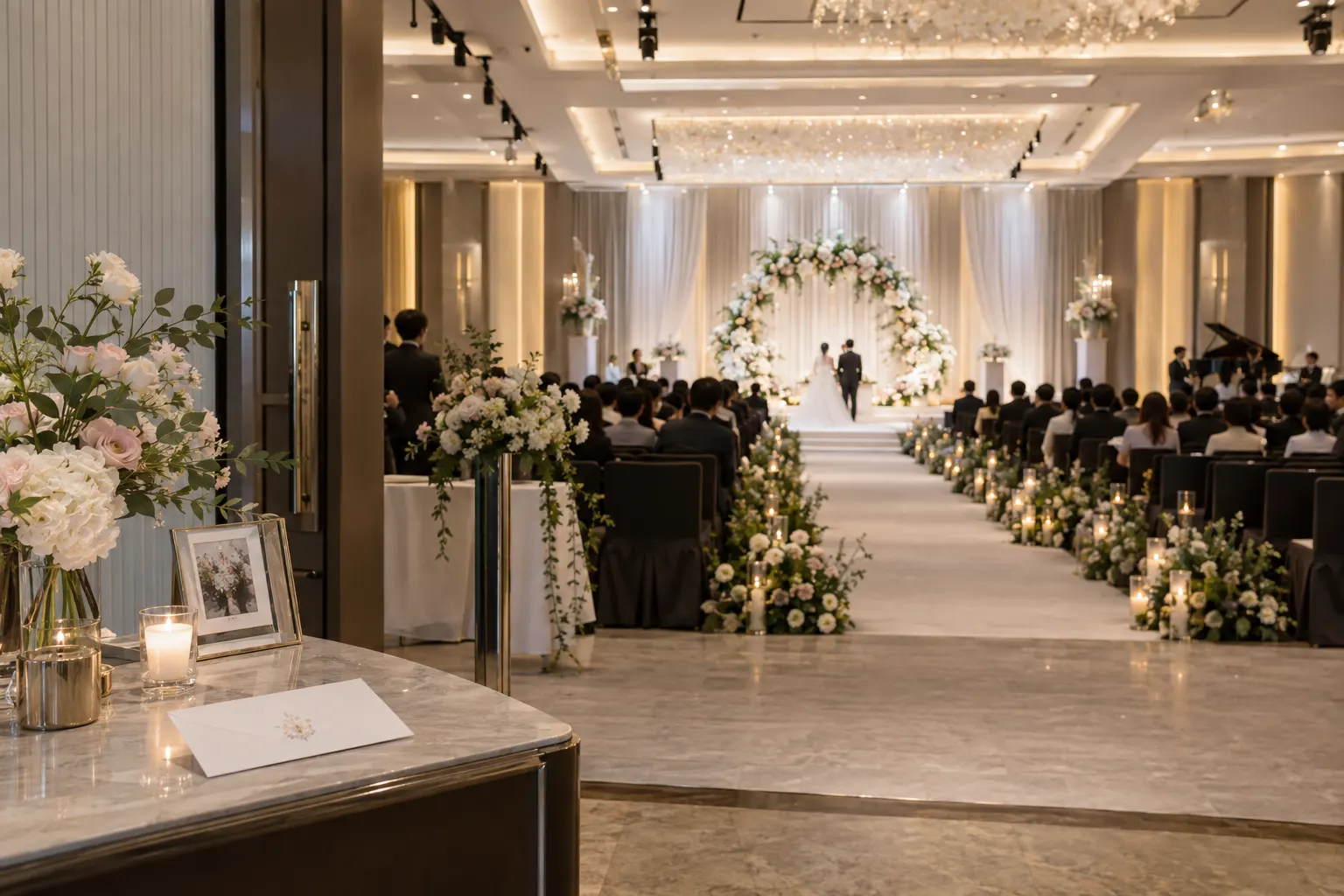
Most Korean weddings, particularly in urban areas, take place at dedicated wedding halls (예식장), commercial venues specifically built and operated for hosting weddings, often running multiple ceremonies on the same day in sequence.
- Wedding halls generally handle the entire event logistics, ceremony space, catering, sometimes photography and other vendor coordination, functioning as a comprehensive one-stop venue rather than couples independently coordinating a separate ceremony location, caterer, and reception space.
- Ceremonies are often notably shorter than Western wedding ceremonies, sometimes 20-30 minutes for the formal ceremony portion itself, reflecting the wedding hall's need to run multiple weddings on the same day, with distinct time slots for different couples.
- Guests often arrive, attend the brief ceremony, then move to a separate buffet dining area, sometimes concurrent with the tail end of the ceremony itself or immediately after, this structure differs meaningfully from a Western reception that typically follows the ceremony as a longer, more extended combined event.
Congratulatory Money (축의금): What to Actually Give
A frequently asked question among foreign guests attending their first Korean wedding involves the expected cash gift, a near-universal practice at Korean weddings rather than a physical gift registry system common in some other countries.
- Cash in a specific congratulatory envelope (축의금 봉투), generally provided at a reception table near the entrance where you write your name and can sometimes select a specific denomination envelope, is the standard gift format.
- The amount generally scales with your relationship closeness to the couple, a colleague or more distant acquaintance typically gives a more modest amount than a close friend or family member, specific amounts vary by your own relationship and general social circle norms, asking a Korean friend or colleague what's appropriate for your specific relationship to the couple is a reasonable and normal question rather than something to guess at.
- This cash gift generally also covers your own meal at the reception buffet, functioning partly as a contribution toward the wedding's substantial catering costs, understanding this framing helps explain why the amount matters practically, not just symbolically.
What the Ceremony Itself Typically Includes
- A relatively brief, formal ceremony, often including specific traditional elements blended with more Western-influenced wedding ceremony conventions (a processional, vows, rings), the specific balance between traditional Korean elements and Western-style format varies by couple's preference.
- A distinct photo session, sometimes happening before, during, or immediately after the ceremony itself, wedding hall logistics often build in dedicated photo time given the tight scheduling between successive ceremonies.
- Pyebaek (폐백), a separate, more traditional post-ceremony ritual involving the couple and close family, sometimes held in a separate room and not always something all wedding guests witness directly, reflecting older Korean marriage customs blended into the modern wedding hall format.
Common Mistakes and Misunderstandings for Foreign Guests
- Arriving significantly late, given how tightly scheduled wedding hall ceremonies tend to be, arriving on time or slightly early matters more here than at a Western wedding with more flexible timing.
- Not preparing a congratulatory cash gift, showing up without understanding this near-universal expectation, or bringing a physical gift instead when cash is genuinely the standard and expected format.
- Expecting a longer, more Western-style extended ceremony and reception combined event, the comparatively brief ceremony followed by a separate buffet dining structure surprises some first-time foreign guests expecting a different pacing and format.
- Not asking about appropriate cash gift amounts, guessing rather than asking a Korean friend or colleague for guidance specific to your actual relationship with the couple, a reasonable and expected question rather than an awkward one.
Practical Tips for Attending
- Dress reasonably formally, business or semi-formal attire is generally appropriate, avoiding overly casual dress for what remains a significant formal occasion despite its brief ceremony format.
- Bring the congratulatory cash gift in an appropriate envelope, some wedding halls provide envelopes at the entrance, though bringing your own prepared envelope in advance is also common and shows thoughtful preparation.
- Understand you're not obligated to stay for the entire event, given the brief ceremony and separate buffet structure, some guests attend just the ceremony, others stay for the meal as well, both are generally acceptable depending on your relationship and available time.
Quick Summary
- Korean weddings commonly take place at dedicated wedding halls handling comprehensive event logistics, often running brief, tightly scheduled ceremonies followed by a separate buffet dining area.
- A congratulatory cash gift (축의금) in a specific envelope is the near-universal expected gift format, generally scaling with your relationship closeness to the couple and effectively covering your own meal at the reception.
- The ceremony itself is often notably brief compared to Western wedding conventions, reflecting the wedding hall's scheduling needs across multiple same-day ceremonies.
- Asking a Korean friend or colleague for guidance on appropriate cash gift amounts and general expectations is a normal, expected question rather than something to navigate by guesswork alone.