How Korean Neighbor Etiquette and Building Manners Work
If you've just moved into a Korean apartment and wondered whether you're supposed to greet the neighbors, apologize for moving noise, or say hello in the elevator, you're asking the right question. Neighbor etiquette in Korea is mostly about being considerate with noise and shared space, and a small gesture early on can prevent months of friction. Foreign residents who learn a handful of norms tend to settle in far more smoothly.
Here are the habits that matter most and the mistakes newcomers make.
The Quick Answer: What Neighbors Expect
Most Korean neighbors expect three things: keep noise down, keep shared areas clean, and acknowledge people politely. Deep friendships with neighbors are not expected, but basic courtesy is.
Greeting Neighbors
- A brief nod or a quiet "annyeonghaseyo" in the elevator or hallway is normal and appreciated.
- You don't need to start long conversations, and silence in elevators is common.
- In smaller buildings, greeting neighbors you pass regularly is more expected than in a large complex.
Moving In: The Small Gesture
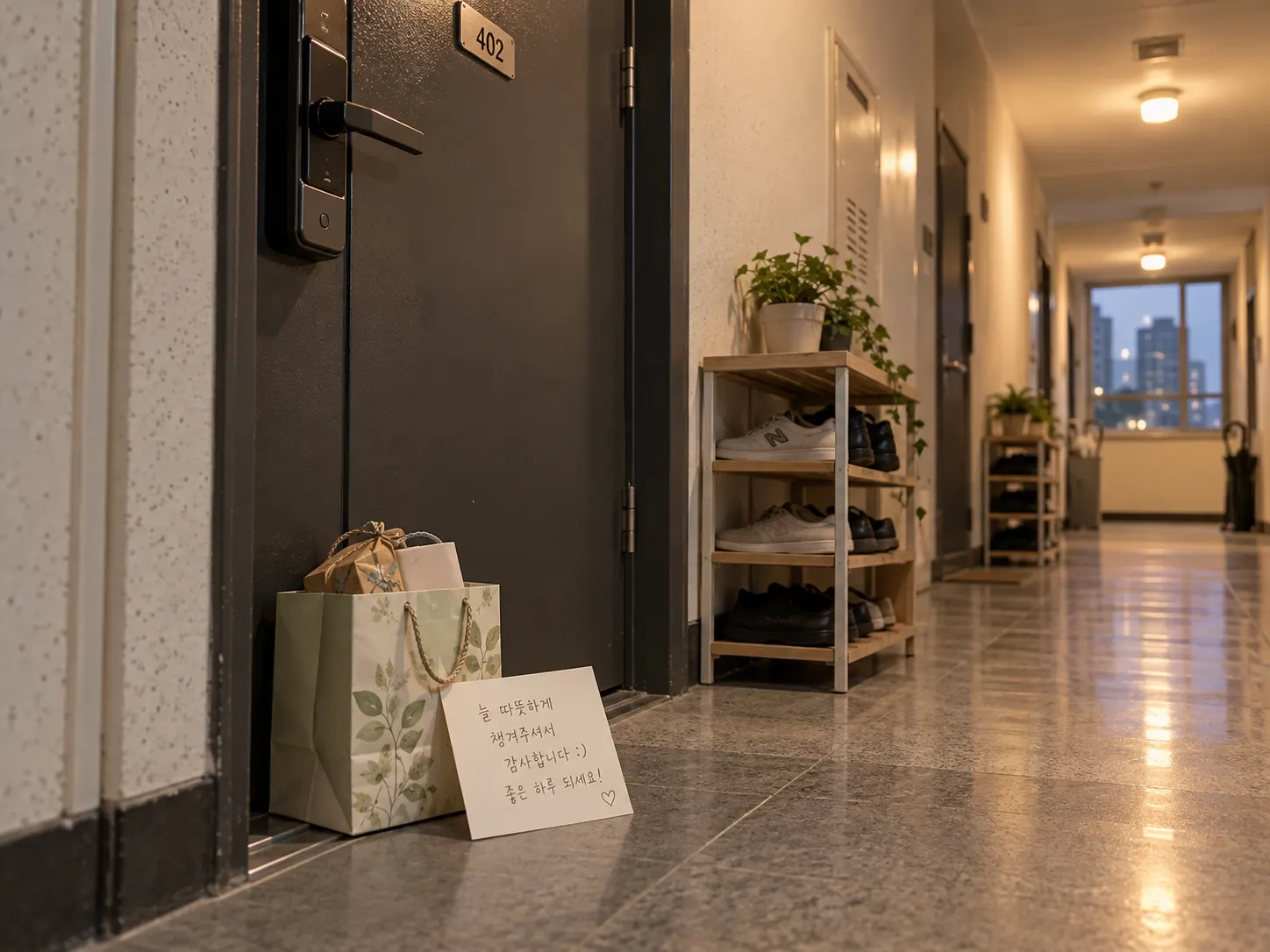
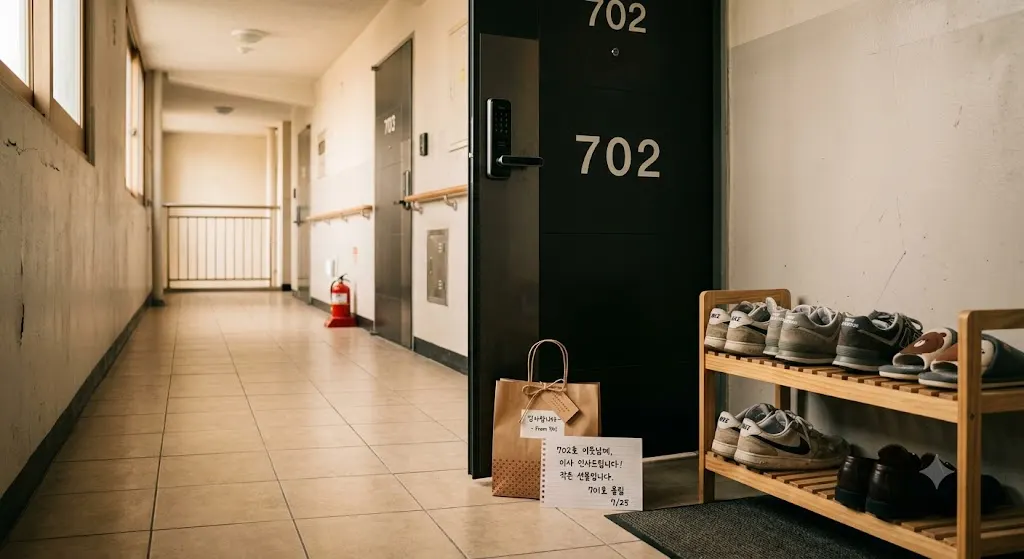
Some Koreans bring a small gift, often rice cakes, fruit, or a simple household item, to nearby neighbors after moving in, or leave a short note apologizing in advance for moving noise. It's a custom rather than a rule, but it often earns goodwill, and many people find it especially helpful in a building with thin floors.
Noise: The Biggest Source of Conflict
Floor-impact noise (층간소음), as covered in the apartment complex guide, is a leading cause of neighbor disputes in Korea. To avoid problems:
- Avoid running, jumping, or moving furniture late at night
- Use rugs or floor mats in living areas, especially with children
- Keep laundry, vacuum cleaners, and loud music to reasonable hours
- Keep TV and speaker volume low in the evening
If a neighbor knocks or leaves a note, a quick apology and adjustment usually resolves it. If you are the one bothered, a polite note or a message through building management works better than confronting someone angrily.
Shared Spaces
- Keep hallways free of personal items, bikes, and delivery boxes
- Follow the building's trash and recycling rules exactly, as covered in the trash guide
- Don't smoke on balconies or in stairwells, since smoke drifts to other units
- Respect elevator etiquette and hold the door when you can
Pets and Children
Dog barking and children's footsteps are the two most common complaints. Train and supervise pets, and be mindful of play areas for children in the evening.
When a Dispute Arises
- Start with a polite note or a brief conversation
- Go through building management or the residents' office if it continues
- For serious ongoing noise, local mediation services run by public bodies can help
Common Mistakes
- Ignoring noise complaints. A quick fix usually ends the problem.
- Complaining aggressively in person. It tends to escalate.
- Leaving packages or items in shared hallways. Neighbors notice quickly.
- Breaking trash rules. Small errors can lead to notes or fines.
Quick Summary
- Korean neighbor etiquette centers on noise control, tidy shared spaces, and brief polite greetings.
- A small gift or note when you move in is a custom that builds goodwill, though it isn't required.
- Floor noise causes the most disputes, so use mats, avoid late-night activity, and respond politely to complaints.
- Handle conflicts through notes and building management before escalating to formal mediation.