Using Public Libraries in Korea: Membership, Study Rooms, and Digital Services for Foreigners
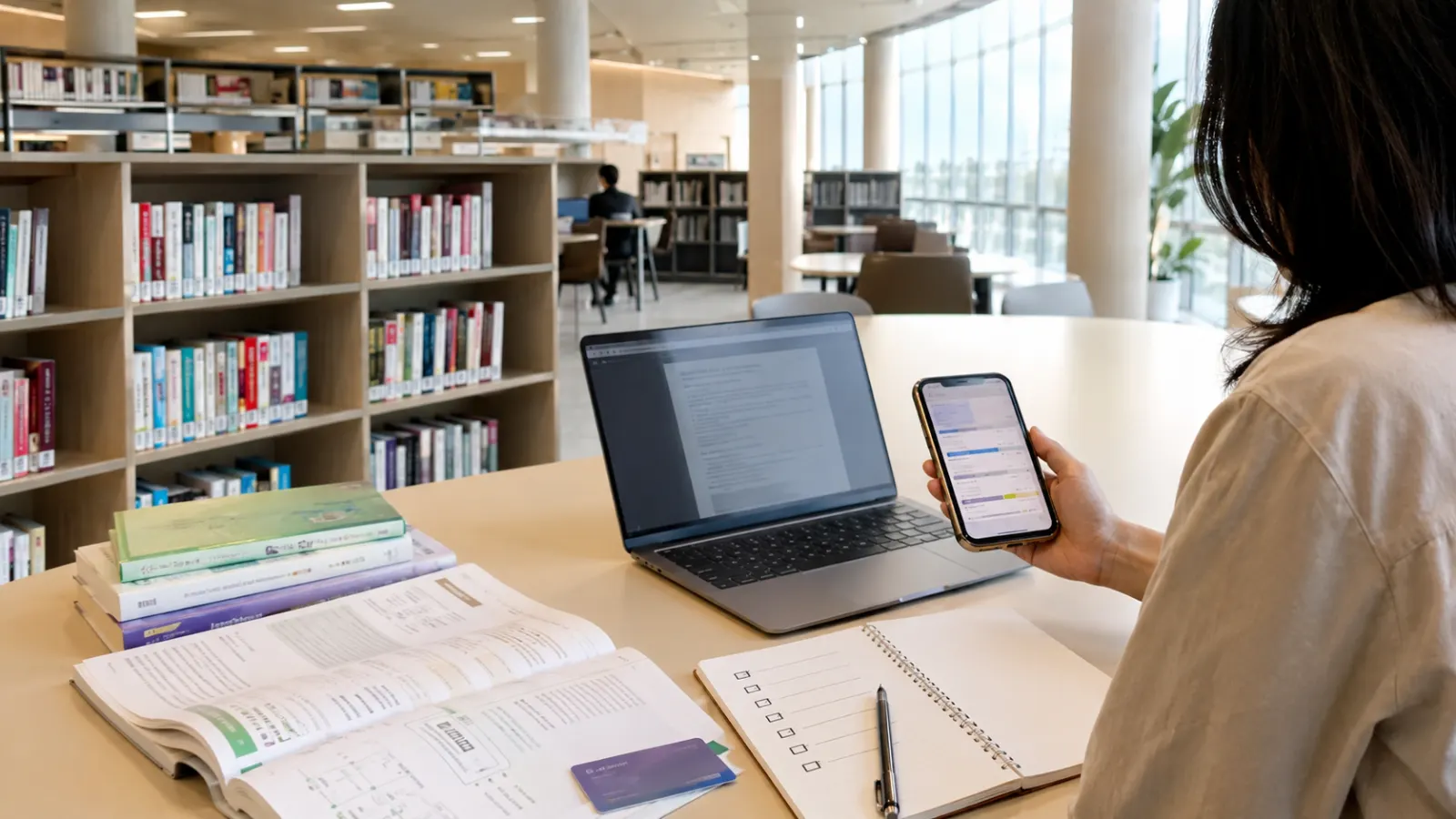
Public libraries in Korea are more than places to borrow books. They can provide quiet study areas, computers, cultural programs, children’s rooms, digital resources, and comfortable indoor space during Korea’s hot summers and cold winters.
Foreign residents often overlook libraries because registration pages and building notices may be primarily in Korean. However, many local libraries are accessible to residents once they understand the membership process and local rules.
Types of libraries you may find
Korea has several kinds of libraries:
- Municipal public libraries
- District libraries
- Small neighborhood libraries
- Children’s libraries
- University libraries
- National or specialized libraries
- Libraries inside community and cultural centers
A public library operated by a city or district is usually the easiest starting point for a local resident.
University libraries often restrict borrowing and building access to students, faculty, alumni, or approved visitors. A university campus may be open to the public while its library services remain limited.
Small neighborhood libraries may have fewer English books but can be convenient for studying or borrowing Korean materials.
How to search for a library
Useful Korean search terms include:
- 도서관: library
- 공공도서관: public library
- 시립도서관: municipal library
- 구립도서관: district library
- 어린이도서관: children’s library
- 작은도서관: small neighborhood library
Search with your district or neighborhood name. For example, combining the district name with 도서관 usually shows nearby facilities. Check the official listing for:
- Opening hours
- Weekly closing day
- Holiday closures
- Membership eligibility
- Required identification
- Study-room reservation rules
- Parking availability
- Language programs
Library schedules can differ even within the same city.
Can foreign residents get a library card?
Many public-library systems allow registered foreign residents to become members, but the exact requirements are determined locally. You may be asked for:
- Residence card
- Korean mobile number
- Local address
- Online account
- Proof that you live, work, or study in the area
- Parent or guardian information for a child
Some library networks share one membership across multiple branches. Others require separate registration. A foreign passport alone may not be enough for full borrowing privileges because the library may need a verified local address and contact number. Bring your residence card on the first visit even if you created an online account beforehand.
Online registration may be the hardest step
A library website may require Korean mobile identity verification. Foreign residents can encounter problems when their phone account name does not match their residence information.
When online registration fails, visit the information desk. Staff may be able to create or verify the account in person, depending on local policy. Prepare a translation showing: “I am a foreign resident living in this district. I would like to register for a library card.”
It may help to save your Korean address and phone number in a copyable format. Do not create multiple accounts after repeated errors. Duplicate profiles can make later verification more difficult.
Borrowing books
Borrowing limits and loan periods differ by library network. Before checking out books, confirm:
- Number of items allowed
- Loan period
- Renewal options
- Reservation process
- Late-return restrictions
- Interlibrary transfer availability
- Return locations
- Rules for DVDs, magazines, and special materials
Some libraries allow books to be returned at another branch in the same network. Others require return to the original location. Automated return machines may be available outside staffed hours. Check whether the machine accepts all item types. Late returns may temporarily block further borrowing even when no cash fine is charged.
English and multilingual materials
A public library may have an English section, but the size and quality vary by neighborhood.
Areas with international schools, universities, or large foreign communities may have more multilingual materials. Children’s libraries sometimes have a stronger selection of English picture books than general adult titles.
Search the online catalog before visiting. Useful filters may include language, branch, availability, format, and publication year. Foreign residents studying Korean can also use:
- Korean-language learning books
- Graded readers
- Children’s books
- Bilingual books
- Audiobooks
- Korean history and culture materials
- Test-preparation books
Children’s books are especially useful for learners because the vocabulary is practical and the illustrations provide context.
Study rooms and reading areas
Korean libraries often distinguish between open reading areas and controlled study rooms. A study room may require:
- Seat reservation
- Library membership
- Check-in through a kiosk
- Mobile reservation
- A numbered seat ticket
- Periodic renewal
- Check-out when leaving
Some rooms are silent and resemble exam-study spaces. Others allow laptop use or quiet conversation. Do not assume every open chair is available. A desk may already be reserved electronically. Look for signs such as:
- 열람실: reading or study room
- 좌석예약: seat reservation
- 노트북실: laptop room
- 휴게실: break room
- 자료실: collection room
- 대화금지: no conversation
Phone calls and video meetings are usually inappropriate in silent areas.
Computers, printing, and Wi-Fi
Many libraries provide public computers, Wi-Fi, copying, scanning, or printing. Availability and payment methods vary. You may need:
- Library login
- Korean mobile number
- Prepaid printing credit
- USB drive
- Local document format
- Staff assistance
Avoid accessing sensitive banking or immigration services on a shared computer. Log out fully and delete downloaded files before leaving. Some public computers automatically end sessions after a set time. Save work regularly. For printing, prepare PDF files because formatting can change when opening foreign word-processing documents.
Digital books and online resources
Library membership may include access to electronic books, audiobooks, academic databases, newspapers, online courses, or language-learning resources. Digital services often require a separate app or website login. Some platforms support only Korean interfaces or domestic app stores. Before assuming a digital book is unavailable, check whether the library has:
- E-book service
- Audio-book service
- Electronic magazine service
- Academic database access
- Streaming lectures
- Children’s digital content
Licensing may limit simultaneous users. A digital item may need to be reserved just like a physical book.
Programs and cultural activities
Public libraries frequently host activities such as:
- Author talks
- Reading clubs
- Children’s storytelling
- Korean-language classes
- Computer lessons
- Career lectures
- Art workshops
- Local-history programs
- Family activities
Programs may be free or low cost, but advance registration is often required.
Foreign residents should check whether the class language is Korean and whether residency in the district is required. A beginner Korean level may be enough for practical workshops, even when no interpretation is available.
Libraries can be a useful way to meet local residents without the pressure of commercial networking events.
Rules that may surprise newcomers
Common library expectations include:
- No loud calls
- No food in collection or study areas
- Drinks allowed only in closed containers
- Seat reservation for controlled rooms
- Shoes kept on unless a specific children’s room says otherwise
- Children supervised by a guardian
- Personal belongings not used to reserve seats indefinitely
- Photography restricted in some areas
Some libraries have a cafeteria, vending area, rooftop, or lounge where conversation and food are allowed. Check the floor map rather than assuming one rule applies to the entire building.
A practical first visit
For your first visit:
- Bring your residence card.
- Save your Korean address and phone number.
- Visit during staffed hours.
- Ask whether online registration is required.
- Confirm borrowing and return rules.
- Check whether study rooms require reservations.
- Photograph the library calendar and floor guide.
- Test your account before leaving.
Once registration is complete, libraries can become one of the most useful free public resources for life in Korea.
Quick Summary
- Search 도서관 with your district or neighborhood name to find nearby public libraries.
- Membership requirements vary, but foreign residents commonly need identification, a local address, and a Korean contact number.
- Study rooms may use electronic seat reservations rather than open seating.
- Library cards may provide access to e-books, classes, computers, and multiple branches.