How to Sort Trash and Recycling in Korea Without Getting Confused
# How to Sort Trash and Recycling in Korea Without Getting Confused Moving to Korea or staying here for more than a few weeks often comes with one unexpected challenge: trash.
For visitors, Korea’s recycling system can feel surprisingly strict. For residents, it becomes part of everyday life. Food waste, plastic, paper, cans, glass bottles, general waste, and sometimes even vinyl packaging may need to be separated.
At first, this can feel overwhelming. But once you understand the basic logic, the system becomes much easier.
Korea’s waste rules are built around separation. The goal is to reduce unnecessary waste, improve recycling, and make households more responsible for what they throw away. The details can vary by city, district, apartment building, villa, officetel, or housing type, but the main categories are similar across the country.
Start With the Three Big Categories
If you are new to Korea, begin with three main groups. General waste. Food waste.
Recyclables.
General waste is regular trash that cannot be recycled and is not food waste. Food waste usually goes into a separate bin or designated food waste bag. Recyclables are sorted by material, such as plastic, paper, glass, cans, and cardboard.
This sounds simple, but the confusion starts with items that seem recyclable but are too dirty, mixed, or coated. In Korea, clean separation matters.
General Waste: What Goes in the Paid Trash Bag
Most general household waste must be thrown away in official prepaid trash bags. These are usually called volume-based waste bags. You can buy them at convenience stores, supermarkets, or local marts.
The important thing is that you need the correct bag for your district. A trash bag bought in one city or district may not be accepted in another. If you move, do not assume your old bags can still be used.
General waste may include tissues, contaminated packaging, broken small items, used hygiene products, and things that cannot be properly recycled. When in doubt, ask your building manager, landlord, or local district office. Rules can vary more than people expect.
Food Waste: Not Everything Edible Counts
Food waste is one of the categories that surprises foreigners the most.
In Korea, food waste is usually separated because it can be processed differently from general trash. Many apartments have food waste bins, and some use card-based or weight-based systems. In other housing types, you may need to use designated food waste bags.
However, not every kitchen scrap belongs in food waste. Hard shells, large bones, fruit pits, tea bags, and some fibrous items may need to go into general waste depending on local rules.
A helpful way to think about it is this: food waste generally means material that can be processed as food-related organic waste. Items that are too hard, sharp, oily, or unsuitable for processing may be excluded.
Because the rules can differ by district, always check local guidance if you are unsure.
Recyclables Need to Be Clean
The most common mistake is throwing dirty packaging into recycling.
A plastic container with leftover sauce, an oily delivery box, or a cup still full of liquid can contaminate other recyclable materials. In many buildings, residents are expected to rinse containers before recycling them.
For plastic bottles, remove the contents, rinse the bottle, and separate the cap and label if your building requires it. For cardboard boxes, remove tape and flatten the box. For cans and glass bottles, empty and rinse them.
Recycling in Korea is not just about putting items into the right bin. It is about making sure the material is clean enough to be collected properly.
Plastic, Vinyl, Paper, Cans, and Glass
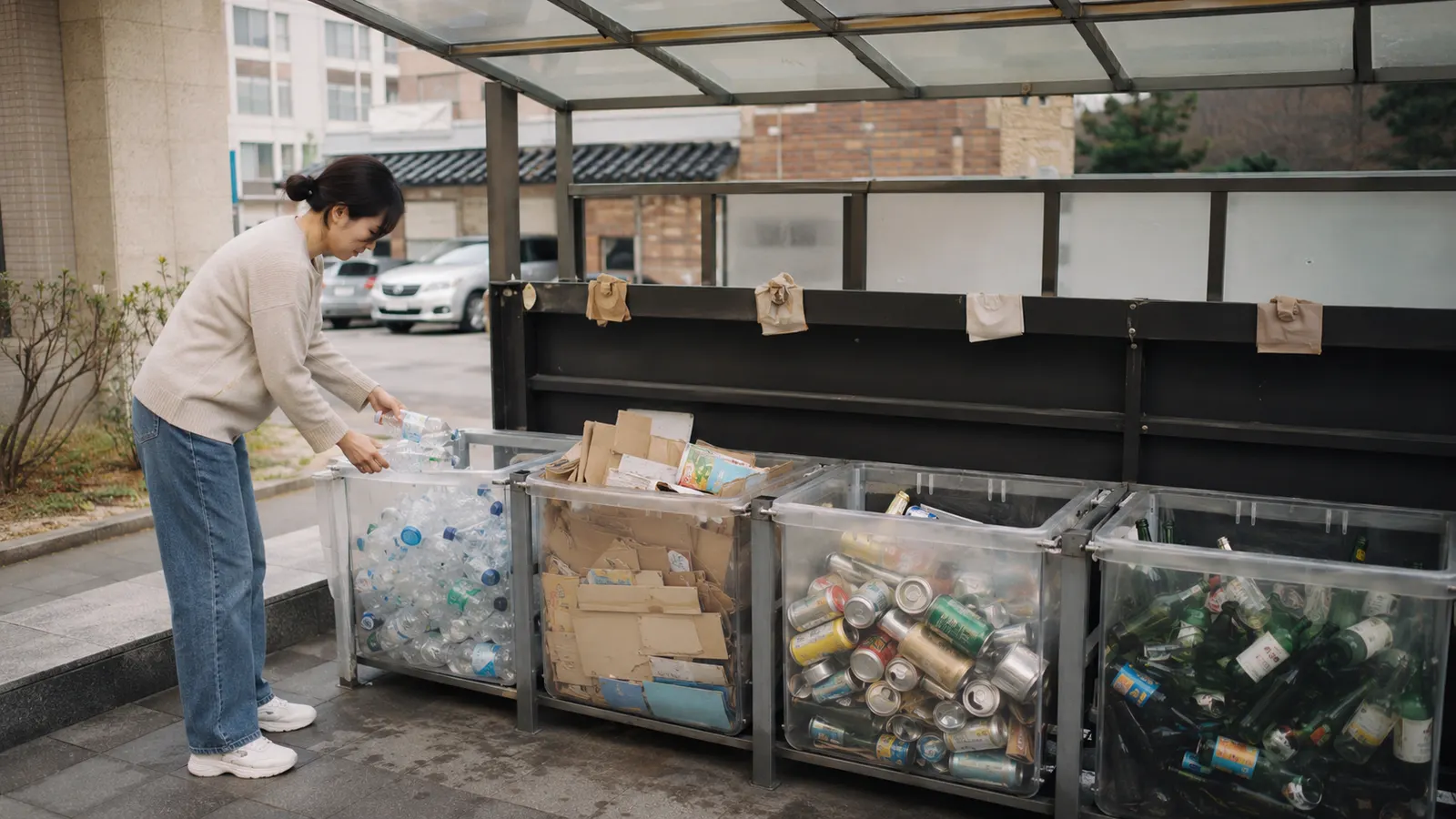
Many apartment recycling areas have separate sections for different materials. Plastic bottles and containers may go in one place. Vinyl packaging may have its own bin.
Paper and cardboard are usually separated. Cans are collected separately. Glass bottles often have a separate container.
Some buildings are very detailed. Others are more relaxed. Apartment complexes often have clearly marked collection areas, while villas and small buildings may use specific collection days.
If signs are only in Korean, look for visual clues. Transparent PET bottles, cardboard boxes, cans, and glass bottles are usually easy to identify by the items already in each bin.
Delivery Food Creates Extra Waste
Food delivery is popular in Korea, but it can create a lot of packaging. If you order often, sorting waste becomes part of the routine.
Before recycling delivery containers, remove leftover food and rinse the container when possible. Separate plastic lids, paper sleeves, wooden chopsticks, sauce packets, and bags according to material.
Heavily stained paper containers may not be accepted as paper recycling. Oily pizza boxes, for example, may need to go into general waste if they cannot be cleaned. This is one area where common sense helps. Clean material has a better chance of being recycled. Dirty, mixed, or food-covered material usually does not.
Large Waste Items Need Special Handling
Furniture, mattresses, appliances, and other large items cannot simply be left outside.
Most cities and districts require a bulky waste sticker, online application, or scheduled collection. The process differs by area. In apartments, the management office may help you arrange disposal. In villas or officetels, you may need to apply through the local district office website.
Do not leave large items outside without checking the rule. You may receive a fine or cause problems for the building.
Why Your Building Rules Matter
Even within the same city, waste disposal can feel different from one building to another.
An apartment complex may have a dedicated recycling area open on certain days. A villa may require residents to put bags outside during a specific evening window. An officetel may have a shared waste room. A short-term rental may have instructions from the host.
This is why the first rule is simple: follow your building’s system.
If you are staying in an Airbnb or short-term rental, ask the host where to put general waste, food waste, and recycling. If you live in an apartment, check notices near the elevator, waste room, or management office.
A Simple Routine That Works
The easiest way to manage trash in Korea is to separate waste immediately instead of dealing with everything at once. Keep a small container for food waste. Use one bag or box for clean recyclables.
Flatten cardboard as soon as packages arrive. Rinse plastic containers before they dry. Take general waste out only in the correct official bag.
This routine saves time and prevents smell, especially in summer.
Don’t Aim for Perfection on Day One
Korea’s waste system can feel strict, but most newcomers learn it gradually. The important thing is to respect the system and pay attention to local instructions.
If you make a mistake once, correct it. If you are unsure, ask someone in your building. Most residents would rather answer a quick question than deal with badly sorted trash later.
Once you get used to it, sorting trash in Korea becomes automatic. It is one of those small daily habits that makes living here smoother and helps you feel more settled.
Quick Summary
- Korean trash is usually divided into general waste, food waste, and recyclables.
- General waste often requires official prepaid bags from your local district.
- Recyclables should be clean, empty, and separated by material.
- Food waste rules vary, and not every kitchen scrap belongs in food waste.
- Building rules matter, so check your apartment, villa, officetel, or host instructions.