How Secondhand Marketplace Apps Work in Korea (Danggeun Market and More)
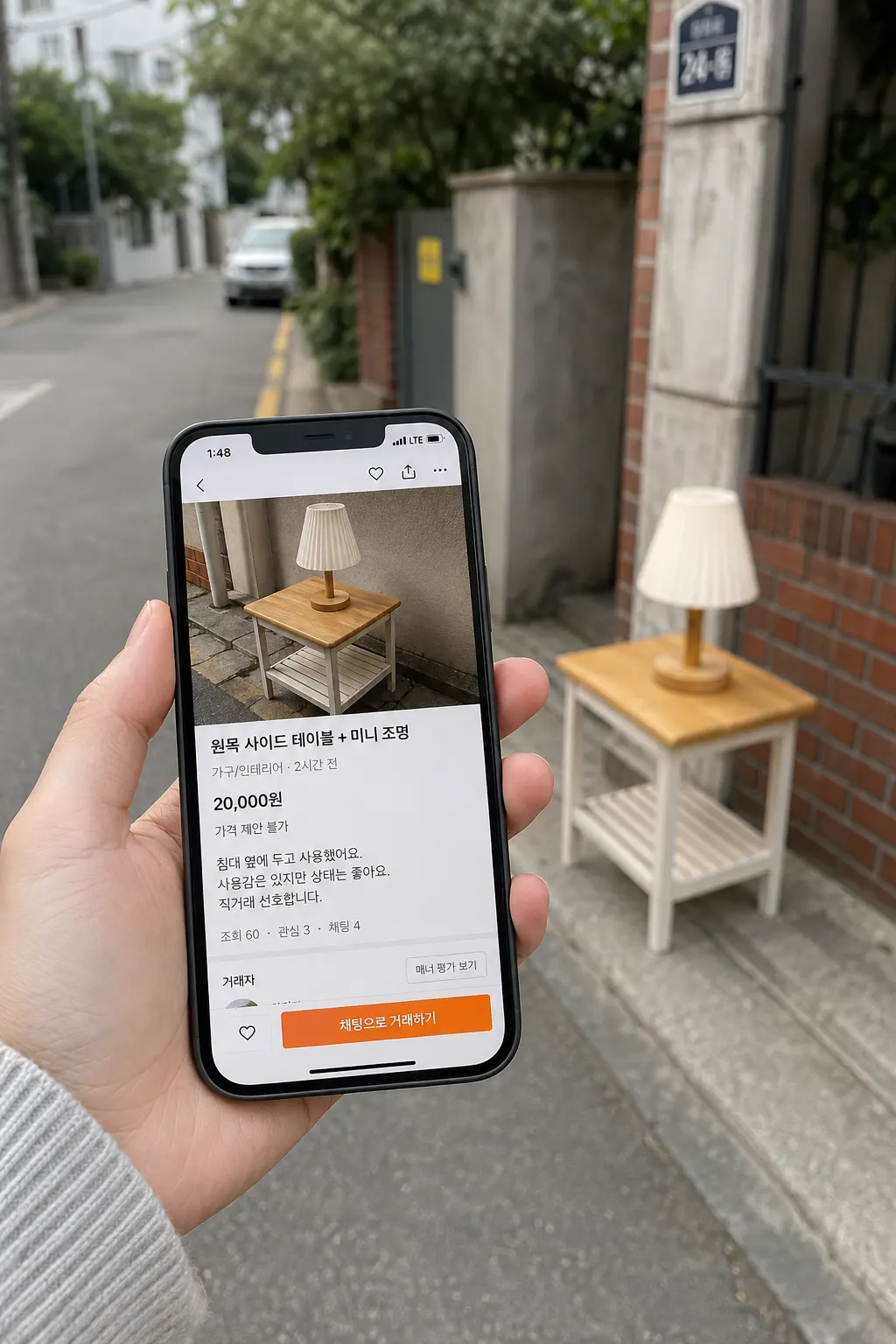
If you've heard Korean friends mention "Danggeun" when talking about buying furniture or selling old electronics, and wondered what it actually is or whether it's accessible without strong Korean, secondhand marketplace culture in Korea runs through a specific set of hyper-local apps that work somewhat differently from general resale platforms in other countries, built around neighborhood-level trust and in-person exchange rather than shipping.
Here's how Korea's secondhand marketplace apps actually work, and how foreign residents can use them.
What Makes Danggeun Market Different
Danggeun Market (당근마켓, literally "carrot market," a pun on the Korean phrase for "neighborhood") is Korea's dominant secondhand marketplace app, and its core design principle, hyper-local, neighborhood-based listings, shapes how it's actually used compared to broader resale platforms.
- Listings are location-restricted, generally only showing items from sellers within a certain radius of your registered location, rather than a nationwide search, this reflects the app's built-in assumption that most transactions happen through in-person meetup rather than shipping.
- In-person exchange is the norm, rather than shipping, most transactions involve meeting the seller at a mutually convenient nearby location, typically outside a subway station, in front of the seller's apartment complex, or a similar accessible public spot.
- A trust and reputation system, called "매너온도" (manner temperature), tracks a user's transaction history and reliability, functioning as an informal trust score that experienced users generally check before finalizing a deal with an unfamiliar seller or buyer.
Setting Up and Using the App as a Foreigner
- Phone number verification is generally required for account setup, similar to the broader Korean digital identity verification pattern, meaning a registered Korean phone number is typically necessary to fully use the app.
- Location verification, confirming your actual neighborhood through GPS, is part of the core functionality, since the entire premise depends on accurately reflecting where you actually live for relevant local listings.
- Korean language proficiency helps significantly for actually browsing and communicating with sellers, though basic transactional Korean (agreeing on price, time, and meeting location) is manageable with a translation app for straightforward transactions, more complex negotiation or detailed questions about an item's condition benefit from stronger language ability or a Korean-speaking friend's help.
What People Actually Buy and Sell
- Furniture and household items are extremely common, particularly useful for foreign residents furnishing a new apartment without paying full retail price, or clearing out items before relocating or leaving Korea.
- Electronics, phones, small appliances, are commonly listed, though checking an item's actual condition and functionality in person before completing a purchase is standard practice, similar to secondhand marketplace norms generally.
- Local community features beyond pure buying and selling have expanded over time, including neighborhood recommendation requests, local job postings, and community interest groups, functioning as a broader hyperlocal community platform rather than purely a resale marketplace.
Safety and Practical Tips
- Meet in public, well-lit locations for exchanges, standard secondhand marketplace safety practice applicable regardless of country, subway station exits and busy public spots near residential areas are common, sensible meetup choices.
- Check the manner temperature and review history of an unfamiliar buyer or seller before finalizing a transaction, particularly relevant for higher-value items where a bit of extra diligence matters more.
- Inspect items in person before paying, rather than paying in advance for an item you haven't seen, standard practice for in-person secondhand transactions generally.
- Negotiate respectfully but directly, Korean secondhand marketplace culture generally accommodates reasonable price negotiation, particularly for furniture and larger items, a polite, direct offer is generally well-received rather than considered rude.
Common Misunderstandings
A frequent assumption among new foreign residents is that Danggeun Market functions like a national online marketplace similar to some international resale platforms, expecting nationwide search results or shipping options. In practice, the hyper-local, in-person exchange model is the core design, not a limitation, understanding this from the start helps you use the app as intended rather than expecting functionality it wasn't built to provide.
Another common point of confusion involves assuming the app is only useful for buying, many foreign residents specifically use it when leaving Korea or relocating within the country to sell off furniture and household items quickly, since shipping large furniture internationally or even domestically is often impractical, local resale through an app like this is frequently the most practical option.
Quick Summary
- Danggeun Market is Korea's dominant hyper-local secondhand marketplace app, built around neighborhood-based listings and in-person exchange rather than nationwide shipping.
- A registered Korean phone number and location verification are generally required for full account functionality, basic Korean helps with transactions though isn't strictly necessary for simple exchanges.
- Furniture and household items are especially popular, useful both for furnishing an apartment affordably and for selling belongings before relocating or leaving Korea.
- Standard secondhand safety practices, meeting in public locations and inspecting items before paying, apply the same way they would on any similar marketplace elsewhere.