Sending Packages Overseas from Korea: A Practical Korea Post Guide
Foreign residents leaving Korea often need to send clothes, books, gifts, documents, or household items overseas. Korea Post can be a practical option, but the price and delivery method depend on the destination, weight, size, speed, and contents.
The biggest mistakes usually happen before the package reaches the counter: using a weak box, packing a prohibited item, writing an incomplete customs declaration, or assuming the cheapest service includes full tracking.
Choose the service based on your real priority
International postal options may differ by destination. A service can prioritize:
- Faster delivery
- Lower price
- Tracking
- Larger weight allowance
- Document delivery
- Parcel delivery
- Surface transportation
- Air transportation
- Express delivery
Not every service is available to every country. Before packing, check the current Korea Post options for your destination. Ask about estimated delivery time, tracking, compensation, and size limits. A cheaper service may be reasonable for books and clothing when time does not matter. Important documents or valuable items may require a faster, tracked option.
EMS and ordinary international parcels are different
EMS is Korea Post’s express international service. Ordinary air or surface parcels may use different delivery networks and timelines. Do not compare only the price. Ask:
- Is tracking included?
- Is a signature required?
- What compensation applies?
- How long is the estimate?
- Which company completes final delivery?
- Can the parcel be returned?
- Are customs fees collected from the recipient?
- Is the destination currently accepting the service?
International transport can be delayed by customs, weather, aviation capacity, strikes, holidays, or local delivery conditions. An estimate is not a guaranteed arrival date.
Prohibited and restricted items
International mail cannot contain everything that is legal to own. Restrictions can involve:
- Batteries
- Power banks
- Perfume
- Aerosols
- Flammable products
- Alcohol
- Medicine
- Food
- Plants and seeds
- Meat products
- Cosmetics
- Liquids
- Weapons
- Pressurized containers
- Counterfeit products
- Cash or valuables
The destination country may also prohibit items that Korea allows to leave. Check both Korea Post and destination-country rules. Product packaging that says “safe” does not mean it is acceptable for air mail. Never hide an item from the postal declaration. A package can be delayed, returned, destroyed, or investigated.
Batteries require special attention
Lithium batteries are one of the most common causes of confusion. Rules can differ between:
- Battery installed in a device
- Spare battery
- Power bank
- Damaged battery
- Large-capacity battery
- Electronic cigarette
- Smart luggage
- Laptop or phone
Do not assume that a phone, laptop, camera, or power bank can be mailed in the same way. Ask the post office before sealing the box when electronics are included. Staff may need to inspect the contents or explain that a different method is required. Never mail a swollen, damaged, or recalled battery.
Use a strong box
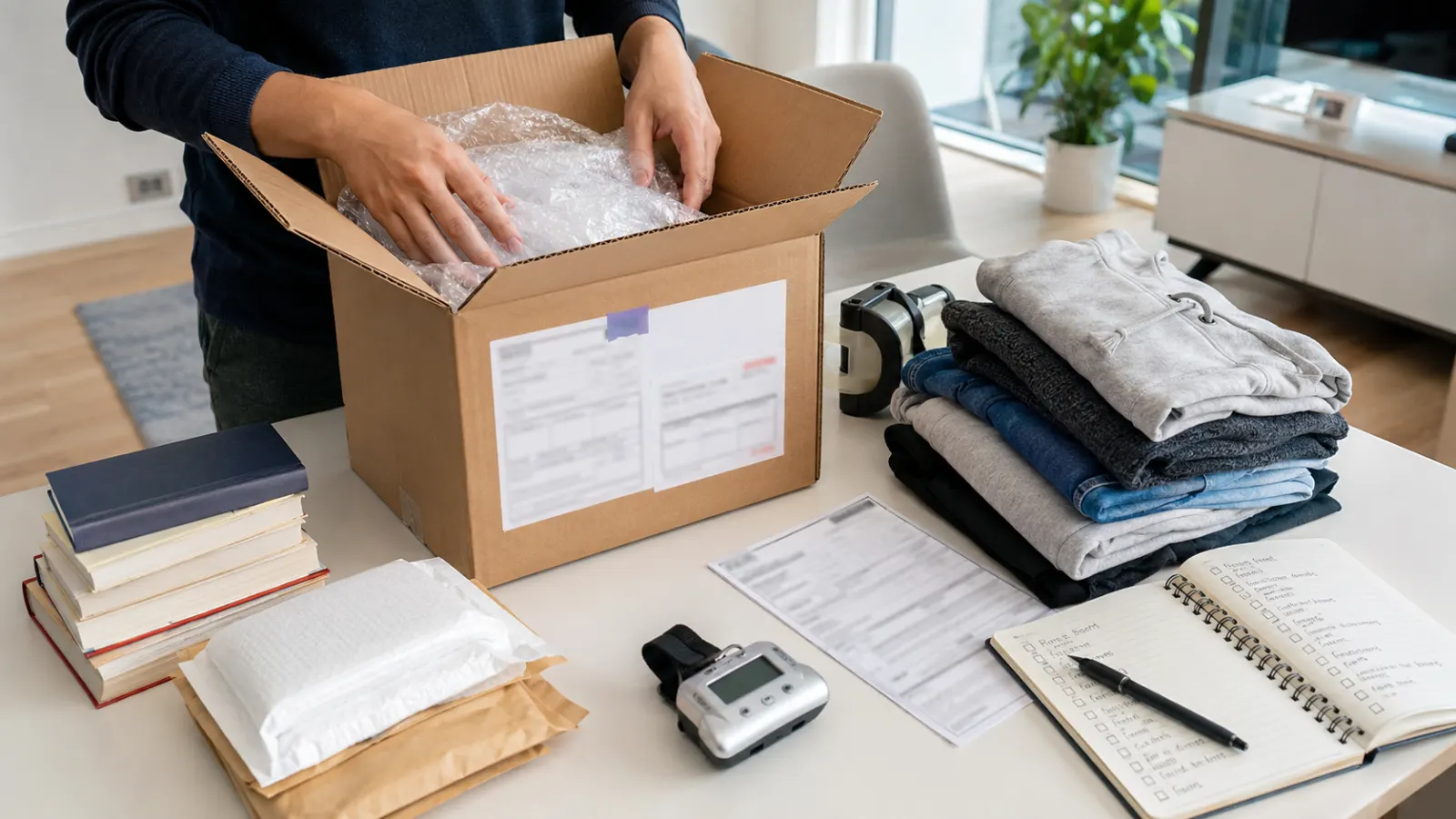
International parcels pass through many facilities and may be stacked under heavier boxes. Use:
- Rigid cardboard box
- Strong packing tape
- Internal padding
- Waterproof inner bag
- Sealed liquid containers
- Protected corners
- Separate wrapping for fragile items
Do not rely only on a shopping bag, moving box weakened by previous use, or decorative gift packaging. Remove old shipping labels and barcodes. Leave the parcel open until you are confident the contents are accepted. Some post offices may need to verify the items before final sealing.
Write addresses clearly
Include the recipient’s:
- Full name
- Street address
- Apartment or unit
- City
- State or province
- Postal code
- Country
- Phone number
Use the destination country’s preferred address format. Write the country name clearly in English. Include a return address in Korea. A phone number is useful when the destination carrier or customs office needs to contact the recipient.
Save a photograph of the finished label and package.
Customs declarations need real descriptions
Descriptions such as “gift,” “personal items,” or “stuff” may be too vague. List contents clearly, for example:
- Used cotton shirts
- Printed books
- Ceramic cup
- Packaged stationery
- Personal shoes
Declare realistic quantities and values. A gift can still be subject to import tax. Writing a lower value does not guarantee that customs will accept it and may reduce compensation if the parcel is lost. The sender is responsible for accurate information.
New and used items can be treated differently
Someone moving home may consider the contents to be personal belongings rather than commercial goods. The destination customs authority may still request evidence or apply rules based on value, ownership, or duration of use.
Keep purchase receipts when sending valuable new items. For relocation boxes, create a detailed packing list. Number the boxes and keep a copy of each contents list. Do not mix important documents with ordinary household items when the parcel may take weeks to arrive.
Cost depends on more than weight
International shipping can be priced using actual weight, size, service type, and destination. A large lightweight box may still be expensive because it occupies significant transportation space. Reduce unnecessary volume by:
- Removing retail packaging
- Folding clothing tightly
- Avoiding oversized boxes
- Separating very heavy books
- Comparing one large box with several smaller boxes
Do not create a box so heavy that the recipient cannot move it safely. Weigh and measure the parcel at home, but treat your estimate as approximate until the post office checks it.
Tracking and proof
Keep:
- Posting receipt
- Tracking number
- Customs form
- Contents list
- Photographs
- Declared value
- Recipient communication
The tracking number is the main proof that the parcel entered the postal system. Tracking updates may pause while the item is moving internationally or waiting for customs. A lack of scans for several days does not automatically mean the package is lost. Use the official tracking system rather than entering the number into random websites.
When something goes wrong
If a parcel is delayed, damaged, returned, or lost, collect the records before contacting Korea Post. Compensation can depend on the service, declared value, packaging, prohibited items, and evidence. Photographs taken before posting can help establish the contents and condition.
The recipient should also photograph damage before opening the package fully. Do not discard the box, label, or packing materials until a claim is resolved.
A practical mailing checklist
Before going to the post office:
- Check destination eligibility.
- Choose speed versus price.
- Review prohibited items.
- Confirm battery rules.
- Create an itemized contents list.
- Pack securely but leave inspection access.
- Prepare the full address and phone number.
- Estimate weight and size.
- Bring identification and payment.
- Keep every receipt and tracking record.
Korea Post publishes international postal services and conditions, but service availability and acceptance rules can change. Confirm current details for the specific country and contents before mailing.
Quick Summary
- International postal services differ in speed, tracking, price, and destination availability.
- Check prohibited items and battery rules before sealing the parcel.
- Use specific customs descriptions and realistic values.
- Keep the receipt, tracking number, contents list, and photographs until delivery is complete.