How Korean Traditional Markets Work and How to Shop Them Well
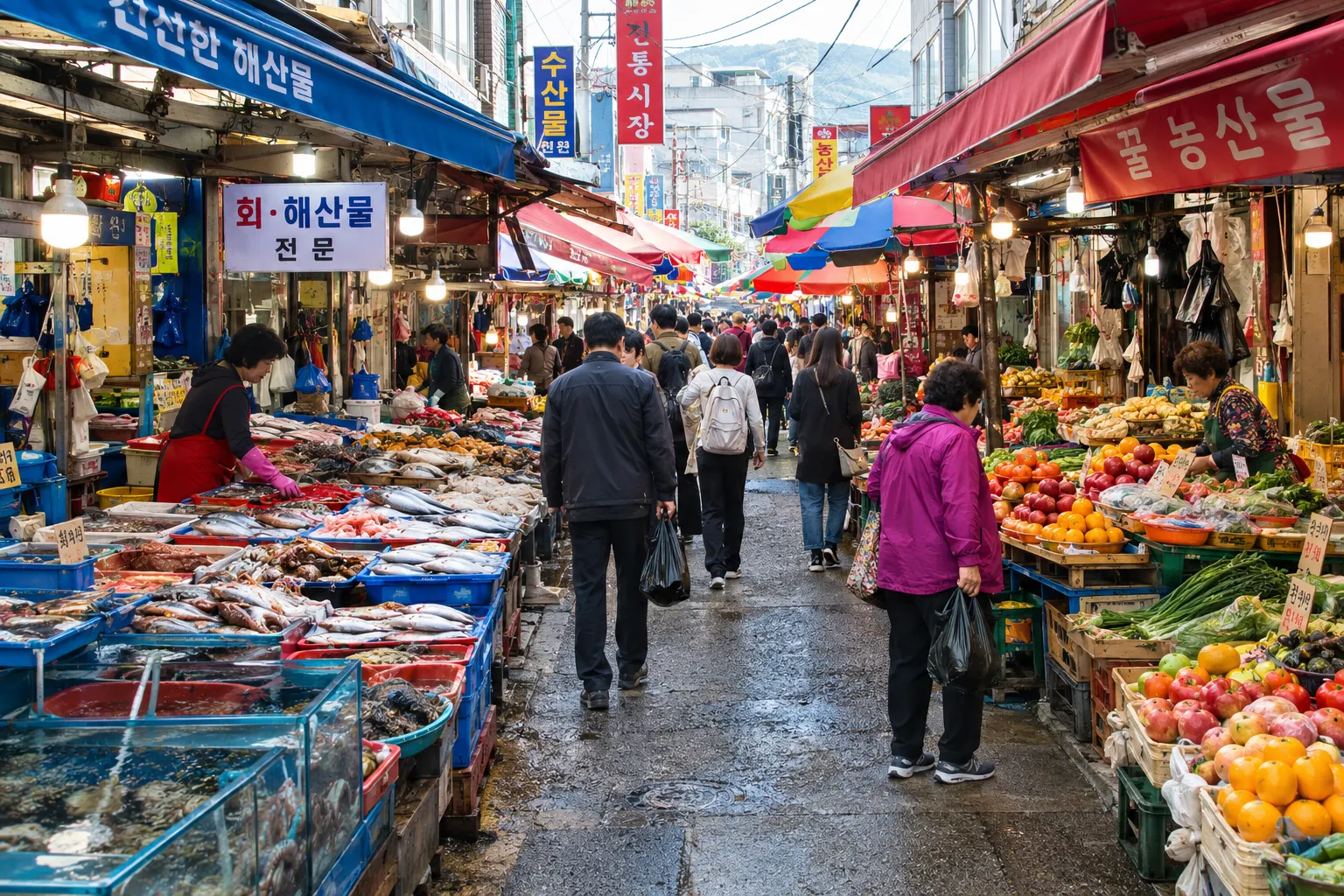
If you've walked into a Korean traditional market (재래시장) expecting something similar to a farmers market back home, and found a much larger, more maze-like space with vendors selling everything from fresh produce to household goods to prepared food, understanding the actual shopping norms, haggling expectations, and what these markets are genuinely good for helps you use them effectively rather than feeling overwhelmed and defaulting back to a supermarket every time.
Here's how Korean traditional markets actually work, and how to shop them confidently.
What Makes a Traditional Market Different From a Supermarket
- Individual vendor stalls rather than a single unified store, each stall is essentially its own small business, meaning pricing, quality, and even willingness to negotiate can vary meaningfully between vendors selling similar items within the same market.
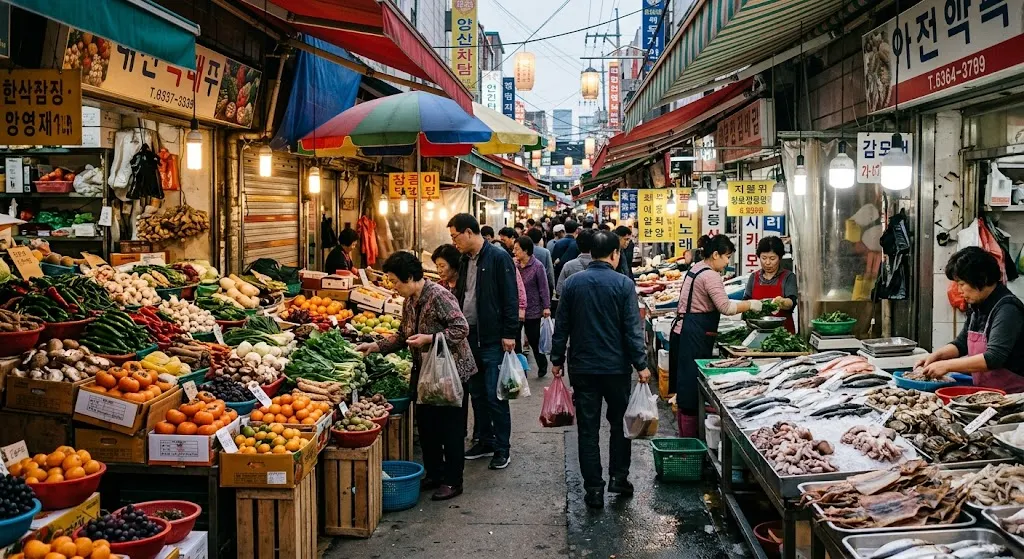
- Fresh produce, seafood, and meat tend to be a genuine strength of traditional markets, often fresher and sometimes better priced than supermarket equivalents, particularly for produce in season, though this requires some comparison shopping across a few stalls to find good value and quality.
- Prepared food and street food sections, a genuinely popular reason many people, both Korean and foreign, visit traditional markets specifically, offer affordable, fresh prepared food options distinct from what you'd find at a supermarket.
Understanding Pricing and Negotiation
- Some price negotiation is culturally accepted at traditional markets, particularly for larger purchases or at smaller individual stalls, unlike fixed supermarket pricing, though this varies by specific market and vendor, some traditional markets in heavily tourist-trafficked areas have moved toward more fixed pricing.
- A polite, modest negotiation approach tends to work better than aggressive bargaining, a simple, friendly inquiry about whether the price is flexible, particularly for a larger purchase, is generally well-received, aggressive haggling over small amounts can come across poorly.
- Regular customers sometimes receive better treatment over time, becoming a recognized repeat customer at a specific stall, common practice among many Korean shoppers, can lead to small discounts, extra items thrown in, or simply better service over time, a genuine relationship-based aspect of traditional market shopping culture.
Practical Shopping Tips
- Bring cash, while card payment acceptance has grown at many traditional markets, particularly larger, more modernized ones, cash remains more universally accepted, especially at smaller individual stalls, bringing a reasonable amount of cash avoids finding a specific vendor doesn't accept your card.
- Compare a few stalls before committing to a purchase, particularly for produce or items where quality and pricing can vary meaningfully between vendors, a quick walk through comparing a few options before buying tends to produce better value than purchasing from the first stall encountered.
- Visit during off-peak hours if you prefer a less crowded experience, weekday mornings tend to be less crowded than weekend afternoons, though weekend crowds also reflect the market's genuine popularity and vibrant atmosphere, which some visitors specifically enjoy experiencing.
- Bring your own bag, many traditional market vendors don't automatically provide extensive packaging or bags the way a supermarket might, bringing a reusable bag matters both practically and increasingly as an environmentally conscious norm.
What to Actually Buy at a Traditional Market vs. a Supermarket
- Fresh produce, seafood, and meat generally represent traditional markets' strongest value and quality proposition, worth prioritizing these categories specifically when shopping at a market rather than assuming every category is better there.
- Specialty or harder-to-find ingredients, particularly for specific Korean or other Asian cuisine ingredients, traditional markets sometimes carry a wider or more specialized selection than a standard supermarket, particularly relevant if you're cooking specific traditional dishes.
- Packaged goods and household items often don't offer a meaningful price or quality advantage over a supermarket or discount retailer, for these categories, shopping convenience and consistent pricing at a regular store sometimes makes more practical sense than seeking them out specifically at a traditional market.
Common Misunderstandings Foreign Shoppers Have
A frequent assumption among new foreign residents is that traditional markets are primarily a tourist attraction or cultural experience rather than a genuine, practical shopping destination many Korean residents use regularly for specific categories. In practice, many Koreans specifically choose traditional markets for fresh produce and seafood as a genuine part of regular household shopping, not purely a novelty or occasional cultural outing, approaching it as a practical shopping option rather than only a sightseeing destination helps you actually benefit from what these markets offer.
Quick Summary
- Korean traditional markets consist of individual vendor stalls, particularly strong for fresh produce, seafood, meat, and prepared food, with pricing and quality varying meaningfully between vendors within the same market.
- Polite, modest price negotiation is culturally accepted at many traditional markets, particularly for larger purchases, though this varies by specific market and has become less common at more tourist-trafficked or modernized locations.
- Bringing cash and a reusable bag, and comparing a few stalls before purchasing, helps you navigate traditional market shopping more smoothly and get better value.
- Traditional markets offer their strongest value for fresh produce, seafood, and specialty ingredients, while packaged goods and household items often don't offer a meaningful advantage over a standard supermarket.