How Korean Trash Collection Days and Recycling Rules Actually Work
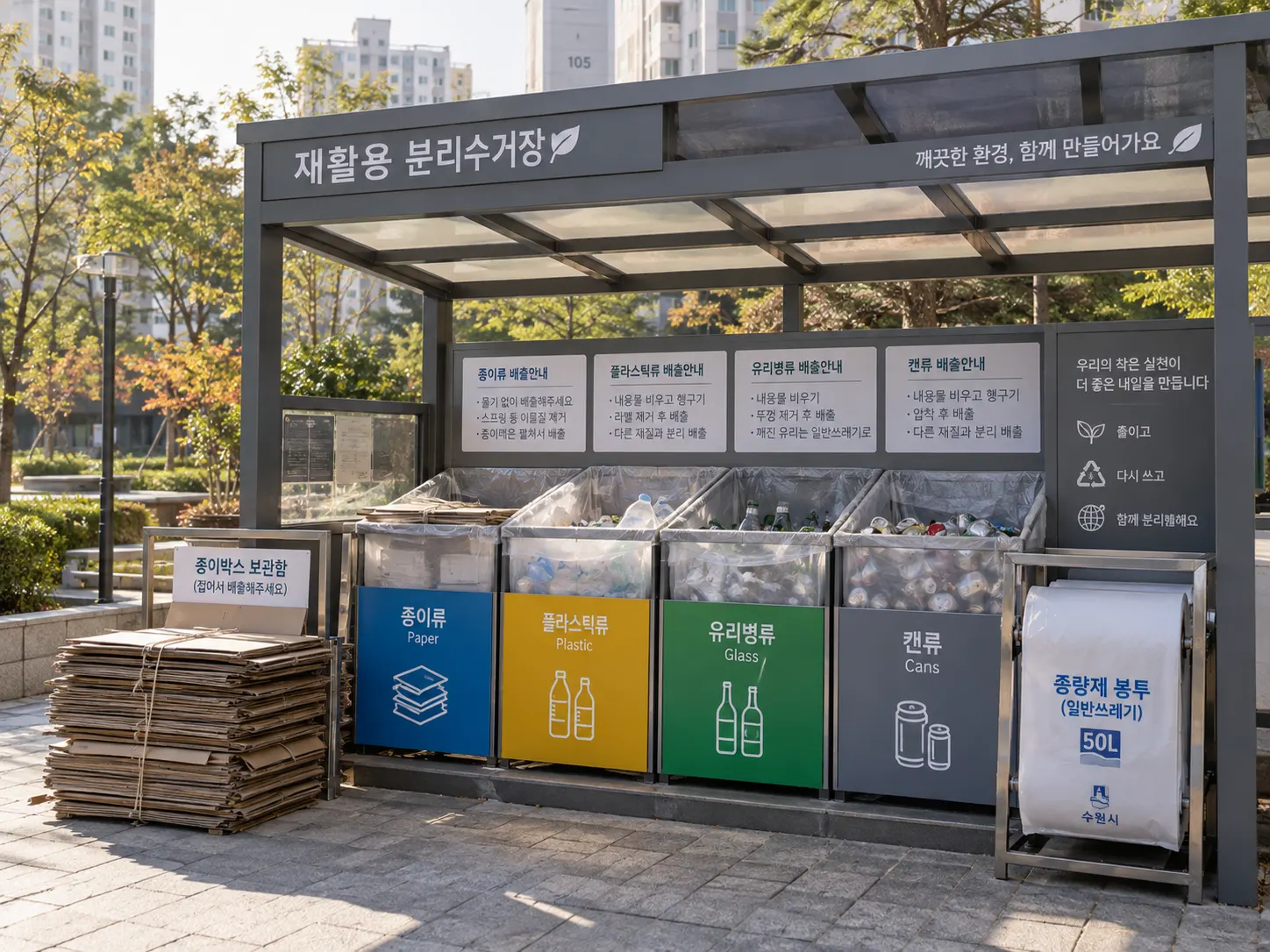
Most newcomers learn Korea's trash rules the hard way, usually by finding a note taped to their door. Korean trash collection works through a mix of designated bags, separated recycling, and local schedules, and the rules change by district. Once you know the system, it takes only a few minutes a week.
Here is how it works, how to find your local rules, and what newcomers most often get wrong.
The Quick Answer: The Four Streams
Most households sort waste into:
- General waste in a designated volume-based bag (종량제 봉투)
- Food waste in a separate bin or bag, collected separately
- Recyclables such as paper, plastic, glass, cans, and vinyl, each with its own rules
- Bulky items, which need a registered pickup and a fee, as covered in the bulky waste guide
Designated Bags
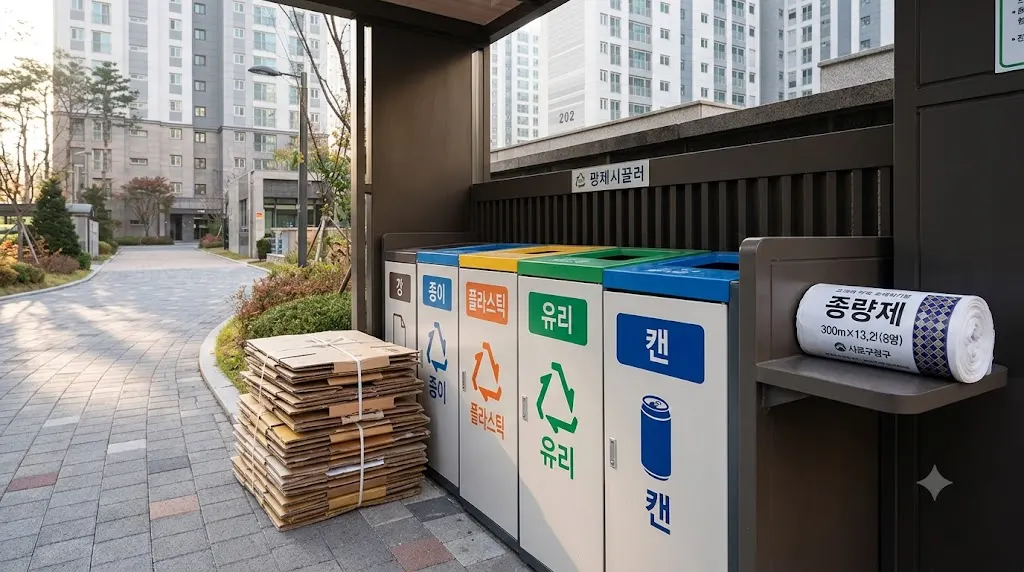
General waste goes in official bags sold at convenience stores and supermarkets. They are priced by size and district, and the bag you buy in one district may not be accepted in another. Use the bag for the district you live in. Trash in ordinary plastic bags may be left uncollected, and repeated violations can bring a fine.
Food Waste
Food waste is collected separately and then often turned into animal feed or compost, so it has to be clean. Common rules include:
- Remove bones, large shells, tea bags, and anything non-edible
- Drain liquid as much as you can
- Use the designated food waste bag or the building's bin, which may use a card or chip system in newer complexes
Rules about what counts as food waste are surprisingly specific, so check your building or district guide.
Recycling Basics
A few habits cover most of it:
- Rinse containers and remove food residue
- Separate materials: paper, plastic, glass, cans, and vinyl go in separate bins
- Remove labels and lids where required, and flatten boxes and PET bottles
- Keep it clean. Dirty recyclables often get rejected
Many apartment complexes have a weekly recycling day with a staffed collection area, and the rules there are strictly followed.
Finding Your Local Schedule
Collection days vary by district and sometimes by building. The most reliable ways to check:
- Ask your building management office or a neighbor
- Look at the notice board near the collection area
- Search your district office website or app, which often lists schedules and bag prices
- Use a translation app on the posted notices
Common Mistakes
- Using regular plastic bags. Collection crews may skip them.
- Putting out trash on the wrong day. Some areas allow disposal only at set times.
- Mixing food waste into general trash. It is separately collected, and mixed bags can be refused.
- Not rinsing recyclables. Dirty items can cause a whole bin to be rejected.
- Assuming one district's rules apply everywhere. Details differ across districts and even buildings.
Quick Summary
- Korea sorts waste into general waste in designated bags, food waste, recyclables, and bulky items that need a fee and registration.
- Use the designated bag for your own district, and keep food waste and recyclables clean and separated.
- Collection days and rules vary by district and building, so confirm them with building management, notices, or your district office.
- Following the system closely avoids uncollected trash, fines, and awkward notes from neighbors.