How Korean University Dormitory Life Works for International Students
If you're preparing to move into a Korean university dormitory as an exchange or degree-seeking student, the application process, room assignment system, and daily living rules involve enough specifics that arriving unprepared can mean a rougher first few weeks than necessary. Korean dorm culture operates with more structure and stricter shared rules than student housing in some other countries, and understanding the system before you arrive makes the adjustment considerably smoother.
Here's how Korean university dormitory life actually works, and what international students commonly find surprising.
Applying for a Dorm Spot
- Dormitory space is often limited relative to demand, particularly at universities in Seoul, and priority is sometimes given to first-year students, students from further away, or specific categories like exchange students with guaranteed housing arrangements through their program.
- Application timing matters significantly, dorm applications generally open well before the semester start, and missing the window can mean scrambling for off-campus housing on short notice, particularly difficult for international students unfamiliar with the local rental market.
- Exchange students often have dormitory placement handled through their exchange program agreement with the host university, generally a smoother process than the general application pool, though space isn't always unlimited even for guaranteed exchange placements.
Room Types and Costs
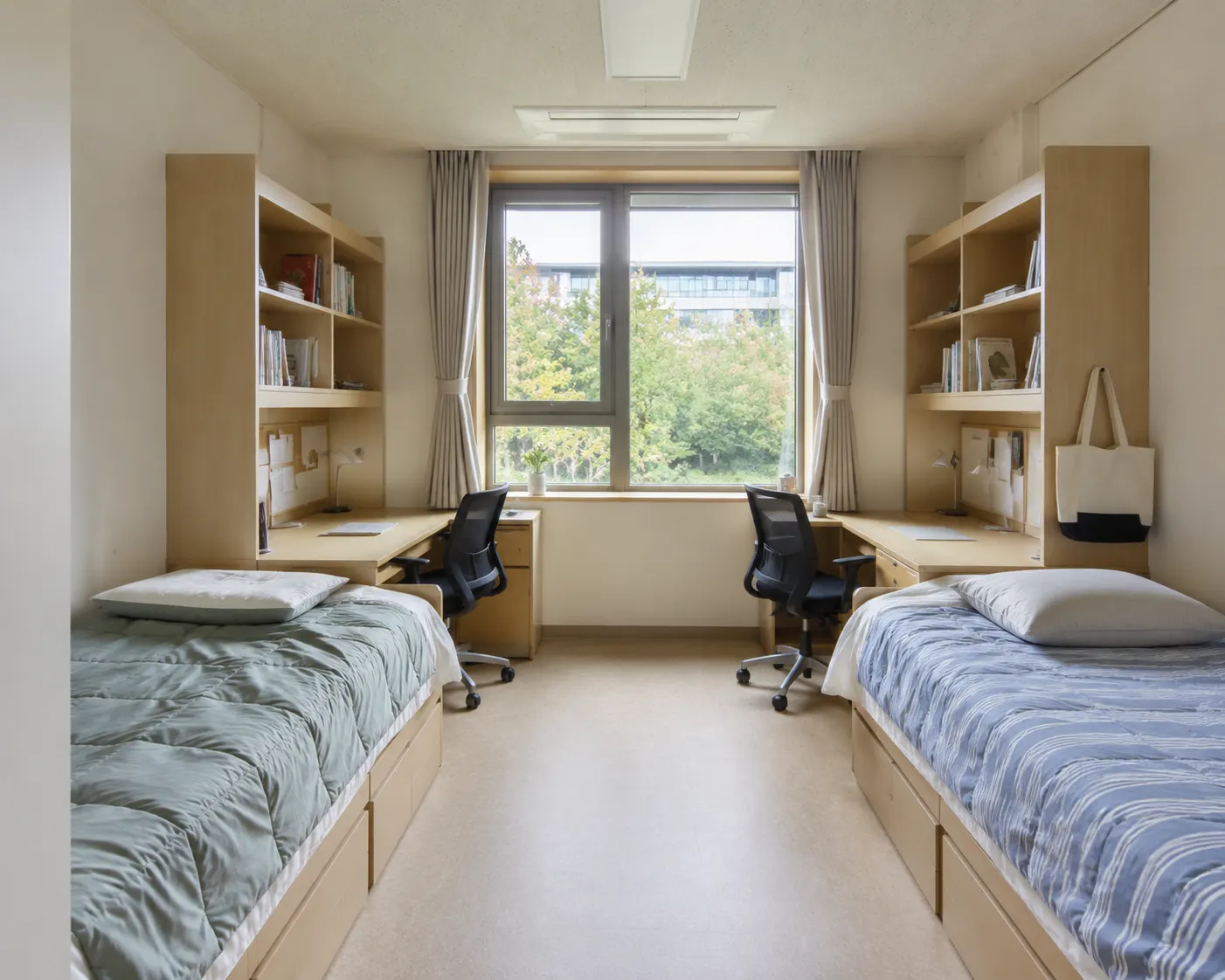
- Shared rooms (2-4 person) are the most common and most affordable option, particularly for first-year and exchange students, private single rooms exist at many universities but are more limited and priced at a premium.
- Dormitory costs are generally significantly cheaper than private off-campus housing in the same area, particularly relevant in expensive markets like Seoul, making dorms an attractive option purely on cost grounds beyond convenience.
- Meal plans are sometimes bundled with dormitory costs or offered as a separate optional add-on, cafeteria-style dining halls are common and generally quite affordable compared to eating out regularly.
Rules That Surprise International Students Most
Korean university dormitories generally enforce stricter shared living rules than student housing in some other countries, particularly around curfews, guest policies, and shared space conduct.
- Curfews or entry restrictions during certain hours exist at some, though not all, Korean university dormitories, particularly more traditional institutions, checking your specific dorm's policy before assuming complete flexibility matters, since being locked out or facing access restrictions during off-hours has caught some students off guard.
- Overnight guest policies are generally more restrictive than casual assumption might suggest, particularly for guests of a different gender in single-gender dormitories, common at many Korean universities, understanding your specific dorm's guest policy avoids an awkward situation or rule violation.
- Quiet hours and shared space etiquette are generally taken seriously, with specific enforced quiet periods, particularly important during exam periods, understanding and respecting this matters for both your standing with dorm administration and basic consideration for roommates and neighbors.
- Alcohol policies vary by institution, some dormitories restrict or prohibit alcohol entirely within the building, worth checking specific rules rather than assuming general Korean drinking culture norms apply identically within dormitory housing specifically.
Practical Daily Life Considerations
- Laundry facilities are typically shared, coin or card-operated, on specific floors or in a designated building area, understanding the payment system (some now use a rechargeable card rather than coins) early avoids a frustrating first attempt.
- Shared bathroom and shower facilities are common in many traditional dormitory setups, particularly in shared-room configurations, a different norm than students used to private ensuite bathrooms might expect.
- Room assignment and roommate matching is sometimes randomized, particularly for international or exchange students, requesting a preference isn't always guaranteed to be honored, approaching an assigned roommate situation with some flexibility helps the adjustment period.
Common Mistakes International Students Make
- Assuming dormitory rules are more flexible than they actually are, particularly around curfew, guest, and alcohol policies, checking your specific dorm's handbook or orientation materials rather than assuming general assumptions apply avoids early rule violations.
- Not applying early enough, particularly relevant for degree-seeking students who don't have a guaranteed exchange program placement, missing application windows can mean a scramble for alternative housing.
- Underestimating the language barrier for dormitory administrative matters, maintenance requests, rule clarifications, and check-in procedures aren't always available in English at every institution, having a translation app ready or connecting with international student support services helps navigate this smoothly.
- Overlooking international student support services, most universities with significant exchange programs have a dedicated office or point of contact for international student housing questions, worth utilizing rather than navigating uncertainty alone.
Quick Summary
- Korean university dormitory applications require attention to timing and specific eligibility categories, exchange students generally have a smoother placement process through their program agreement.
- Shared rooms are the most common and affordable option, significantly cheaper than off-campus housing, particularly valuable in expensive markets like Seoul.
- Dormitory rules around curfews, overnight guests, and alcohol are often stricter than general assumptions, checking your specific institution's policy avoids early missteps.
- Utilizing international student support services for housing and administrative questions helps navigate language barriers and institution-specific processes more smoothly than figuring things out alone.