Using Coin Laundries in Korea: A Practical Guide for Foreign Residents and Travelers
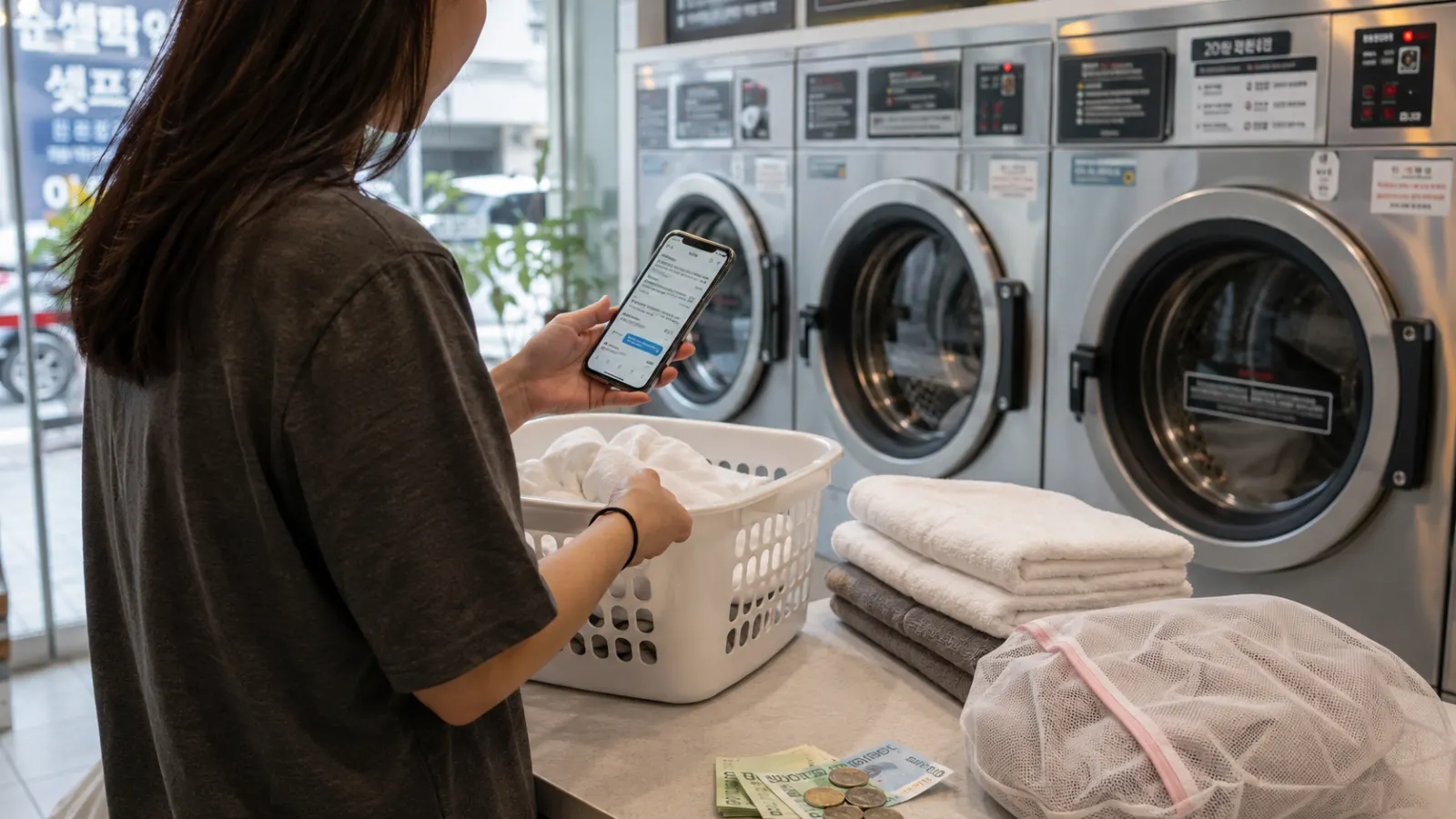
Coin laundries are common in Korean neighborhoods, especially near universities, studio apartments, goshiwons, and areas with many short-term residents. They can be useful when your accommodation has no washing machine, when you need to wash bedding, or when Korea’s humid summer weather makes air-drying clothes difficult.
The machines may look familiar, but payment methods, detergent rules, drying temperatures, and Korean instructions can make the first visit confusing. A little preparation can help you avoid damaged clothing, wasted money, and unfinished laundry late at night.
How to find a coin laundry
The most useful Korean search terms are:
- 셀프빨래방: self-service laundry
- 코인세탁: coin laundry
- 무인세탁소: unattended laundry shop
- 빨래방: laundry room or laundromat
Searching these terms in a Korean map app usually gives more results than searching only in English.
Many laundries operate without staff. Some are open late or around the clock, but operating hours vary. Check the door notice or map listing before carrying a large bag across the neighborhood.
A typical shop may have:
- Large washing machines
- Large tumble dryers
- Detergent vending machines
- Change machines
- Card or mobile-payment terminals
- Folding tables
- Laundry carts
- Shoe-washing machines
- Machines designed for blankets or pet items
Not every machine is intended for ordinary clothing, so read the label before loading it.
Check whether detergent is included
Some Korean laundromat machines automatically dispense detergent and fabric softener. Others require you to add your own.
Do not pour detergent into the machine until you confirm the instructions. Adding extra detergent to an automatic-dispensing machine can create excessive foam and leave residue on clothing.
Look for wording such as:
- 세제 자동투입: detergent automatically added
- 세제 포함: detergent included
- 세제 별도: detergent sold or added separately
- 섬유유연제: fabric softener
When instructions are unclear, use a translation app on the machine panel. Photographing the full instruction sheet is often easier than translating one button at a time.
Sort clothes before leaving home
Self-service laundries are easier when clothing is already sorted. Separate:
- White and light-colored clothing
- Dark clothing
- Delicate fabrics
- Towels and underwear
- Bedding
- Items that should not enter a dryer
Check pockets carefully. Receipts, tissues, pens, cosmetics, earphones, and access cards can damage both the clothing and the machine. Close zippers, fasten hooks, and place small or delicate items in a laundry net. Turn printed shirts inside out to reduce friction.
Do not wash clothing marked dry-clean only. Korean laundromats generally use ordinary water-based washing machines, not professional dry-cleaning equipment.
Do not overload the machine
The capacity printed on a washer does not mean you should force clothing tightly into the drum. Clothing needs space to move. An overloaded washer may clean poorly, rinse badly, or stop during operation. Bulky blankets can become much heavier after absorbing water. For bedding, choose a machine specifically marked for large loads. A small washer that can hold dry bedding may not handle its wet weight safely.
As a practical rule, leave visible space in the drum instead of packing it completely full.
Payment methods vary
Despite the English term “coin laundry,” many Korean laundries no longer rely only on coins. A shop may accept:
- 500-won coins
- 1,000-won notes through a change machine
- Credit or debit cards
- Stored-value laundry cards
- QR-based mobile payment
- A dedicated laundry app
Foreign cards and foreign mobile-payment accounts may not work with every terminal. Carrying some Korean cash can be useful, especially at unattended locations. If the shop uses a prepaid card, check whether the card requires a deposit and whether unused credit can be refunded. A card designed for one laundry brand may not work elsewhere.
Choose the wash course carefully
Machine options may include:
- 표준: standard
- 쾌속: quick
- 온수: warm or hot water
- 찬물: cold water
- 이불: bedding
- 헹굼추가: extra rinse
- 탈수: spin only
Cold or standard washing is safer for most everyday clothing. Hot-water settings may shrink, fade, or damage some fabrics. A quick course can save time but may not be suitable for heavily soiled clothing or thick towels. If you have allergies or sensitive skin, an extra rinse may help remove detergent residue. Confirm whether the machine already includes a strong automatic detergent dose.
Dryers can be hotter than expected
Large commercial dryers may dry clothes faster than home machines, but the heat can damage some materials. Avoid high heat for:
- Wool
- Spandex
- Sportswear
- Printed clothing
- Bras
- Waterproof fabric
- Clothing with glued decorations
- Items labeled tumble-dry prohibited
Remove delicate items and air-dry them at home.
Drying options may be described as high, medium, or low temperature. Begin with a moderate setting when you are unsure. You can add more drying time, but you cannot reverse heat damage.
Clean the lint filter when the machine instructions require it. A blocked filter can reduce drying efficiency.
Do not leave laundry unattended for too long
Many people leave during a wash cycle, but returning late can inconvenience other customers.
When a machine finishes, another person may need it. Some customers may remove finished laundry and place it in a basket or on a table. This is not necessarily theft or hostility; it may happen because the owner did not return.
Set a timer on your phone and return a few minutes before the cycle ends. Avoid occupying folding tables with bags, food, or personal belongings. Keep the shared space clean and remove lint or spilled detergent after use.
Washing shoes requires a special machine
Some Korean laundries have machines specifically designed for sneakers.
Do not put shoes into an ordinary washing machine unless both the footwear label and the shop allow it. Shoes can damage the drum, lose their shape, or spread dirt through the machine.
A shoe-washing machine may use brushes and a separate drying unit. Remove loose dirt, insoles, and laces first when instructed. Leather shoes, dress shoes, and delicate footwear should usually be handled by an appropriate cleaning service rather than a coin-operated machine.
Laundry services are different from coin laundries
Korea also has staffed laundry and clothing-care shops. Search for:
- 세탁소: laundry or dry-cleaning shop
- 드라이클리닝: dry cleaning
- 수선: clothing alteration or repair
These businesses may handle suits, coats, dresses, leather items, stains, ironing, and repairs. Some offer pickup and delivery. Before leaving an expensive item, confirm the price, expected completion date, stain risk, and whether the shop accepts responsibility for delicate materials. Keep the receipt because clothing may be organized by ticket number rather than customer name alone.
What to bring
A useful laundromat bag includes:
- Korean cash
- Laundry net
- Stain remover
- Separate bag for clean clothing
- Hangers for items you will not dry
- Phone charger or power bank
- Translation app
- Fabric-care labels or photos
Do not place freshly dried clothing back into the same dirty bag unless it has been cleaned or separated with a liner.
Quick Summary
- Search 셀프빨래방 or 코인세탁 to find self-service laundries in Korea.
- Confirm whether detergent is automatically included before adding your own.
- Commercial dryers can run hot, so separate delicate and heat-sensitive clothing.
- Set a timer and remove laundry promptly when the cycle ends.